You’ve invested in a compact monocular to get closer views of nature on your hikes. But how do you keep this handy tool safe from bumps, scratches, and bad weather when you’re out on the trail?
Protecting your monocular isn’t just about keeping it looking good—it’s about making sure it works perfectly every time you need it. You’ll discover simple, practical tips to guard your monocular during your adventures. Keep reading to learn how to extend its life and enjoy clearer views on every hike.
Choosing The Right Case
A sturdy, well-padded case shields compact monoculars from bumps and scratches during hikes. Choosing a water-resistant case adds extra protection against rain and moisture. Compact and lightweight designs make carrying easier without adding bulk.
Material Considerations
A durable case keeps your monocular safe from drops and scratches. Hard cases protect better but can be heavy. Soft cases are lightweight and easy to carry but offer less protection. Waterproof materials help keep your gear dry in rain or snow. Look for cases with padding inside to absorb shocks. Breathable fabrics prevent moisture build-up inside the case.
Size And Fit
The case should fit your monocular snugly without too much space. A loose case lets the monocular move around and get damaged. Too tight a case might scratch or press the lenses. Check the case size before buying. Some cases have adjustable straps or compartments for extra items like lens cloths or filters.
Credit: gearjunkie.com
Using Lens Covers
Lens coverskeep the monocular’s glass clean and safe. They stop dirt, dust, and scratches during hiking. Using lens covers also helps to avoid water spots from rain or sweat. This protection keeps your view clear and sharp.
Lens covers are easy to use and fit snugly. They save money by preventing damage that costs repair or replacement.
- Soft caps:Made from fabric or rubber, lightweight and flexible.
- Hard caps:Plastic or metal, offer stronger protection against impacts.
- Flip-up covers:Attached to the monocular, easy to open and close.
- Lens hoods:Shield from sunlight and reduce glare along with protection.
Waterproofing Techniques
Sealants and coatingscreate a protective layer on the monocular’s surface. They prevent water from entering small gaps and seams. Use silicone-based or waterproof sprays for best results. Apply in a well-ventilated area and let it dry completely before use.
Waterproof casesoffer extra protection during hiking. Choose a case with a snug fit to avoid movement inside. Look for materials like EVA foam or hard plastic that resist water and impacts. Cases often have zippers or clasps that seal tightly to keep moisture out.
- Silicone sprays help repel water effectively.
- Waterproof coatings protect against rain and dew.
- Hard cases shield from drops and scratches.
- Foam-lined cases prevent internal damage.
- Sealed zippers stop water from seeping in.
Securing Monoculars To Gear
Secure compact monoculars by attaching them firmly to your backpack or belt with straps or clips. Use padded cases to prevent scratches and absorb shocks during hikes. Keeping them accessible yet protected ensures they stay safe on rugged trails.
Using Straps And Clips
- Use strong straps to keep monoculars safe and close.
- Clips help attach the monocular quickly to belts or loops.
- Check straps and clips for tightness before hiking.
- Soft straps prevent scratches on the monocular surface.
Placement On Backpack
Place monoculars on the outside pockets or loops of the backpack. This keeps them easy to reach. Avoid placing them where they can bump into rocks or branches.
Choose spots that keep monoculars steady and stop them from moving too much. This helps avoid damage while walking.
Regular Cleaning Practices
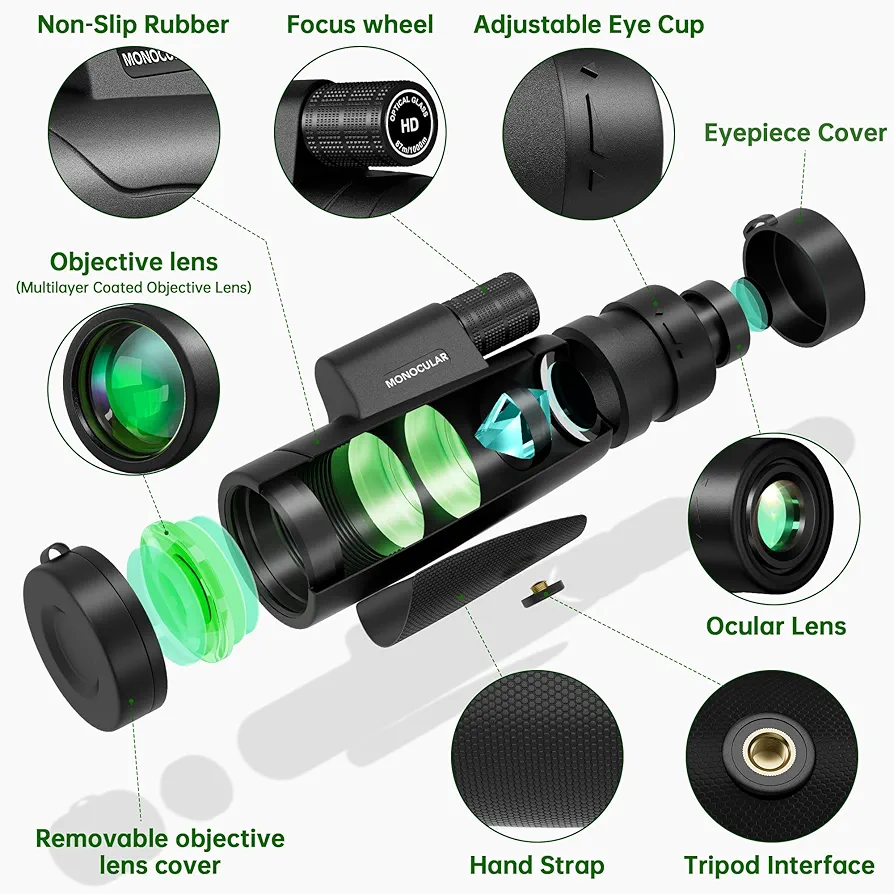
Using the right cleaning toolshelps keep your monocular clear. Use a soft microfiber clothto gently wipe lenses. Avoid rough materials that can scratch glass. A lens cleaning solutionmade for optics works best. Spray it on the cloth, not directly on the lens.
Regular cleaning avoids dust and smudges. Check your monocular after each hike for dirt or moisture. Clean lenses at least once a week if used often. Store the monocular in a dry, dust-free case when not in use.

Credit: www.gosupps.com
Handling During Hiking
Hold the monocular firmlywith both hands when using it. Attach a neck or wrist strap to prevent accidental drops. Avoid using the monocular near steep edges or slippery paths. Always place it on a soft surface when not in use, like a cloth or padded bag.
Use protective casesmade for your monocular. These cases cushion it from shocks and scratches. Keep the lens caps on when not looking through it. This protects the glass from dirt and damage.
- Check the strap regularly for wear and tear.
- Do not leave the monocular hanging loosely.
- Keep the device away from water and heavy rain.
Carry the monocular inside a backpack pocket or secure pouch. This adds extra protection during rough hikes. Avoid quick movements that might cause it to fall.
Storing Monoculars Post-hike
Always dry your monoculars thoroughly after hiking. Use a soft cloth to remove moisture. Check lenses and body for dirt or damage. Gently blow away dust with a blower brush. Avoid touching lenses with fingers to prevent smudges. Let the monocular air dry in a cool, dry place.
For long-term storage, keep the monocular in its protective case. Store it in a dry area away from direct sunlight. Avoid places with high heat or humidity to prevent mold and damage. Remove batteries if the monocular uses them to avoid corrosion. Regularly check the monocular to ensure it stays clean and dry.
Credit: www.youtube.com
Frequently Asked Questions
How Do I Protect Compact Monoculars From Moisture?
Keep your monocular in a waterproof case to prevent moisture damage. Use silica gel packs inside the case for added dryness. Always wipe lenses with a soft, dry cloth after exposure to damp conditions.
What’s The Best Way To Clean Monocular Lenses?
Use a microfiber cloth or lens brush to clean lenses gently. Avoid using rough materials or harsh chemicals. Cleaning regularly ensures clear vision and prevents permanent scratches on the lens surface.
How To Prevent Scratches On Compact Monoculars?
Store your monocular in a padded case when not in use. Avoid placing it on rough surfaces. Use lens caps and handle the monocular carefully during hiking to protect it from scratches and impacts.
Can Extreme Temperatures Damage Compact Monoculars?
Yes, extreme heat or cold can affect lens coatings and internal components. Store your monocular in a temperature-controlled environment when possible. Avoid leaving it in direct sunlight or freezing conditions for extended periods.
Conclusion
Protecting your compact monocular during hiking keeps it safe and working well. Use a sturdy case to avoid scratches and dust. Keep it dry and clean after every trip. Avoid dropping or hitting it against hard surfaces. Store it in a secure place when not in use.
Taking these simple steps helps your monocular last longer. Enjoy clearer views on every hike with a well-kept monocular. Small care makes a big difference. Stay prepared and protect your gear for the best outdoor experience.