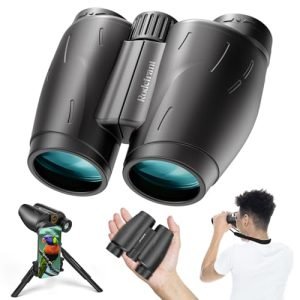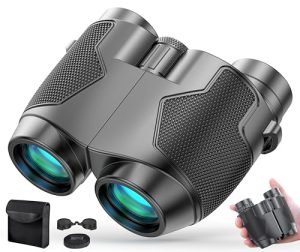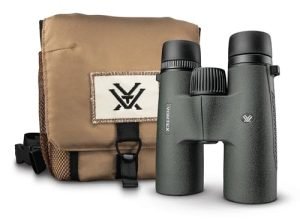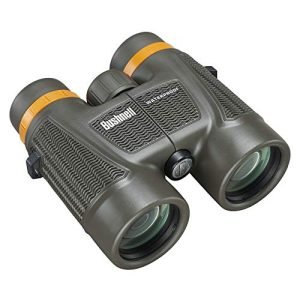
The right pair of binoculars can transform a good camping trip into a great one. Whether you're scanning a ridgeline for elk at dawn, identifying a distant hawk from the campsite, or watching your kids explore a meadow, good optics pull the landscape closer and make every moment richer.
But the binocular market is full of numbers, specs, and conflicting advice. Do you need compact or full-size? Is 8x better than 10x for campers? What does "42mm" actually mean when you're packing a backpack?
This guide answers those questions with practical, experience-based advice. You'll learn which sizes actually work in real camping conditions, where the trade-offs hurt the most, and how to pick a pair that earns its place in your pack on every trip.
Why Binocular Size Matters More for Camping Than Other Activities
Camping combines elements of hiking, birdwatching, hunting, and stargazing in one activity. That's exactly why choosing a size is harder for campers than for specialized users.
A birdwatcher walking a flat boardwalk can comfortably carry full-size 10×42 binoculars all day. A backcountry hunter needs maximum low-light performance and accepts the weight penalty of a 50mm objective lens. A stargazer prioritizes aperture above portability because the scope or binoculars stay at camp.
A camper needs one pair to do some of everything well:
- Carrying comfort during hikes and scrambles
- Brightness for early mornings and late evenings at camp
- A wide view for scanning landscapes and following moving wildlife
- Stability without always needing a tripod
- Durability for dust, rain, and temperature swings
In practice, this pushes most campers toward mid-sized binoculars — but the right choice for you depends on how you camp. Let's break down the two key numbers before recommending specifics.
Understanding the Two Key Numbers: Magnification and Objective Lens
Every binocular size is expressed as two numbers, like 8×42 or 10×25.
- The first number is magnification: an 8x pair makes objects appear eight times closer.
- The second number is the objective lens diameter in millimeters: a 42mm lens is bright in low light, while a 25mm lens is smaller and dimmer.
The relationship between these numbers decides most of what you'll experience in the field.
Magnification Options: 8x vs 10x vs 12x
| Magnification | Field of View | Image Stability | Best Camping Use |
|---|---|---|---|
| 7x | Widest | Very stable | Dense forest, close-range scanning, kids |
| 8x | Wide | Stable for most people | General camping, wildlife, hiking |
| 10x | Narrower | Requires steady hands | Open terrain, lakes, distant peaks |
| 12x | Narrow | Hard to hold steady | Specialized long-distance viewing, usually needs a tripod |
Higher magnification sounds better on paper. In practice, it magnifies every tiny hand movement along with the image. A 10x pair held without support will show a visibly shaky image after a few minutes, and by the end of a long day on the trail, the shake gets worse. An 8x pair is noticeably calmer in the hand and much easier to hold on a moving subject.
A common mistake is buying 12x or higher magnification for camping because "more power is better." In reality, high magnification narrows your field of view, makes it harder to locate animals, and forces you to work harder just to keep the image still. Most campers end up leaving those binoculars in the tent.
Objective Lens Diameter: Why 42mm Is the Camping Sweet Spot
The objective lens is the big lens at the far end of the binocular. Its diameter — 25mm, 32mm, 42mm, 50mm — controls how much light the binocular gathers.
More light means brighter, clearer views in dim conditions. Camping involves a lot of dim conditions: dawn hikes, dusk wildlife watching, heavy tree canopy, overcast weather. This is why compact 25mm binoculars, while wonderfully light, often leave campers squinting. The image looks fine at noon in open sun but falls apart when the light gets interesting.
The 42mm objective lens hits the balance for most campers:
- Bright enough for dawn, dusk, and shaded forest
- Light enough to carry on a hiking strap all day
- Affordable enough to fit most family camping budgets
- Big enough for comfortable eye placement, even with glasses
That's why the most common camping recommendation is an 8×42. It is not a compromise — it's the spec that does the broadest range of camping tasks well.
If you're interested in how a pair of stargazing binoculars uses a larger objective lens differently, this article on choosing a 10×50 setup for night skies explains the aperture trade-offs in more detail.
The Best Overall Size for Most Campers: 8×42
If this guide had to give exactly one answer, it would be 8×42.
Here's why this size has become the default recommendation for general outdoor use:
- 8x magnification provides enough reach for most wildlife encounters without destabilizing the image
- 42mm objective lenses deliver useful brightness at dawn and dusk when animals are most active
- A typical weight of 22–27 ounces is light enough for all-day shoulder carry
- A wide field of view — often above 400 feet at 1,000 yards — helps you find and follow moving subjects
- Enough mass to hold steady, unlike featherweight compacts that bounce with every heartbeat
In practice, I reach for an 8×42 far more than any other binocular on camping trips. It handles a mule deer on a hillside at 300 yards, a bald eagle over a lake, and a warbler in a streamside bush equally well. It works without a tripod. It fits in a daypack's top pocket or on a chest harness.
How to Read the "8×42" Numbers So You Never Get Confused Again
When a binocular is labeled "8×42," always read it as two separate facts:
- 8x = how much closer the image appears
- 42mm = the diameter of the front lenses
The "x" does not mean "times bigger," even though that's effectively what happens. Also note that a binocular labeled "10-30×50" is a zoom model — these are rarely worth buying for camping because zoom mechanisms add weight, reduce image quality, and introduce more points of failure. Fixed magnification is almost always the better choice for durability and optical clarity.
Compact vs Full-Size Binoculars: Which One Fits Your Camping Style?
Your camping style should drive the size decision more than any spec sheet. Let's frame this by how you actually spend your time outdoors.
Choose Compact (8×25, 10×25, 8×32) If:
- You prioritize ultralight backpacking and count ounces
- Most of your camping happens in open daylight conditions
- You mainly want binoculars for quick identification, not extended viewing
- You often carry binoculars in a pocket or hip belt pouch rather than a harness
The trade-off is real: compacts are dimmer at dawn and dusk, harder to hold still, and less comfortable for longer viewing sessions. But for a fast-and-light backpacker, a 12-ounce compact that's always within reach beats a 27-ounce full-size left behind in the car.
Choose Full-Size (8×42, 10×42, 10×50) If:
- You camp in low-light environments like dense forest, deep valleys, or high latitudes
- Wildlife viewing is a top priority, not an afterthought
- You want better comfort for glasses wearers and longer viewing sessions
- You don't mind carrying a chest harness or around-the-neck strap all day
A full-size 10×50 is technically amazing at dusk — but it's heavy, often 30+ ounces, and the 10x magnification magnifies hand shake. Many campers who buy 10x50s for "better wildlife viewing" end up with tired arms and a shaky image.
For hiking-specific advice on how to carry whatever size you choose, see this guide on carrying binoculars comfortably while hiking.
The Best Camping Binocular Sizes by Activity
Not every camper wants the same thing. Here's a practical breakdown by what you'll most likely use your binoculars for.
For Wildlife Watching
Best: 8×42 or 10×42
Wildlife is most active at dawn and dusk, so you need a lens large enough to gather low light. You also need a wide enough field of view to spot an animal moving through brush. An 8×42 gives you the best balance. Go to 10×42 only if you'll be viewing across open terrain like meadows, lakes, or tundra.
For Hiking and Backpacking
Best: 8×25, 8×32, or 8×42 — depending on distance and pack weight
For day hikes, an 8×32 splits the difference nicely. For multi-day backpacking where every ounce counts, an 8×25 compact is the realistic choice. If you're heading into grizzly country or want to glass distant slopes, the 8×42 earns its weight.
For Casual Family Camping
Best: 8×32 or 8×42
Kids and casual campers do better with a wider field of view and a stable image. An 8×32 is small enough for younger users to hold, but noticeably brighter than a 25mm compact. If you're buying one pair for the whole family, think about eye relief and durability too. This guide on eyeglass-friendly binocular choices covers a spec many family campers overlook.
For Stargazing at Camp
Best: 7×50 or 10×50
For casual night-sky viewing, bigger objective lenses are genuinely better. A 7×50 or 10×50 gathers enough light to reveal star clusters, the Milky Way's structure, and even some brighter deep-sky objects. If you want one pair to split between daytime camping and nighttime astronomy, a 10×42 can work, but a dedicated 50mm pair is noticeably better under dark skies. This comparison of options that handle both birding and stargazing explores that crossover in depth.
Prism Types: Roof vs Porro for Camping
The prism system is what lets a binocular be compact while still delivering magnification. There are two designs, and they affect size, weight, durability, and image quality.
Roof Prism Binoculars
Roof prism binoculars have straight, streamlined barrels because the prisms sit in line with the lenses. They are:
- More compact and easier to slide into a backpack or case
- Generally lighter for the same objective lens size
- Better sealed against water and dust, thanks to the internal focusing design
- More expensive to make at the same optical quality level
For most campers, roof prisms are the practical choice. Modern roof prism binoculars are rugged, weatherproof, and packable. If you want to understand how this design delivers its optical quality, this breakdown of how roof prism optics work covers the mechanics clearly.
Porro Prism Binoculars
Porro prism binoculars have the classic offset, zigzag-barrel shape. They tend to be:
- Bulkier and heavier than an equivalent roof prism
- Often brighter for the same price, due to the simpler optical path
- Cheaper to manufacture at a given quality level
- Wider in the hand, which some users find easier to hold steady
For camping on a tight budget, a good Porro prism binocular often beats a mediocre roof prism. The added weight and bulk can matter on a long hike, but they're perfectly serviceable around a car-camping basecamp.
Critical Camping Specs That Matter More Than You Think
Size is more than magnification and objective lens. These specs affect whether the binocular actually works in the field.
Eye Relief for Glasses Wearers
Eye relief is the distance from the eyepiece lens to where your eye needs to sit to see the full image. If you wear glasses, look for at least 15mm of eye relief, and ideally 16–18mm. Without enough eye relief, you'll see a narrow tunnel instead of the full circular view.
This is the spec that most commonly disappoints glasses wearers who buy binoculars without trying them first.
Field of View
Field of view is how wide an area you can see, usually expressed as feet at 1,000 yards. Wide fields — roughly 350 feet or more — make it much easier to find a moving bird or animal, keep it in frame, and enjoy sweeping landscape views.
Narrow fields, often under 300 feet, are common on higher-magnification and cheaper binoculars. They make wildlife spotting feel like looking through a soda straw.
Close Focus Distance
Many campers use binoculars for more than distant views: butterflies, wildflowers, frogs, and campground birds. If close viewing matters to you, check the close focus distance. Good camping binoculars focus down to 6–8 feet; some birding-oriented models go below that.
Exit Pupil and Twilight Performance
Exit pupil is the objective lens diameter divided by magnification. An 8×42 has a 5.25mm exit pupil; a 10×42 has 4.2mm. In daylight, your eye's pupil is small enough that both look similar. At dawn and dusk, the 8×42's larger exit pupil provides a brighter, easier view with less effort.
This is one of the strongest arguments for 8×42 over 10×42 for general camping.
Waterproofing and Fog Proofing: Non-Negotiable for Camping
Camping binoculars live outside. They ride in packs through rain, sit on damp tent floors, and get moved from cool morning air into warm tents where condensation wants to form.
A camping binocular should be:
- Waterproof, not merely "water-resistant," with O-ring seals so a downpour or an accidental dunk doesn't ruin it
- Nitrogen- or argon-purged to prevent internal fogging when temperature and humidity shift
- Rubber-armored for grip in wet hands and bump protection against rocks and branches
If a binocular isn't clearly waterproof and fog proof, skip it for camping. This guide on waterproof and fog-proof hunting binoculars explains what these seals and purging actually do, and why they matter in the backcountry. It applies just as much to campers as to hunters.
How to Choose Your Camping Binoculars in 6 Practical Steps
Rather than getting lost in specs, follow this sequence when comparing models.
1. Decide Your Primary Use Case
Write down what you'll do most: close forest birding, long-distance glassing, evening wildlife watching, or occasional scanning on day hikes. Let that drive the magnification and objective lens, not marketing copy.
2. Set a Realistic Budget by Tier
| Price Tier | What to Expect | Best For |
|---|---|---|
| Under $75 | Basic durability, acceptable daytime image, limited low-light performance | Kids, occasional campers, a spare pair for the car |
| $75–$200 | Solid waterproofing, good optics, good eye relief options | Most family campers and casual wildlife watchers |
| $200–$500 | Excellent optical quality, strong build, better coatings and warranty | Regular campers who prioritize wildlife viewing |
| $500+ | Premium glass, edge-to-edge sharpness, best low-light performance, lifetime repair policies | Enthusiasts and long-term buy-once users |
You do not need to spend $500 to get good camping binoculars. A well-made $150–$250 roof prism pair will serve most campers for a decade or more. For a look at what low-light performance costs at different budgets, this guide to mid-range low-light options is a useful reference.
3. Check the Specs That Matter for Your Situation
Glasses wearers: check eye relief. Dawn/dusk viewers: check objective lens and exit pupil. Ultralight hikers: check weight. Kids: check close focus and minimum interpupillary distance.
4. Try Before You Buy When Possible
Nothing replaces holding a binocular at eye level. Check that the barrels adjust comfortably to your eye spacing, that the focus wheel turns smoothly, and that the view is sharp across the center of the image. If you can't try a specific model, buy from a retailer with a good return policy.
5. Get the Fit and Carry System Right
A binocular you can't access quickly is useless at the moment an animal appears. A padded strap or, better, a lightweight chest harness keeps the binocular stable on your sternum instead of bouncing at your belt. Get this accessory sorted at the same time you buy the binocular, not three trips later.
6. Learn to Focus Efficiently
Sloppy focus technique makes even great binoculars feel blurry. The sequence matters: set the diopter, get the interpupillary distance right, then practice finding a target and bringing it sharp in one smooth motion. This article on focusing binoculars quickly in the field walks through the process step by step.
Long-Term Care: Protecting Your Camping Investment
A quality pair of binoculars should last 10–20 years with basic care. Most failures happen for predictable, preventable reasons.
Cleaning Lenses Without Scratching Them
Use a soft lens brush or squeeze-bulb blower first to remove dust and grit. Never rub a dry lens with a shirt or tissue — that's how fine scratches accumulate. If a smudge remains, use a microfiber cloth and a small amount of dedicated lens cleaner, wiping in gentle circles from the center outward.
Storing Between Trips
Keep binoculars in their case, in a cool, dry place, out of direct sunlight. Avoid leaving them in a hot car for long periods, which can cause internal lubricants to migrate onto optical surfaces. Silica gel packets inside the storage case help in humid climates.
Routine Checks
Once a season, verify that the focus wheel still moves smoothly, the hinges hold their position, and the view remains sharp. Small problems are far cheaper to fix early. If something does go wrong in the field, this guide on repairing damaged birding binoculars covers what can and can't be field-fixed.
Common Camping Binocular Mistakes to Avoid
Buying too much magnification. A 12x or 16x pair sounds powerful but is exhausting to hold and frustrating to use without a tripod. For most campers, 8x or 10x is the ceiling.
Choosing compact lenses to save weight at the cost of usability. A 25mm compact is great on paper and disappointing at dawn. If you actually enjoy low-light wildlife, carry the 42mm.
Ignoring eye relief. Glasses wearers who buy short-eye-relief binoculars get a narrow, dark view no matter how good the optics are.
Skipping waterproofing to save money. One rainstorm, one dropped pack in a stream, and the savings vanish. Waterproofing is not optional for camping.
Using a bad carry system. Any binocular hanging on a thin neck strap will bounce, dig in, and get left behind. A proper harness changes how often you actually use the binocular.
Not setting the diopter correctly. Many blurry views are not the binocular's fault — they're an unadjusted right-eye diopter. Set it once, correctly, and the image transforms.
Best Camping Binocular Size Cheat Sheet
| Your Situation | Recommended Size | Why |
|---|---|---|
| Most campers, all-around use | 8×42 | Best balance of brightness, stability, and portability |
| Open terrain, lakes, distant peaks | 10×42 | More reach where you need it, still reasonably stable |
| Ultralight backpacking, daytime use | 8×25 or 8×32 | Keeps pack weight down, adequate in good light |
| Dense forest, close wildlife | 7×35 or 8×32 | Wider view and easier tracking at close range |
| Stargazing from camp | 7×50 or 10×50 | Bigger aperture gathers more starlight |
| Kids or family shared use | 8×25 or 8×32 | Lighter, more forgiving eye placement |
Frequently Asked Questions
Is 10×42 too much for camping?
Not necessarily. A 10×42 works well in open country, around lakes, or anywhere you want a little more reach. But it magnifies hand shake, has a narrower field of view, and is harder to hold steady for long periods. For mixed forest and open terrain, 8×42 is more forgiving. If you mostly camp in wide-open spaces, 10×42 can be the right call.
Are compact binoculars good enough for camping?
For daytime hiking and quick identification, yes. Compact 8×25 or 10×25 binoculars are light enough to always carry, and that convenience matters. But they're dim in low light, harder to hold steady, and less comfortable for extended viewing. Treat them as a supplement for active daylight use, not a replacement for a full-size pair if wildlife watching is your priority.
What size binoculars should I buy for both camping and stargazing?
A 10×50 handles both reasonably well, though it's heavy for daytime hiking. If stargazing is a secondary interest, an 8×42 still reveals the Moon's craters, Jupiter's moons, and the Milky Way's structure. If astronomy is a primary reason for the purchase, go with a dedicated 50mm pair and accept the daytime weight.
Do I really need waterproof binoculars for camping?
Yes. Even in dry climates, morning dew, condensation, and accidental spills happen. Non-waterproof binoculars are vulnerable to internal fogging and mold, and one submerged moment ends them. Waterproofing with nitrogen purging is the single most important durability feature for any outdoor binocular.
How much should I spend on camping binoculars?
A quality camping binocular starts around $150–$250. Below $75, expect compromises in waterproofing, optical coatings, or build quality. Above $500, you're paying for premium glass and build refinements that many campers won't notice. Any pair, regardless of price, should be protected and cleaned carefully. If kids will be using the binoculars too, this guide to teaching children proper binocular care can save you from a scratched-lens heartbreak.
Final Verdict: Pick a Size You'll Actually Carry
The best binocular size for camping is the one you'll have with you when a moose steps out of the willows or an eagle circles overhead.
For most people, that's an 8×42 — bright enough for dawn and dusk, steady enough for all-day use, and light enough to carry without making excuses. Ultralight backpackers may legitimately choose an 8×25 or 8×32. Open-country campers may prefer the extra reach of a 10×42. Stargazers who stay near the tent can justify a 10×50.
The mistake isn't choosing one of these sizes. The mistake is choosing based on a spec sheet instead of your actual camping style, then leaving the binocular in the car because it's too heavy, too shaky, or too dim when it matters.
Match the size to how you camp, protect it with good waterproofing, and it will outlast several tents. For a closer look at how optical quality translates into brands and models, see this comparison of trusted roof prism binocular manufacturers once you've settled on a size.