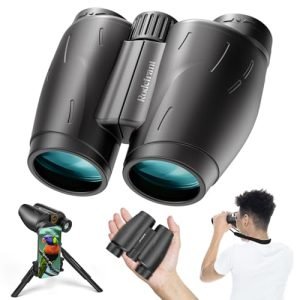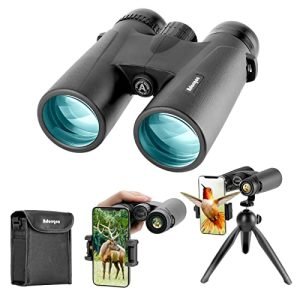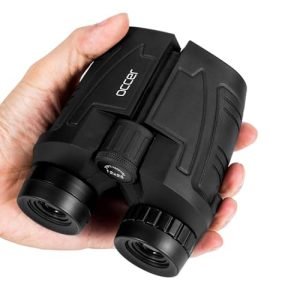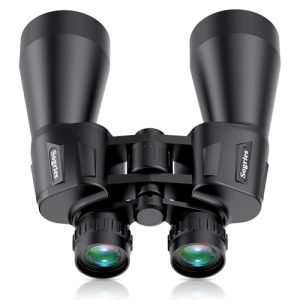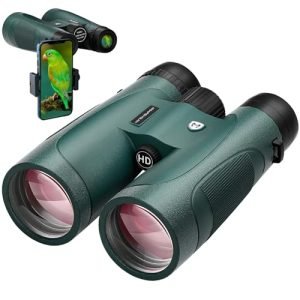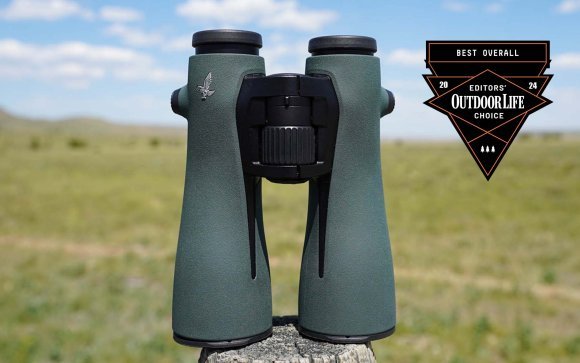
The short answer is that 8x and 10x binoculars are the sweet spot for almost all wildlife watching. They give you enough detail to identify birds, mammals, and behavior without making the view so shaky or narrow that you lose the animal. But the best magnification for you depends on where you watch, how far away the wildlife is, and how steady your hands are.
This guide breaks down the numbers, the real-world trade-offs, and the situations where lower or higher magnification actually makes more sense.
Magnification Basics: What 8×42 Really Means
Every binocular model name contains two key numbers. In an 8×42, the first number is magnification — the animal appears eight times closer than with the naked eye. The second number is the objective lens diameter in millimeters, which controls how much light enters the binocular.
Magnification is not just about zoom. It directly changes three things:
- Field of view — how wide an area you see at a distance.
- Exit pupil — the bright circle of light that reaches your eye.
- Hand-held stability — how much natural hand shake gets magnified.
To calculate exit pupil, divide the objective lens diameter by the magnification. An 8×42 has a 5.25mm exit pupil. A 10×42 has a 4.2mm exit pupil. In low light, the larger exit pupil of the 8×42 can give you a brighter image with the same optical quality.
A wider field of view is especially helpful when animals are moving through brush or flying. If you want a deeper breakdown of how magnification and viewing width interact, our guide to balanced field of view explains it in more detail.
In practice, wildlife watchers rarely choose magnification in isolation. They choose a format, such as 8×42 or 10×42, and then compare field of view, close focus, weight, and optical quality.
The 8x vs 10x Decision: The Core Choice for Wildlife
Most experienced wildlife watchers eventually settle on either an 8×42 or a 10×42 as their primary binocular.
| Feature | 8×42 | 10×42 |
|---|---|---|
| Hand-held stability | Very steady for most people | Slightly more shake visible |
| Typical field of view | Often 7–8 degrees | Often 6–6.5 degrees |
| Exit pupil | 5.25mm | 4.2mm |
| Low-light comfort | Better at dawn and dusk | Still usable, but slightly dimmer |
| Detail at distance | Good | Better for distant animals |
| Ease of quick target finding | Excellent | Good |
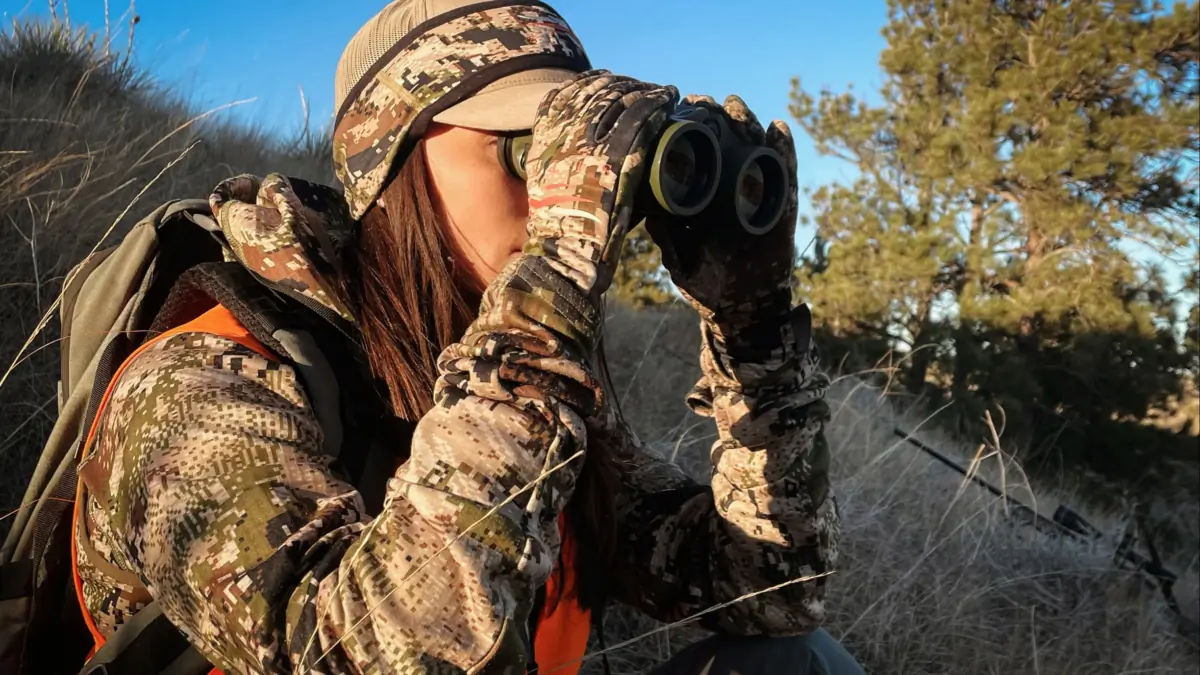
Credit: gearjunkie.com
A wider field of view makes it easier to locate wildlife before you bring the binoculars up.
Why 8x Is Often the Smarter First Choice
An 8×42 feels calm in the hand. The image is bright, the field of view is forgiving, and you can hold it steady for long periods without arm fatigue. That makes it easier to follow warblers flitting through trees, scan a mixed flock, or track a fox moving through brush.
The Cornell Lab of Ornithology consistently emphasizes that finding birds quickly is more important than getting the highest possible magnification. An 8x binocular helps you do exactly that.
Why 10x Works Better in Open Country
When animals are far away and there is less cover to search, 10x earns its place. It pulls more detail from distant shorebirds, perched raptors, elk on a hillside, or antelope on the plains. The narrower field of view matters less because you can often spot the animal with your eyes first, then lift the binoculars.
The trade-off is real: a 10×42 magnifies hand tremor more than an 8×42, and its exit pupil is smaller. Most people can still hold a 10×42 steady in short sessions, but it becomes tiring after several hours.
If you are choosing your first serious wildlife binocular, start by comparing a few well-rounded wildlife models in both magnifications before you buy.
When Lower Magnification (6x–7x) Is the Smarter Choice
Lower magnification is often overlooked, but it excels in specific wildlife scenarios:
- Dense woodland and rainforest: A 6x or 7x binocular gives an extremely wide view and excellent depth of field, so you can find animals among leaves and branches.
- Close-range feeders and garden watching: If birds, squirrels, or butterflies are 10 to 30 feet away, 8x or 10x can feel like too much zoom.
- Fast, erratic motion: Swallows, dragonflies, and warblers are easier to follow with a wide, stable view.
- Unsteady hands or long sessions: Lower magnification hides small hand movements and reduces eye strain.
- Kayaking or canoeing: The extra stability matters when you are moving on water.
Many compact and mid-size models in the 6x to 7x range are also light and easy to carry. If most of your watching happens close up or under canopy, our nature observation picks include several lower-power options worth considering.
When Higher Magnification (12x–15x) Actually Helps
High magnification has a purpose, but it is rarely the best first binocular for wildlife.
A 12x, 15x, or even 20x binocular can help when:
- You are watching open plains, deserts, or large lakes where animals are consistently 200 yards or more away.
- You need to identify distant raptors in flight, nesting birds on cliffs, or seals hauled out on rocks.
- You can brace the binocular or use a tripod, monopod, or image-stabilized model.
The drawbacks are significant. At 12x and above, hand shake becomes obvious enough to reduce detail. The field of view shrinks, making it harder to find a moving animal. Exit pupil drops, so the image looks dimmer at dawn and dusk. Depth of field also narrows, which means more frequent focusing.
In practice, a 12x or 15x binocular works best as a second, specialized tool for open-country specialists. If you want more reach without a tripod, look for an image-stabilized binocular designed specifically for that job.
Credit: greatdaysoutdoors.com
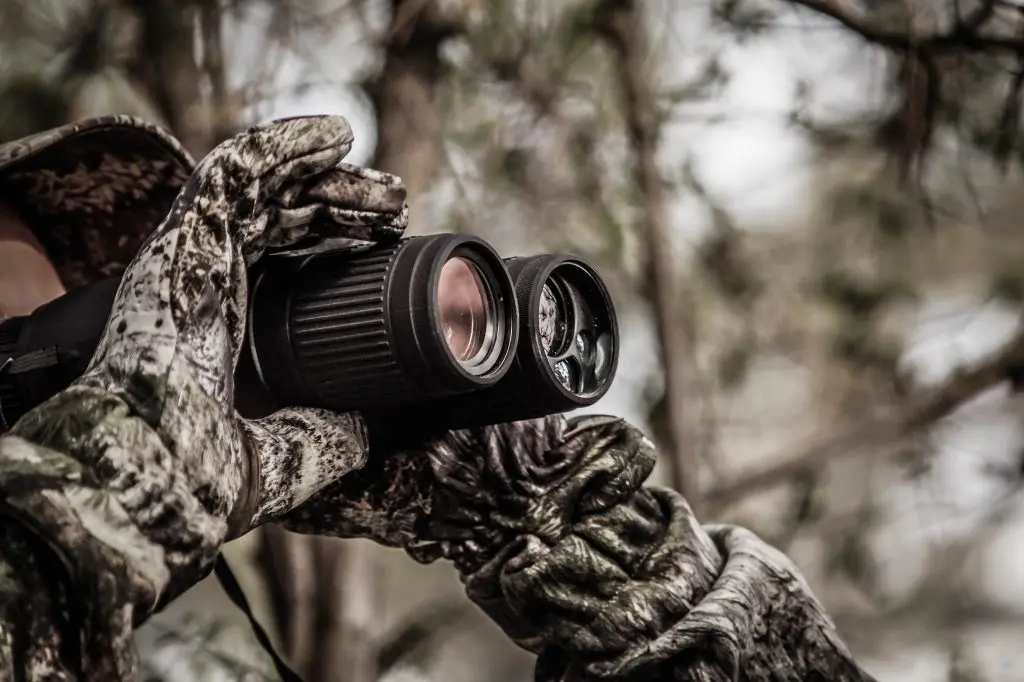
Roof-prism binoculars in 8x or 10x are the most common and comfortable choice for all-day wildlife viewing.
Five Factors That Should Change Your Magnification Choice
1. Terrain and Environment
In open terrain — grasslands, wetlands, coastlines, alpine zones — a 10x or higher magnification can use its extra reach effectively. In forested or brushy habitat, an 8x or lower magnification helps you see more of the scene and find animals before they disappear.
2. Species and Behavior
Birders watching small, fast songbirds usually prefer 8x. Those scanning for distant ducks, hawks, elk, or bighorn sheep often reach for 10x. Think about how quickly the animal moves and how much distance you typically have to cover.
Audubon’s field guidance repeatedly notes that wide fields of view help birders track movement more effectively than raw zoom.
3. Distance and Field of View
Higher magnification narrows the area you see. If you routinely scan from a fixed point and animals are far away, that trade-off is acceptable. If you hike and need to find animals quickly, a wider field is usually more useful than extra magnification.
4. Light and Exit Pupil
Dawn and dusk are prime wildlife hours, but they punish small exit pupils. An 8×42 is more comfortable than a 10×42 in dim light. A 7×50 is even better for low light, though the large 50mm objective makes the binocular heavier.
A model with a larger exit pupil will serve you better during the first and last hour of daylight. Adding quality anti-glare lens treatments also helps you see through glare and haze without forcing you into higher magnification.
5. Hand Steadiness and Viewing Comfort
The best magnification is one you can hold steady for the entire time you are outside. In practice, many people can hold 8x steady for hours, 10x for shorter stretches, and 12x only when braced. If your hands tire quickly, prioritize 8x or an image-stabilized model.
How to Test a Magnification Before You Buy
A specification sheet cannot tell you how a binocular feels in your hands. When possible, test before you commit:
- Hold it steady for 60 seconds while looking at a distant sign or treeline.
- Track a moving object — a bird, a cyclist, a passing car — and see if you lose it easily.
- Check the focus wheel speed — wildlife often moves closer and farther fast.
- Look at a dark, shaded area to judge brightness and contrast.
- Check edge sharpness by panning slowly across a detailed scene.
- Adjust the eyecups to see if the full field is comfortable without black rings.
- Carry it for a few minutes to feel the weight and balance against your neck or in a harness.

Credit: www.popsci.com
Check the focus wheel and eyecup comfort before you commit to a magnification.
If weight and bulk matter on long hikes, compare a few compact hiking designs with the same magnification to find the right ergonomics.
Features That Support Your Magnification Choice
Magnification performs best when the rest of the binocular supports it.
- Fully multi-coated lenses and ED glass improve contrast, color accuracy, and low-light performance. This matters more than a small jump in magnification.
- Waterproof and fog-proof construction keeps internal lenses clear in rain, cold mornings, and humid forests. Many waterproof hiking models handle these conditions without extra weight.
- Close focus distance is critical for watching insects, reptiles, and nearby birds. A 6x or 8x binocular with a close focus of 6 feet or less can double as a nature-watching tool.
- Tripod adaptability turns a high-magnification model from frustrating to usable. Look for a tripod socket if you choose 12x or more.
- Weight and balance affect how long you can hold a given magnification steady. A well-balanced 10x binocular often feels steadier than a poorly balanced 8x one.
Common Magnification Mistakes to Avoid
- Thinking more magnification is always better. It is not. Above 10x, hand shake, narrow field, and reduced brightness usually cancel the zoom advantage for hand-held wildlife watching.
- Buying 12x or 15x as a first wildlife binocular. Most people end up frustrated and leave it at home.
- Ignoring exit pupil for dawn and dusk. A 10×42 may feel noticeably dimmer than an 8×42 during the exact hours wildlife is most active.
- Using high magnification in dense cover. You will spend longer finding animals than actually watching them.
- Choosing magnification without considering field of view. Field of view often matters more for moving wildlife than raw detail.
Quick Reference: Magnification by Wildlife Scenario
| Scenario | Recommended Magnification | Why |
|---|---|---|
| Dense forest, close birds, butterflies | 6x–8x | Wide view, easy tracking, bright image |
| General birding and mammal watching | 8x or 10x | Balanced reach, stability, and field of view |
| Open fields, wetlands, shorelines | 10x | More detail at longer distances |
| Distant raptors, cliffs, open plains | 12x–15x with support | Maximum reach, but needs tripod or stabilization |
| Dawn, dusk, or deep shade | 7×42, 8×42, 7×50 | Larger exit pupil for brighter viewing |
| Kayaking, canoeing, unsteady hands | 6x–8x | Lower power hides movement and vibration |
Frequently Asked Questions About Wildlife Binocular Magnification
Is 8x or 10x better for bird watching?
For most bird watchers, 8x is the better all-around choice because it is easier to hold steady and gives a wider field of view for finding fast-moving birds. A 10x is better for open areas, distant waterbirds, and shorebirds.
Can I use 12x binoculars for wildlife without a tripod?
You can, but most people cannot hold 12x steady enough to see true detail for long. A monopod, tripod, or image-stabilized model is strongly recommended above 10x.
Does higher magnification make the image darker?
Higher magnification often reduces exit pupil when the objective lens stays the same size, which can make the image dimmer in low light. A 10×42 has a smaller exit pupil than an 8×42.
What magnification is best for safari?
8x or 10x is ideal for safari. Animals are often close enough for 8x, but a 10x helps for distant elephants, lions, or birds without being too shaky in a vehicle.
Are zoom binoculars good for wildlife?
Zoom binoculars offer flexibility, but they usually sacrifice optical quality, field of view, and brightness compared with fixed-magnification models. For most wildlife watching, a fixed 8x or 10x is sharper and more pleasant to use.
Conclusion: Match the Magnification to How You Watch, Not Just How Far
For nearly every wildlife watcher, the best answer is an 8x or 10x binocular. Choose 8x if you value steady, bright, wide views and often watch animals in mixed or forested habitat. Choose 10x if you spend most of your time in open country or need a little more reach for distant waterbirds and mammals.
Reserve 6x–7x for close-range and high-motion situations, and 12x–15x for specialized open-terrain viewing with a tripod or stabilization. The right choice is the one that lets you find animals quickly, hold the image steady, and keep watching comfortably hour after hour.
If you are ready to compare specific models, start with trusted wildlife optics brands and then narrow your list using the factors in this guide.