Choosing the right optical tool can transform your birding experience, especially when you're trying to spot distant avian wonders. Deciding between a monocular and a spotting scope for long-distance birding isn't just about magnification; it's about understanding how each device fits your specific needs and how you’ll use it in the field. We've looked at what makes each a valuable companion for birdwatchers as of 2026.
Often, the question boils down to portability versus dedicated observation power. A monocular offers incredible convenience and a slim profile, making it ideal for quick glances and active tracking. However, for prolonged, detailed observation of shy or distant species, a spotting scope provides superior image quality and magnification.
Manufacturer specifications indicate that spotting scopes typically range from 20x to 60x magnification, while monoculars often top out at around 10x to 15x. This difference is crucial for serious bird identification.
Quick Answer
For long-distance birding, a monocular offers unmatched portability for quick observations, while a spotting scope provides higher magnification and detail for extended viewing. Consider a monocular if you prioritize a compact, lightweight tool for active birding. Opt for a spotting scope if detailed identification of distant or shy birds is your main goal, especially when paired with a tripod for stability.
Why This Choice Matters for Your Birding Adventures
Your choice of optics directly impacts how you connect with the natural world around you. For birding, especially when targeting species that keep their distance or are masters of camouflage, the right tool isn't a luxury; it’s essential for accurate identification and a rewarding experience. Think about it: a bird you can barely make out at 50 yards is a completely different subject when you can clearly see its plumage details, beak shape, and subtle behaviors.
This level of detail is what separates casual observation from serious identification.
The practical implications are significant. If you're hiking miles into a nature reserve, every ounce counts, and a bulky spotting scope might become a burden. Conversely, if you're settled in a blind or at a prime vantage point, the superior magnification and stability of a spotting scope can reveal birds you'd otherwise miss entirely.
The decision also touches on your budget, your physical stamina, and the environments you most frequently explore. Understanding these trade-offs is key to making an informed choice that enhances your birding passion.
Monoculars: The Compact Powerhouses
Monoculars are like a single eyepiece from a pair of binoculars, and their primary appeal lies in their sheer convenience. They're incredibly compact, lightweight, and easy to deploy, making them perfect for spontaneous nature encounters or when you're already carrying a lot of gear. If you're someone who likes to keep a piece of optics in a jacket pocket or a small daypack, a monocular is hard to beat.
Their simple design often means fewer moving parts, which can translate to greater durability in rugged conditions. For birding where you're constantly on the move, this portability is a game-changer.
Monocular Features to Know
When you're looking at monoculars, a few key specifications really stand out. Magnification is the most obvious one; it tells you how much closer the subject appears. Most birding monoculars fall in the 8x to 15x range.
Higher magnification sounds better, but it also means a narrower field of view and a shakier image if you're hand-holding. Objective lens diameter is also critical; a larger lens (like 42mm or 50mm) gathers more light, which is essential for seeing details, especially in dimmer conditions like early mornings or late afternoons. We've seen many models specifying fully multi-coated lenses, which significantly improve light transmission and reduce glare for a clearer, brighter image.
When a Monocular Shines (Use Cases)
A monocular truly excels in situations where agility and speed are paramount. Imagine you’re on a brisk hike through a forest, constantly scanning the treeline. Pulling out a monocular for a quick peek at a fleeting movement is far more efficient than fumbling with larger binoculars.
They're also fantastic for casual nature walks, observing wildlife from a distance without disturbing it, or even for sporting events where you need a quick boost of vision. For birders who participate in bird walks or enjoy birding along trails where carrying heavy equipment is impractical, a monocular is often the ideal choice. It's your go-to for grabbing those quick, clear views.
The Downsides of Going Monocular
Despite their portability, monoculars do have limitations, especially when compared to their binocular or spotting scope counterparts. The most significant drawback is the narrower field of view at higher magnifications. This can make it challenging to track fast-moving birds or to locate them in the first place if you’re unsure of their exact position.
Hand-holding a monocular at its highest magnification, say 15x, often results in a shaky image that makes fine detail difficult to discern. Furthermore, while some monoculars offer decent light-gathering capabilities, they generally can't match the clarity and brightness of larger objective lenses found on spotting scopes, particularly in low-light scenarios. This limitation can hinder the identification of subtle plumage variations crucial for accurate bird ID.
Spotting Scopes: The Detail Detectors
Spotting scopes are built for one primary purpose: to bring distant subjects into sharp, detailed focus. They are essentially powerful, single-lens telescopes designed for terrestrial viewing, making them indispensable for serious birdwatchers who need to identify birds from afar without disturbing them. Unlike binoculars, which offer a slightly wider field of view and are hand-holdable at lower magnifications, spotting scopes typically require a tripod for stability, especially at their higher power settings, which can range from 20x all the way up to 60x or even more.
This dedicated design allows for a much more intimate and analytical look at your subject.
Spotting Scope Features That Count
The specifications of a spotting scope tell a story of its intended use. Magnification is key, often adjustable with a zoom eyepiece, allowing you to go from a broader view to extreme close-ups. Objective lens diameter is equally crucial; common sizes are 65mm, 80mm, or even 95mm.
A larger objective lens gathers significantly more light, which is vital for maintaining a bright, clear image at high magnations and in challenging light conditions. Manufacturer specifications often highlight features like fully multi-coated lenses to maximize light transmission and reduce internal reflections, which is crucial for discerning subtle color differences in bird plumage. Look for models that are O-ring sealed and nitrogen-purged, confirming their waterproofing and fog-proofing for reliable performance in varied weather.
When a Spotting Scope is Essential (Use Cases)
A spotting scope truly shines when you need to scrutinize details that are simply out of reach for binoculars or monoculars. Think about watching shorebirds on a distant mudflat, identifying raptors soaring high overhead, or observing waterfowl on a large body of water. In these scenarios, the high magnification and superior optical quality of a spotting scope allow you to see critical identification features like wing bars, eye rings, and subtle color variations in the feathers.
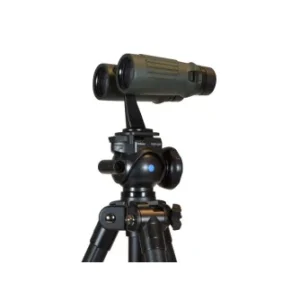
They are also invaluable for digiscoping, where you can attach a camera to the scope to capture high-resolution images or videos of your finds. For birders who spend extended periods at a single location, like a field blind or a favorite lookout point, a spotting scope mounted on a sturdy tripod provides an unparalleled viewing experience.
The Trade-offs of a Spotting Scope
While spotting scopes offer incredible detail, they come with their own set of considerations. Their main drawback is their size and weight. Even compact spotting scopes are considerably bulkier than monoculars, and when you add a tripod for stability, the total setup can be heavy and cumbersome to carry over long distances.
This makes them less ideal for active birding on trails or in dense woods where constant movement is required. Furthermore, the high magnification means a narrower field of view, which can make it harder to locate moving birds or to track them once you find them. Hand-holding a spotting scope, especially at higher magnifications, is generally not feasible due to the resulting image shake, making a stable tripod an absolute necessity for effective use.
Monocular vs. Spotting Scope: A Head-to-Head Showdown
When you're trying to decide which optic is right for your birding needs, pitting a monocular against a spotting scope directly is the best way to see where each one shines. It's not about one being universally "better," but rather about which tool fits your specific style of birding and what you hope to achieve in the field. We’ve broken down the key differences to help you make a confident choice.
Key Differences at a Glance
The most fundamental distinction lies in their design and primary function. A monocular is essentially a single telescope eyepiece, built for maximum portability and quick observation. It’s lightweight, pocketable, and easy to deploy instantly.
A spotting scope, on the other hand, is a more robust instrument, typically larger and heavier, designed for prolonged, detailed viewing of distant subjects. This difference in design philosophy leads to distinct advantages and disadvantages for birding.
| Feature | Monocular | Spotting Scope |
|---|---|---|
| Portability | Extremely high; pocketable | Moderate to low; often requires tripod |
| Magnification | Typically 8x – 15x | Typically 20x – 60x (often zoom) |
| Field of View | Generally wider at comparable power | Generally narrower, especially at high power |
| Stability | Hand-holdable (best at lower power) | Requires tripod for stable viewing |
| Use Case Focus | Quick ID, active tracking, convenience | Detailed observation, distant subjects, digiscoping |
| Weight | Very light (under 1 lb) | Moderate to heavy (1-4 lbs without tripod) |
| Cost | Generally lower | Generally higher |
Magnification & Field of View: What You'll Actually See
Magnification is the number that tells you how much closer an object appears. For monoculars, you'll commonly find magnifications like 8x, 10x, or perhaps 12x. This is enough to identify common birds at a reasonable distance, but for smaller, more distant, or shy species, it might not be enough.
Spotting scopes, however, can offer much higher magnifications, often ranging from 20x up to 60x, and many have zoom eyepieces that let you adjust this power on the fly. This higher magnification is crucial for discerning fine details like the subtle markings on a warbler’s wing or the exact color of a duck’s head.
The trade-off for higher magnification is almost always a narrower field of view (FOV). Think of FOV as the width of the area you can see through the optic. A wider FOV makes it easier to find and track moving birds.
A monocular at 10x might have a FOV of around 6-7 degrees, giving you a decent sweep. A spotting scope at 20x might have an FOV of only 3 degrees, and at 60x, it shrinks to around 1 degree. This means with a spotting scope, you need to be more precise in aiming and may have to do more sweeping to locate your subject, but once you do, the detail you can see is unparalleled.
Portability vs. Stability: How You'll Carry and Use Them
This is arguably the biggest deciding factor for many birders. A monocular is designed for life on the move. It slips easily into a pocket, a small hip pack, or a dedicated pouch on your belt.
You can whip it out in seconds to get a quick look at a bird that flits past. This makes it perfect for long hikes, fast-paced bird walks, or situations where you might be scanning a wide area from a moving vehicle. Its lightweight nature means it won't be a burden, even after hours of exploration.
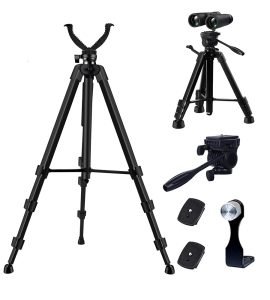
Spotting scopes, by their nature, are less about spontaneous deployment and more about dedicated observation. While some compact spotting scopes are available, their true potential is unlocked when used with a tripod. The tripod provides a stable platform that eliminates the image shake inherent in hand-holding high magnifications.
This combination, while excellent for detailed viewing, means you’re carrying more gear. Setting up a tripod takes time, and navigating rough terrain with it can be challenging. If your birding involves a lot of hiking or moving between different viewing spots, the setup and weight of a spotting scope might be a significant consideration.
Price Points: What to Expect
Your budget will definitely play a role in this decision. Generally speaking, monoculars are more affordable than spotting scopes. You can find decent quality birding monoculars for under $100, with high-end models reaching a few hundred dollars.
They offer a lot of value for their cost, especially for casual birders or those who prioritize portability above all else.
Spotting scopes, especially those with good optical quality, higher magnifications, and durable construction, represent a larger investment. Entry-level spotting scopes might start in the $150-$250 range, but good quality, versatile models for serious birding will typically cost anywhere from $300 to $1000 or more, especially when you factor in the cost of a good tripod, which is essential. For birders who are deeply invested in detailed identification and spend significant time observing from stationary positions, the higher cost of a spotting scope is often justified by the enhanced viewing capabilities it provides for critical identification work.
Who Should Carry What? Matching Gear to Your Birding Style
The best optic for you hinges entirely on how and where you bird. There’s no single right answer, only the right answer for your specific needs and preferences. To help you figure this out, let's break down who benefits most from each type of instrument.
Consider your typical birding environment and your personal comfort with carrying gear.
Best Monocular Moments
A monocular is your ideal companion if you're the kind of birder who's always on the move. Think about those days when you're covering a lot of ground, perhaps on a long nature trail, hiking through varied terrain, or enjoying a brisk bird walk with friends. If you find yourself frequently spotting birds in trees at moderate distances and need to get a quick identification before they disappear, a monocular is perfect.
It's also a fantastic choice if you’re just starting out in birding and want an accessible, less expensive entry into optics, or if you also plan to use the optic for other non-birding activities like hiking or attending outdoor events where a compact tool is advantageous. For anyone who values lightness and speed over extreme detail from afar, the monocular is the clear winner.
Best Spotting Scope Scenarios
You'll find yourself reaching for a spotting scope when your birding style demands more. This is the tool for patient observers who enjoy setting up at a prime location and meticulously scanning a large area, such as a wetland, a coastline, or a distant hillside. If you’re particularly interested in identifying shorebirds, waterfowl, raptors, or any species that tends to stay far from view, the high magnification and clarity of a spotting scope are indispensable.
Birders who engage in digiscoping, attaching cameras to their optics to capture high-resolution images, will also find a spotting scope to be their primary choice. Essentially, if you’re willing to carry a bit more gear in exchange for superior detail and the ability to observe distant, shy subjects for extended periods, a spotting scope is your best bet.
Common Birding Optics Mistakes to Sidestep
Even with the right tool, it's easy to get it wrong. A common mistake is buying too much magnification on a monocular or spotting scope. While it’s tempting to think higher numbers are always better, excessive magnification without proper stabilization leads to shaky images and a narrow field of view, making identification harder.
Many beginners also overlook the importance of objective lens diameter, focusing only on magnification. A larger objective lens gathers more light, which is critical for bright, clear views, especially in low-light conditions, a fact confirmed by optical design principles that dictate light-gathering is proportional to the square of the objective lens diameter.
Another frequent error is neglecting the need for a tripod with spotting scopes. Trying to hand-hold a high-power spotting scope results in a frustratingly blurry and unstable image, completely negating its benefits. Even a modest tripod can make a world of difference.
Lastly, choosing optics based solely on price without considering optical quality, like lens coatings and prism types, can lead to a disappointing viewing experience. Poorly made lenses can produce chromatic aberration (color fringing) and dim, washed-out images, making identification a chore rather than a joy.
Pro Tips for Getting the Most From Your Optics
To truly unlock the potential of your monocular or spotting scope, a few expert insights can make a big difference. First, always practice with your chosen optic. Get familiar with how to find and track subjects, especially if you're using a spotting scope with a narrower field of view.
Spend time scanning different environments to understand how light conditions affect your view. When using a spotting scope, invest in a sturdy tripod; a lightweight, flimsy one will only hinder your viewing. Look for one with a smooth panning head for fluid adjustments.
For both monoculars and spotting scopes, proper care is essential. Keep your lenses clean using a microfiber cloth specifically designed for optics and a lens cleaning solution. Avoid touching the lenses with your fingers, as oils can degrade image quality.
When observing in challenging light, remember that larger objective lenses on spotting scopes will generally perform better. Lastly, don't be afraid to experiment with different magnifications on zoom models to find the sweet spot for clarity and field of view in various situations. For an in-depth look at choosing binoculars, which share many optical principles, see our guide on best binoculars for beginner birdwatchers.
Making Your Choice: Final Thoughts
Ultimately, the decision between a monocular and a spotting scope for long-distance birding boils down to your personal birding style and priorities. If you value ultimate portability, quick deployment, and are often on the move, a monocular is likely your best bet. It's an accessible and incredibly convenient tool for many birding scenarios.
However, if your passion lies in dissecting the fine details of distant birds, spending extended periods in observation, or venturing into serious digiscoping, a spotting scope, paired with a tripod, offers an unmatched level of visual information. Consider your typical birding environment, how much gear you're willing to carry, and the level of detail you need for accurate identification. Both tools can significantly enhance your birding experience, but choosing the one that aligns with your needs will ensure you're always ready to spot that elusive species.
For those looking for binoculars that offer a middle ground in portability and magnification, exploring options like best binoculars for nature walks can also provide valuable insight into optical choices.
Common Birding Optics Mistakes to Sidestep
Even with the right tool, it's easy to get it wrong. A common mistake is buying too much magnification on a monocular or spotting scope. While it’s tempting to think higher numbers are always better, excessive magnification without proper stabilization leads to shaky images and a narrow field of view, making identification harder.
Many beginners also overlook the importance of objective lens diameter, focusing only on magnification. A larger objective lens gathers more light, which is critical for bright, clear views, especially in low-light conditions, a fact confirmed by optical design principles that dictate light-gathering is proportional to the square of the objective lens diameter.
Another frequent error is neglecting the need for a tripod with spotting scopes. Trying to hand-hold a high-power spotting scope results in a frustratingly blurry and unstable image, completely negating its benefits. Even a modest tripod can make a world of difference.
Lastly, choosing optics based solely on price without considering optical quality, like lens coatings and prism types, can lead to a disappointing viewing experience. Poorly made lenses can produce chromatic aberration (color fringing) and dim, washed-out images, making identification a chore rather than a joy.
Pro Tips for Getting the Most From Your Optics
To truly unlock the potential of your monocular or spotting scope, a few expert insights can make a big difference. First, always practice with your chosen optic. Get familiar with how to find and track subjects, especially if you're using a spotting scope with a narrower field of view.
Spend time scanning different environments to understand how light conditions affect your view. When using a spotting scope, invest in a sturdy tripod; a lightweight, flimsy one will only hinder your viewing. Look for one with a smooth panning head for fluid adjustments.
For both monoculars and spotting scopes, proper care is essential. Keep your lenses clean using a microfiber cloth specifically designed for optics and a lens cleaning solution. Avoid touching the lenses with your fingers, as oils can degrade image quality.
When observing in challenging light, remember that larger objective lenses on spotting scopes will generally perform better. Lastly, don't be afraid to experiment with different magnifications on zoom models to find the sweet spot for clarity and field of view in various situations. For an in-depth look at choosing binoculars, which share many optical principles, see our guide on best binoculars for beginner birdwatchers.
Making Your Choice: Final Thoughts
Ultimately, the decision between a monocular and a spotting scope for long-distance birding boils down to your personal birding style and priorities. If you value ultimate portability, quick deployment, and are often on the move, a monocular is likely your best bet. It's an accessible and incredibly convenient tool for many birding scenarios.
However, if your passion lies in dissecting the fine details of distant birds, spending extended periods in observation, or venturing into serious digiscoping, a spotting scope, paired with a tripod, offers an unparalleled level of visual information. Consider your typical birding environment, how much gear you're willing to carry, and the level of detail you need for accurate identification. Both tools can significantly enhance your birding experience, but choosing the one that aligns with your needs will ensure you're always ready to spot that elusive species.
For those looking for binoculars that offer a middle ground in portability and magnification, exploring options like best binoculars for nature walks can also provide valuable insight into optical choices.
Frequently Asked Questions
How long does it take to get proficient with a monocular for birding?
Most users find they can comfortably use a monocular for quick identifications within a few hours of practice. Mastering tracking fast-moving birds or finding them in dense foliage might take a few days of consistent use.
Is a tripod truly necessary for all spotting scopes?
Yes, a tripod is almost always necessary for effective use of a spotting scope, especially for birding. Even compact spotting scopes offer magnifications that make hand-holding too unstable for detailed observation and identification.
Can I use a monocular for birding in low light conditions?
While some monoculars have larger objective lenses for better light gathering, they generally cannot match the performance of a spotting scope with an 80mm or larger objective lens in low light. Early mornings and late evenings are often better suited for spotting scopes.
What is the typical lifespan of quality birding optics?
With proper care, good quality monoculars and spotting scopes can last for many years, often decades. Manufacturer specifications for lens coatings and build quality, such as waterproof sealing, are good indicators of durability. Reputable brands offer warranties that can range from 5 years to a lifetime.