Are you tired of struggling to see objects up close with your binoculars? You might be wondering if close-focus binoculars come with ED glass options to improve your viewing experience.
Understanding whether ED glass is available can make a huge difference in the clarity and color of what you see. You’ll discover how ED glass affects your binoculars and why it matters for your close-up observations. Keep reading to find out if upgrading to ED glass is the right choice for you.
Close-focus Binoculars Basics
Close-focus binoculars let you see objects clearly at short distances. They work well for viewing plants, insects, or small animals nearby.
These binoculars have special lenses to focus on subjects just a few feet away. This makes them different from regular binoculars.
What Close-focus Means
Close-focus means the binoculars can focus on objects very close to you. Usually, this distance is under 6 feet or about 2 meters.
This feature helps you see details on small things near you. It is good for nature study and other close-up activities.
Typical Uses And Benefits
People use close-focus binoculars for many outdoor activities. They help with bird watching, hiking, and observing insects or flowers.
These binoculars give clear images at close range. They also work well for general use, giving good views of both near and far objects.
- Great for nature observation up close
- Useful for watching small wildlife
- Good for detailed viewing of plants and flowers
- Can also view distant objects clearly
- Easy to use in many outdoor settings
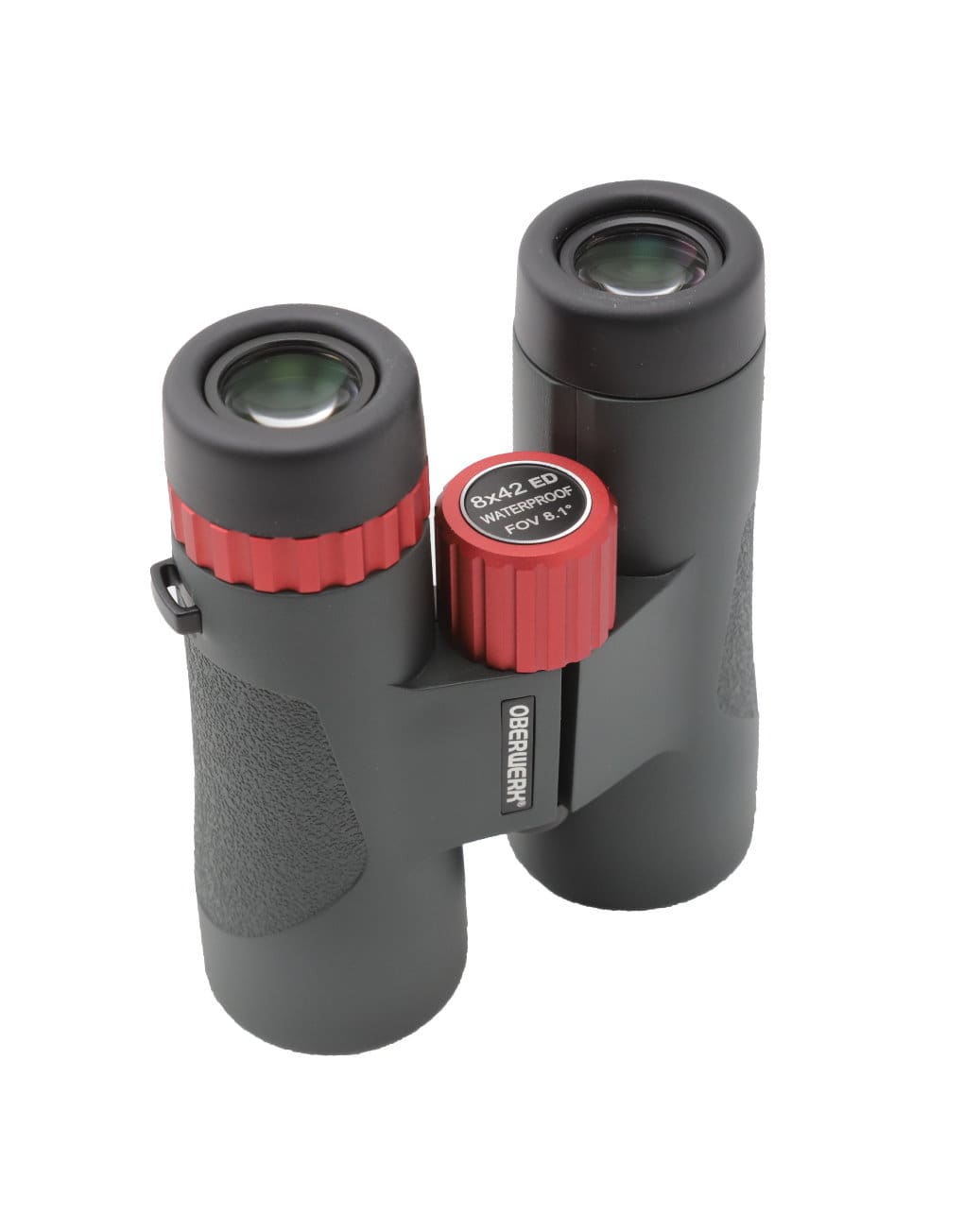
Credit: oberwerk.com
Ed Glass Features
ED glass is a special type of optical glass. It helps reduce color distortion in lenses. Many binoculars use ED glass to improve image clarity.
Close-focus binoculars sometimes include ED glass. This glass makes viewing objects at short distances clearer and sharper.
What Is Ed Glass?
ED stands for Extra-low Dispersion. This glass reduces the bending of light inside the lens. It limits color fringing around objects seen through the binoculars.
- ED glass minimizes chromatic aberration
- It improves sharpness and detail
- It allows better color accuracy
- Used in high-quality optics
Advantages Of Ed Glass In Optics
| Advantage | Benefit |
| Reduced Color Fringing | Clearer images with less blur |
| Better Light Transmission | Brighter and sharper views |
| Improved Contrast | Easier to see fine details |
| Less Eye Strain | Comfortable viewing for longer times |
In close-focus binoculars, these advantages matter. They help you see nearby objects clearly without color distortions. ED glass options improve the quality of close-up viewing experiences.
Ed Glass In Close-focus Binoculars
Close-focus binoculars let you see objects that are very near. ED glass helps reduce color blur and makes images clearer. This glass type is useful in many binoculars.
Many people want to know if close-focus binoculars come with ED glass options. The answer depends on the brand and model. Some do, some do not.
Availability Of Ed Options
ED glass is not in all close-focus binoculars. It is mostly found in higher-end models. These binoculars give sharper images and better color accuracy. Some mid-range models also offer ED glass.
- ED glass reduces chromatic aberration.
- It improves image sharpness at close range.
- Not all close-focus models include ED glass.
- ED options are common in premium binoculars.
Popular Brands Offering Ed Glass
Several brands include ED glass in their close-focus binoculars. These brands are known for quality optics and durability. Here is a table with some popular options.
| Brand | Model Example | ED Glass Feature |
|---|---|---|
| Zeiss | Victory SF | Yes, premium ED glass |
| Nikon | Monarch 7 | ED glass included |
| Swarovski | EL Range | High-quality ED glass |
| Vortex | Viper HD | ED glass lenses |
| Leica | Trinovid HD | ED glass in optics |
Performance Differences
Close-focus binoculars can use different glass types. One option is ED glass, which affects how well the binoculars perform. Understanding these differences helps you choose the right pair.
ED glass stands for extra-low dispersion glass. It reduces color blur and improves image sharpness. This makes a big difference in close-focus binoculars.
Image Quality Improvements
ED glass cuts down chromatic aberration. This means less color fringing around objects. It sharpens edges and details. This is very useful for close objects seen through binoculars.
- Clearer images with less blur
- Sharper focus on close subjects
- Better contrast between objects
- Reduced eye strain during long use
Color Accuracy And Clarity
| Feature | Standard Glass | ED Glass |
|---|---|---|
| Color Fringing | Noticeable at edges | Minimal or none |
| Color Accuracy | Moderate | High |
| Image Clarity | Good | Excellent |
| Eye Comfort | Average | Better for long viewing |
Choosing The Right Model
Close-focus binoculars are useful for viewing nearby objects clearly. Choosing the right model depends on several key factors. Understanding these helps you find binoculars that fit your needs.
One common question is whether close-focus binoculars have ED glass options. ED glass improves image quality by reducing color distortion. This can be important depending on your viewing preferences.
Factors To Consider
Look for binoculars with a close focus distance that suits your activities. Also, check if ED glass is included for better clarity. Size and weight matter for comfort during use. Waterproof and fog-proof features add durability.
- Close focus distance
- ED glass availability
- Size and weight
- Durability features
Budget And Value
Binoculars with ED glass usually cost more. Decide your budget before choosing a model. Higher price often means better lens quality and build. But some affordable models still offer good performance.
| Price Range | Features | Best For |
| Under $100 | No ED glass, basic optics | Casual users, beginners |
| $100 – $300 | Some ED glass options, better clarity | Hobbyists, regular use |
| Over $300 | High-quality ED glass, durable build | Serious birdwatchers, professionals |

Credit: oberwerk.com
Maintenance And Care
Close-focus binoculars with ED glass need proper care. Good maintenance keeps the lenses clear and sharp.
Cleaning and storing your binoculars correctly helps them last longer and perform better.
Cleaning Ed Glass
ED glass lenses are delicate and require gentle cleaning. Avoid harsh chemicals that can damage the coatings.
- Use a soft brush or air blower to remove dust and dirt.
- Apply lens cleaning solution to a microfiber cloth, not directly on the glass.
- Wipe the lenses in a circular motion to prevent scratches.
- Do not use tissues or paper towels, as they can leave fibers or scratches.
- Clean the lenses only when necessary to avoid wear on the coatings.
Storage Tips
| Storage Method | Reason |
| Keep binoculars in a padded case | Protects from bumps and scratches |
| Store in a dry place | Prevents mold and fungus growth |
| Avoid direct sunlight | Prevents lens coating damage |
| Remove batteries if unused for long | Prevents battery leakage and damage |
| Use silica gel packs | Absorbs moisture inside the case |

Credit: www.amazon.ca
Frequently Asked Questions
Do Close-focus Binoculars Offer Ed Glass Options?
Yes, many close-focus binoculars come with ED (Extra-low Dispersion) glass. ED glass reduces chromatic aberration and enhances image clarity, especially for close-up viewing. This feature improves color accuracy and sharpness, making close-focus binoculars with ED glass ideal for birdwatching and nature observation.
How Does Ed Glass Improve Close-focus Binoculars?
ED glass minimizes color fringing around objects in close focus. It provides sharper, clearer images with better contrast. This enhances viewing details at short distances. The result is a more natural and vivid visual experience when using close-focus binoculars.
Are Ed Glass Binoculars More Expensive?
Yes, binoculars with ED glass generally cost more. The manufacturing process and quality materials increase the price. However, the improved image quality and reduced eye strain justify the higher cost for many users. Investing in ED glass binoculars benefits serious close-focus observers.
Can Ed Glass Benefit All Types Of Binoculars?
ED glass enhances image quality in all binocular types, including close-focus models. It improves color accuracy and reduces distortions across various distances. Whether for birdwatching, sports, or astronomy, ED glass provides a noticeable visual upgrade.
Conclusion
Close-focus binoculars do offer ED glass options for clearer views. ED glass helps reduce color blur and sharpens images. This makes seeing details easier, even up close. Choosing binoculars with ED glass improves your viewing experience. It suits nature watchers and hobbyists who want bright, clear pictures.
Remember, not all close-focus models include ED glass. Check product details before buying. Good optics matter for both near and far sights. Quality lenses make a big difference in enjoyment. Consider your needs and budget carefully before deciding. Clear, crisp images make every observation more fun.