Night vision monoculars are powerful tools for low-light observation, but their effective range is often limited by technology and environment. Understanding these constraints helps users choose the right device and use it more effectively in real-world conditions.
Key Takeaways
- Image intensifier tube quality: Higher-generation tubes offer better light amplification and longer range, but even top-tier models have physical limits.
- Available ambient light: Monoculars rely on existing light (moonlight, starlight); total darkness severely reduces visibility.
- Atmospheric conditions: Fog, rain, dust, and humidity scatter light, reducing clarity and effective range.
- Lens size and optics: Larger objective lenses gather more light, improving range, but add size and weight.
- Digital vs. analog technology: Digital night vision can enhance range with zoom and recording, but may introduce lag or noise.
- User expectations: Realistic use cases—like wildlife watching or security—help match the right monocular to your needs.
- IR illuminators extend range: Built-in or external infrared lights boost visibility in complete darkness, acting like a flashlight for night vision.
📑 Table of Contents
Why Does Night Vision Monocular Have Limited Range?
If you’ve ever peered through a night vision monocular on a dark night, you might have noticed that even the clearest image fades into a grainy blur after a certain distance. You’re not imagining things—there’s a real, technical reason why night vision monoculars have limited range. Whether you’re a hunter, security professional, or outdoor enthusiast, understanding these limits can help you make smarter gear choices and use your device more effectively.
Night vision isn’t magic. It’s science. These devices don’t create light—they amplify what’s already there. That means their performance depends heavily on the environment, the technology inside, and how you use them. While modern monoculars can reveal shapes and movements in near-total darkness, they rarely match the clarity and range of daylight vision. The good news? Knowing the factors behind this limitation lets you work around them and get the most out of your gear.
How Night Vision Technology Works
Visual guide about Why Does Night Vision Monocular Have Limited Range
Image source: steeleindustries.com
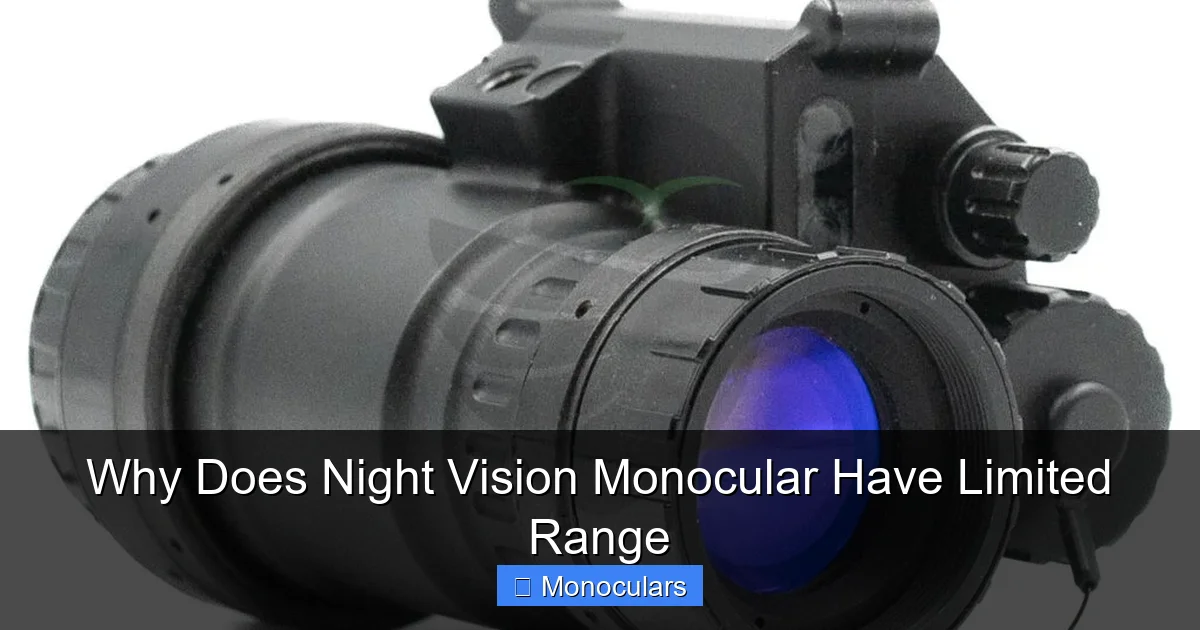
To understand range limits, it helps to know how night vision monoculars actually function. Most traditional models use image intensifier tubes—vacuum-sealed components that capture tiny amounts of light and amplify them thousands of times.
Image Intensifier Tube Basics
Inside the tube, photons (light particles) pass through a photocathode, which converts them into electrons. These electrons are then accelerated and multiplied through a microchannel plate (MCP), creating a brighter image. Finally, the electrons hit a phosphor screen, producing the familiar green-hued image you see through the eyepiece.
The generation of the tube—Gen 1, Gen 2, Gen 3, or Gen 4—plays a huge role in performance. Gen 1 is entry-level and works best under moonlight. Gen 3 offers superior clarity and range, often used by military personnel. Each step up improves light sensitivity, resolution, and effective range, but even Gen 3 has limits.
Digital Night Vision: A Different Approach
Digital night vision monoculars use sensors similar to those in digital cameras. They capture ambient light (or IR light) and convert it into a digital image displayed on an LCD screen. These models often include features like zoom, video recording, and image capture.
While digital units can offer longer theoretical ranges—especially with high-resolution sensors and zoom—they may suffer from lag, lower contrast, and increased noise in very dark conditions. They’re great for versatility, but they don’t always match the real-time clarity of high-end analog tubes.
The Role of Ambient Light
One of the biggest reasons night vision monoculars have limited range is their dependence on ambient light. Unlike thermal imagers, which detect heat, night vision needs some form of light to work.
Natural Light Sources
Moonlight, starlight, and even airglow (a faint emission of light from Earth’s atmosphere) provide the foundation for night vision. On a clear, moonlit night, a Gen 2 or Gen 3 monocular might clearly identify a person at 100–200 yards. But on a moonless, overcast night, that same device might struggle to see beyond 50 yards.
For example, imagine trying to spot a deer in a forest. On a bright, starry night, you might see it clearly at 150 yards. But if clouds block the moon and stars, the image becomes dim and grainy—even with high-end gear. This is why experienced users often check the lunar calendar before heading out.
Artificial Light and Urban Environments
In cities or near buildings, streetlights, porch lights, and car headlights can boost visibility. But this light isn’t always helpful. Glare from bright sources can wash out the image or create hotspots, reducing contrast and making it harder to see details at a distance.
That said, some monoculars include automatic gain control (AGC), which adjusts brightness to prevent overexposure. Still, too much artificial light can reduce the effective range by overwhelming the sensor or tube.
Environmental Factors That Reduce Range
Even with perfect gear and plenty of light, nature can interfere. Weather and atmospheric conditions play a major role in how far you can see.
Fog, Rain, and Humidity
Water droplets in the air scatter light, much like how fog makes headlights appear blurry during the day. This scattering reduces contrast and detail, shortening the usable range of a night vision monocular. Heavy rain can cut visibility to just a few dozen yards, regardless of the device’s specs.
Humidity has a similar effect. Moist air absorbs and diffuses light, especially infrared wavelengths. In tropical or coastal areas, high humidity can significantly reduce performance, even on clear nights.
Dust, Smoke, and Pollution
Particles in the air—whether from wildfires, industrial areas, or dusty trails—act like tiny obstacles for light. They absorb and deflect photons, reducing the amount that reaches the monocular’s lens. This is why night vision works best in clean, dry air.
For instance, a security guard using a monocular in a smoky warehouse might only see 20–30 feet clearly, even if the device is rated for 100+ yards in ideal conditions.
Optical and Mechanical Limitations
The design of the monocular itself also affects range. Lens size, magnification, and build quality all play a role.
Objective Lens Diameter
The objective lens is the front lens that gathers light. A larger lens (e.g., 50mm vs. 25mm) collects more light, improving brightness and range. However, bigger lenses mean a heavier, bulkier device. Many compact monoculars sacrifice lens size for portability, which limits their long-range performance.
For example, a 25mm lens might work well for close-range scouting, but a 50mm lens will give you a brighter, clearer image at 200 yards—assuming other conditions are favorable.
Magnification and Field of View
Higher magnification helps you zoom in on distant objects, but it also narrows the field of view and can amplify image shake. Most night vision monoculars offer 3x to 5x magnification. Going beyond that often results in a dimmer, less stable image.
Also, higher magnification doesn’t always mean better range. If the base image is already grainy, zooming in just makes the noise more obvious. It’s like enlarging a blurry photo—it doesn’t add detail.
Focus and Eye Relief
Proper focus is essential for clarity at distance. Many monoculars have adjustable focus rings, but in low light, it can be hard to fine-tune. Poor focus reduces effective range, even if the device is technically capable of seeing farther.
Eye relief—the distance between your eye and the eyepiece—also matters. If it’s too short, you might not see the full image, especially if you wear glasses. A comfortable eye relief (15mm or more) helps maintain a clear view at longer ranges.
The Impact of Infrared (IR) Illuminators
One way to extend the range of a night vision monocular is by using an infrared illuminator—essentially an IR flashlight that emits light invisible to the naked eye.
How IR Illuminators Work
IR illuminators emit light in the 700–1000nm wavelength range, which night vision devices can detect. They’re especially useful in total darkness, where ambient light is absent.
For example, a monocular with a built-in IR illuminator might let you see a person clearly at 100 yards in complete darkness—something impossible without it. Some high-end models even have adjustable IR power, so you can boost range without over-illuminating nearby objects.
Limitations of IR Illumination
However, IR light has its own range limits. Most built-in illuminators reach 50–150 yards, depending on power and beam angle. External IR illuminators can go farther but require additional batteries and setup.
Also, IR light can be detected by others with night vision gear—so it’s not stealthy. In military or tactical situations, this can give away your position.
Choosing the Right Monocular for Your Needs
Understanding these limitations helps you pick the right tool for the job. Not every night vision monocular needs to see a mile away.
Matching Range to Use Case
– **Hiking and wildlife observation:** A Gen 2 monocular with 3x magnification and a 40mm lens is often sufficient for spotting animals at 100–150 yards.
– **Home security:** A compact digital monocular with IR illuminator can monitor a backyard or driveway effectively at 50–100 yards.
– **Tactical or professional use:** Gen 3 tubes with larger lenses and external IR support offer the best range and clarity for long-distance surveillance.
Practical Tips to Maximize Range
– Use your monocular during brighter nights (full or half moon).
– Avoid pointing it directly at bright lights.
– Clean the lenses regularly to maintain clarity.
– Use a tripod or stable surface to reduce shake at high magnification.
– Pair your monocular with an external IR illuminator for extended range in total darkness.
Conclusion
So, why does night vision monocular have limited range? It’s a combination of technology, environment, and physics. These devices amplify existing light, but they can’t create it. Atmospheric conditions, lens size, tube generation, and available illumination all shape how far you can see.
While you can’t eliminate these limits entirely, understanding them helps you make better decisions—whether you’re buying gear or using it in the field. By choosing the right monocular for your needs and optimizing your environment, you can push its performance to the max.
Night vision isn’t about seeing everything in total darkness. It’s about seeing enough, far enough, to stay safe, informed, and one step ahead. And with the right knowledge, your monocular can do just that.
Frequently Asked Questions
Can night vision monoculars work in total darkness?
No, most traditional night vision monoculars need some ambient light to function. However, models with built-in infrared (IR) illuminators can see in complete darkness by emitting invisible light that the device detects.
Does a higher price mean longer range?
Not always. Price often reflects tube generation, build quality, and features—not just range. A mid-priced Gen 2 monocular with a large lens may outperform a cheaper Gen 3 model with poor optics in real-world conditions.
How far can a typical night vision monocular see?
Most consumer models have an effective range of 50 to 200 yards, depending on light, weather, and technology. High-end military-grade units may reach 300+ yards under ideal conditions.
Why is the image green?
The green glow comes from the phosphor screen inside analog night vision tubes. Green was chosen because the human eye is most sensitive to it in low light, making details easier to see.
Can I use night vision during the day?
Most analog night vision monoculars should not be used in daylight, as bright light can damage the image intensifier tube. Digital models are generally safer for daytime use, but check the manufacturer’s guidelines.
Do night vision monoculars work through glass?
Yes, but performance may be reduced. Glass can reflect IR light and cause glare, especially if it’s tinted or coated. For best results, view through clean, untreated glass and avoid direct angles.