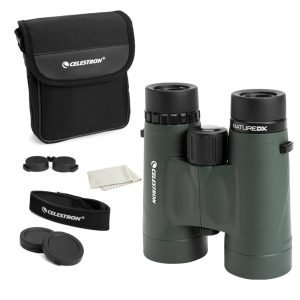
Spotting your ball from 200 yards out shouldn't feel like guesswork. The right golf binoculars give you a crisp view of the pin, the terrain, and your landing zone — without dragging down your walk between holes. But brand names alone don't tell you much. Some excel at optical clarity, others at durability, speed of focus, or value for money.
In this guide, I'll break down which brands consistently earn their reputation on the course, what separates a genuinely useful golf binocular from a generic compact pair, and how to match a model to your game. You'll also find honest trade-offs and practical buying advice based on how these optics actually perform in the field. For more on this, see our guide on what brands make the best wildlife binoculars.
Quick Answer: The Best Golf Binocular Brands
If you want a straightforward starting point, these five brands appear most often in golfers' bags — and for good reason.
| Brand | Standout Strength | Typical Price Range | Best For |
|---|---|---|---|
| Bushnell | Rangefinder integration, durability | $80–$300 | Players who want distance data and optics in one |
| Nikon | Optical clarity, smooth focus | $100–$350 | Golfers who prioritize a sharp, bright image |
| Vortex | Rugged build, excellent warranty | $150–$400 | Walkers who play in all weather |
| Leupold | Low-light brightness, compact size | $250–$500 | Early-morning and twilight rounds |
| Leica | Premium glass, edge-to-edge clarity | $600–$1,500+ | Serious players who want the best optics available |
No single brand wins for everyone. The right choice depends on your budget, how often you play, and whether you want a rangefinder built in. For more on this, see our guide on what brands make the best camping binoculars.
What Makes a Great Golf Binocular?
Before comparing brands, it helps to know what actually matters on the course. A common mistake is buying high magnification thinking it'll reveal more — then discovering the image shakes too much to be useful while walking.
Magnification: 6x to 8x Is the Sweet Spot
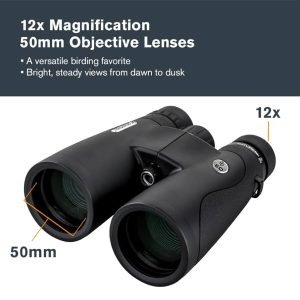
Golf binoculars typically range from 6x to 10x magnification. For most players, 6x to 8x offers the best balance between detail and stability. At 10x, hand shake becomes noticeable, especially after a brisk walk to your ball. If you want more reach, look for a tripod-ready model or one with image stabilization, but understand the trade-off in weight and price.
For a deeper dive into choosing the right power for your game, this guide on magnification for golf covers the practical differences between 6x, 8x, and 10x more thoroughly.
Field of View: Wider Is Usually Better
A wide field of view helps you locate a small white ball against a busy background — rough, trees, bunkers, and cart paths all compete for your attention. In practice, a field of view of 330 feet or more at 1,000 yards makes target acquisition noticeably easier. Narrower views force you to scan more, which costs time and adds frustration.
The relationship between field of view and magnification is one of the most misunderstood aspects of golf optics. This explanation of viewing angles for golf breaks down what the numbers mean in real-world terms.
Close Focus
Close focus matters more than many golfers realize. A binocular that focuses down to 10 feet or less lets you read greenside details, check lie conditions, or inspect a ball mark without walking over first. Models with a close focus of 15 feet or more feel limiting once you've used something better.
Waterproofing and Fog Resistance
Golf is an outdoor sport, and morning dew, light rain, and humidity are part of the deal. Look for binoculars that are fully waterproof — not just "water resistant" — and nitrogen-purged to prevent internal fogging. In practice, this means the optics stay clear when you move from an air-conditioned clubhouse into warm, humid air.
If you play in consistently wet conditions, waterproofing should be near the top of your list. The same principles apply to hiking optics, and this comparison of weather-sealed hiking binoculars explains what to look for in a truly waterproof build.
Weight and Ergonomics
You'll carry these for four hours or more. Every ounce counts. Target models under 20 ounces for comfortable neck carry, and look for rubber armor that gives a secure grip even with sweaty hands. A comfortable eyecup design matters too — especially if you wear glasses.
Eye Relief for Glasses Wearers
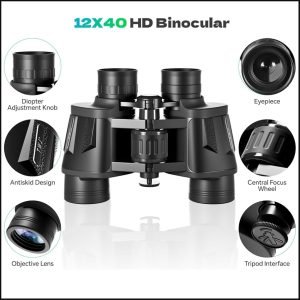
If you play in prescription glasses, look for at least 15mm of eye relief. Less than that means you'll see a reduced field of view and dark edges around the image. Twist-up eyecups with multiple stops let you fine-tune the position.

Credit: www.youtube.com
A compact pair of golf binoculars ready for use on the course — size and grip matter as much as magnification.
Bushnell: The Rangefinder Specialist
Bushnell has built its reputation on combining traditional optics with laser rangefinding. For golfers who want one device that shows the flag and tells them the exact yardage, Bushnell is the most established name.
What Bushnell Does Well
Bushnell's golf-focused models typically offer fast target acquisition, decent optical clarity, and rugged construction. Their binoculars feel substantial in the hand, with grippy rubber armor that survives being tossed into a cart basket. Many models include a built-in rangefinder, eliminating the need to carry two separate devices.
The trade-off is optical purity. A dedicated binocular from Nikon or Leica at the same price often delivers a brighter, sharper image. Bushnell's advantage is integration and convenience, not absolute glass quality.
Popular Models and Real-World Pricing
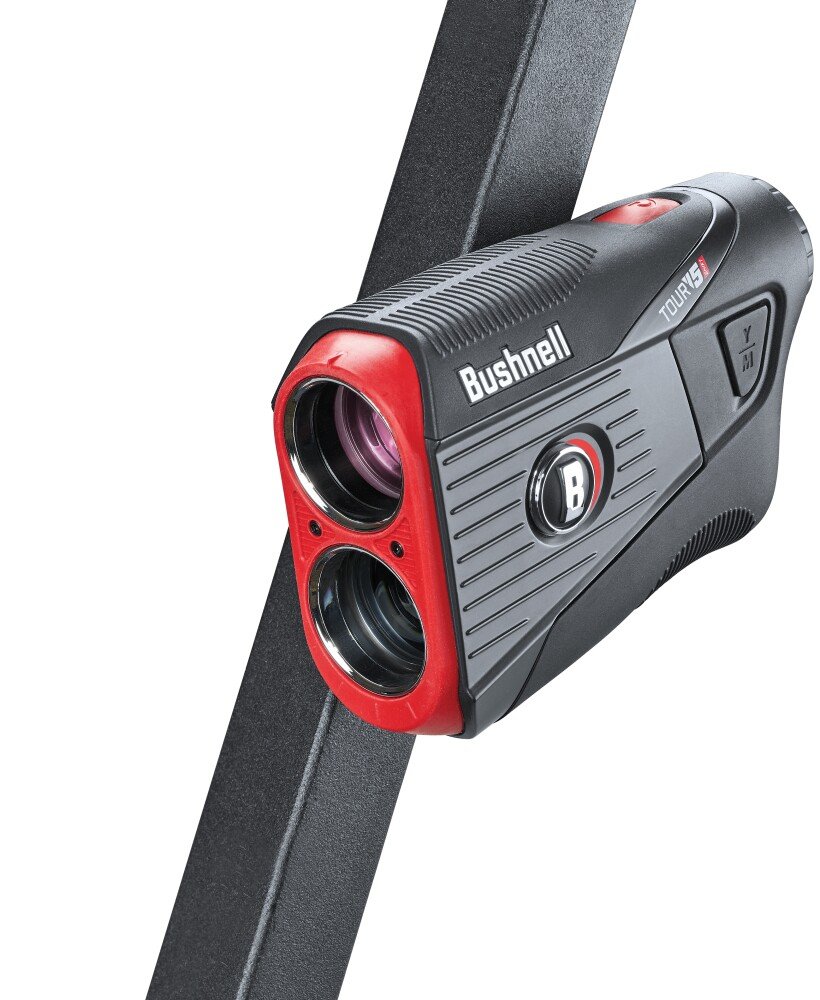
- Bushnell Tour V5 — 7x magnification with an integrated rangefinder. Popular with players who want slope-adjusted distances. Mid-tier pricing.
- Bushnell Prime 10×42 — A more traditional binocular with a wide field of view. Lightweight enough for walking rounds, but the 10x power amplifies hand shake.
- Bushnell Legend E-Series — A step up in optical quality, with better low-light performance and a more refined focus mechanism.
What Users Consistently Report
In practice, Bushnell owners praise the rugged feel and the convenience of having a rangefinder built in. The most common complaints focus on eye strain during long sessions and focus wheels that feel slightly stiff out of the box. For the price, however, Bushnell remains one of the best values in golf optics — especially if you'd otherwise buy a separate rangefinder.
Nikon: Optical Clarity and Smooth Focus
Nikon's reputation in photography carries over to their sport optics. Their golf binoculars consistently deliver bright, high-contrast images with natural color rendition — a real advantage when you're trying to separate a white ball from glare off a sand trap.
Nikon's official sport optics line highlights their lens coating technology, which reduces internal reflections and improves light transmission. In practical terms, that means a clearer view in the flat light of early morning or overcast afternoons.
What Nikon Does Well
Nikon binoculars are known for smooth, precise focus mechanisms. The adjustment is neither too loose nor too stiff, which matters when you're scanning from tee to green quickly. Their eyecups are comfortable for extended wear, and the lightweight designs don't fatigue your neck over 18 holes.
Where Nikon Fits Your Game
Nikon is the best choice for golfers who want a pure optical instrument — no rangefinder, no gimmicks, just a sharp, reliable view. Their mid-range models compete favorably with far more expensive European glass, making them a smart choice for the value-conscious player who refuses to compromise on image quality.
For golfers who want the fastest possible target acquisition, quick-response optics make a noticeable difference in how quickly you can lock onto the flag. Nikon's smooth focus pairs well with this priority.
Vortex: Rugged Value With a Legendary Warranty
Vortex has earned a loyal following among outdoors enthusiasts for one simple reason: they build tough optics and back them with an unconditional lifetime warranty. For golfers, that translates into peace of mind when a binocular gets dropped on a cart path or caught in a downpour.
What Vortex Does Well
Vortex binoculars feature aggressive rubber armor, secure grip textures, and fully waterproof, fog-proof construction. Their optical quality is very good — not quite Leica-level, but far better than the price suggests. The real differentiator is the warranty: Vortex repairs or replaces damaged binoculars with minimal questions asked, which matters if you play frequently in rough conditions.
The Value Proposition
A common observation from Vortex owners is that the brand delivers 80–90% of the performance of premium European glass at roughly half the cost. If you want a dependable, weatherproof pair that you won't feel precious about, Vortex is hard to beat. The trade-off is weight — some Vortex models run slightly heavier than comparable Nikon or Leupold options.
If you play in wet or humid climates regularly, the weatherproofing on these models is worth prioritizing. This comparison of waterproof hiking binoculars covers the same sealing and fog-proofing standards in detail.
Leupold: Built for Low Light and Quick Decisions
Leupold's golf optics prioritize two things: low-light performance and compact ergonomics. Their lens coatings are engineered to maximize brightness in dawn and dusk conditions, which is when many serious golfers play — especially in shoulder seasons.
Why Leupold Stands Out
Leupold binoculars are consistently among the brightest in their class. The difference is most noticeable in the first and last hour of daylight, when other optics render shadows as murky blobs while Leupold pulls out detail. Their compact designs fit easily in a vest pocket or cart console, and the focus mechanisms are fast and intuitive.
The trade-off is price. Leupold sits above Bushnell and Vortex in cost, though below Leica. For players who regularly play early-morning rounds or in heavily treed courses with deep shade, the premium is justified.
For a deeper look at options that maintain image quality in challenging light, this guide to high-clarity golf optics explains what separates good glass from great glass.
Leica and Zeiss: The Premium Tier
At the top of the market, Leica and Zeiss produce golf binoculars with exceptional optical engineering. These are the brands that optics enthusiasts name-drop — and for good reason.
Leica: Edge-to-Edge Sharpness
Leica binoculars are famous for their contrast and color fidelity. The image holds sharpness almost to the edge of the field of view, and the mechanical build feels precise in a way that's hard to describe until you've handled one. Their compact models, like the Ultravid and Trinovid lines, are favorites among players who want premium glass in a small package.
Zeiss: Brightness and Detail
Zeiss emphasizes light transmission and micro-contrast — the ability to distinguish subtle variations in texture and color. On the course, this translates into better depth perception and terrain reading. Zeiss binoculars tend to be slightly heavier than Leica equivalents, but the optical performance is widely regarded as reference-class.
Are They Worth It?
For casual players, probably not. The law of diminishing returns kicks in hard above $800. But for serious golfers, course designers, or optics enthusiasts who can appreciate the difference, Leica and Zeiss justify their price over years of use. If you're considering this tier, try before you buy — the ergonomic differences between brands matter more at this level.

Credit: www.amazon.com
Premium compact binoculars in hand — small enough for a vest pocket, bright enough for early-morning rounds.
Rangefinder Binoculars vs. Traditional Binoculars
One of the biggest decisions in golf optics is whether to combine your rangefinder and binoculars into a single device. Rangefinder binoculars offer obvious convenience: one piece of gear, one battery to charge, and instant distance feedback overlaid on your view.
The trade-offs are real, though:
- Weight — Rangefinder binoculars typically weigh more than traditional models of equivalent magnification.
- Battery dependence — The optical view works without power, but the rangefinding feature doesn't.
- Price — Integration adds cost. You may pay $100–$200 more for the rangefinding capability compared to a similar optical-only model.
- Optical compromise — Some integrated models prioritize the rangefinder electronics over pure glass quality.
For most golfers, a hybrid model makes sense if you don't already own a laser rangefinder. If you do, a dedicated optical pair often delivers better clarity for the same money. If you want to eliminate hand shake entirely, laser-stabilized golf binoculars solve a different problem — at a significantly higher price.
How to Choose: A Practical Buying Framework
Rather than defaulting to a brand name, work through these questions in order:
- What's your real budget? Set a number before browsing. The gap between $150 and $400 is where most golfers find the best value.
- Do you need a rangefinder? If yes, Bushnell's integrated models are the most practical. If no, Nikon or Vortex offer better pure optics for the money.
- When do you play? Low-light players should prioritize Leupold. All-weather walkers should prioritize Vortex's durability.
- Do you wear glasses? Confirm eye relief of at least 15mm and try the eyecups if possible.
- How far do you need to see? For wide-open courses, long-range models help. For tighter, tree-lined layouts, field of view matters more.
Once you've answered these, narrow to two or three models and — if possible — handle them in person. Ergonomics are deeply personal. A binocular that feels perfect to one golfer can feel awkward to another.
Common Mistakes to Avoid
After seeing many golfers choose optics, a few patterns stand out:
- Buying too much magnification. 10x sounds impressive but is harder to hold steady. For walking golfers, 8x is usually the practical ceiling.
- Ignoring close focus. You'll use these for more than distance viewing. If the close focus is poor, the binoculars stay in the bag.
- Overlooking weight. Four hours of neck carry will expose heavy models quickly. Under 20 ounces is a good target.
- Confusing "water resistant" with "waterproof." These are not the same. Look for fully sealed, nitrogen-purged models.
- Buying on brand reputation alone. Every brand makes budget and premium lines. Evaluate the specific model, not just the logo.
Frequently Asked Questions
Which brand makes the best golf binoculars overall?
For most golfers, Nikon offers the best balance of optical quality, comfort, and value. Bushnell is the best choice if you want an integrated rangefinder, while Leica and Zeiss lead in absolute optical performance.
What magnification is best for golf binoculars?
6x to 8x is the ideal range for most players. It provides enough detail to read the course while remaining stable enough to use while walking. Higher magnifications amplify hand shake.
Are rangefinder binoculars worth it?
If you don't already own a laser rangefinder, yes — an integrated model saves weight and simplifies your gear. If you already have a rangefinder, a dedicated optical pair usually offers better clarity for the same price.
Do I need waterproof golf binoculars?
Yes, unless you only play in perfectly dry conditions. Waterproofing protects against rain, humidity, and condensation when moving between different temperatures. Look for nitrogen-purged models.
What's the best budget golf binocular?
Vortex offers the best combination of ruggedness, optical quality, and warranty in the mid-price range. Bushnell's entry-level models are also solid if rangefinding is a priority.
Conclusion: The Best Brand Is the One That Fits Your Game
The best golf binocular brand isn't a universal answer — it's the one that matches how you play, when you play, and what you're willing to spend.
Choose Bushnell for integrated rangefinding. Choose Nikon for pure optical quality at a fair price. Choose Vortex for bulletproof durability and an unbeatable warranty. Choose Leupold for low-light brightness. Choose Leica or Zeiss if you want the finest glass available and don't mind paying for it.
The most important step is to define your priorities before you start comparing models. A clear sense of your budget, playing conditions, and feature needs will narrow the field quickly. From there, a shortlist of two or three models — tested in person if possible — will lead you to a pair you'll enjoy using for years, not just a few rounds.