Are you curious about getting closer to the stars without investing in expensive telescopes? If you love stargazing, you might have heard about ED binoculars and wondered if they can truly enhance your astronomy experience.
Imagine seeing clearer, brighter, and more detailed views of the night sky with just a pair of binoculars in your hands. But are ED binoculars really better for astronomy? You’ll discover what makes ED binoculars special and whether they are the right choice to unlock the wonders of the universe for you.
Keep reading to find out how you can elevate your starry nights like never before.

Credit: www.skyatnightmagazine.com
What Are Ed Binoculars
ED binoculars use special glass called extra-low dispersion glass. This glass reduces color fringing in images. It helps you see clearer and sharper views.
These binoculars are popular for activities needing clear details. Astronomy is one of those activities. They help you see stars and planets better.
Extra-low Dispersion Glass Features
Extra-low dispersion glass lowers light scatter inside the lenses. It stops colors from spreading apart. This means less blurring around bright objects.
ED glass also improves light transmission. This means more light reaches your eyes. It makes dim objects like stars brighter and easier to see.
- Reduces color fringing
- Improves light transmission
- Sharpens image details
- Enhances contrast
Benefits For Image Quality
Using ED binoculars, you get clearer and sharper images. Stars and planets look more defined. This helps when watching faint celestial objects.
Colors in the sky appear more natural. You see less purple or green halos around bright objects. This makes your view more comfortable and realistic.
- Sharper and clearer images
- Natural color display
- Less eye strain during long viewing
- Better contrast in low light
Key Factors For Astronomy Binoculars
Choosing the right binoculars is important for astronomy. The right pair helps you see stars and planets clearly.
Some key features make binoculars better for night sky viewing. These include magnification, aperture, field of view, weight, and portability.
Magnification And Aperture
Magnification shows how much closer objects appear. Aperture means the size of the lenses that gather light. Bigger apertures bring in more light for clearer views.
| Feature | Effect for Astronomy |
| Magnification (7x to 15x) | Brings objects closer but too high causes shaky images |
| Aperture (35mm to 70mm) | Bigger lenses collect more light for brighter images |
Field Of View
The field of view is the width of the sky you can see. A wide view helps you find objects faster and enjoy star clusters or the Milky Way.
- Wide field of view shows more stars at once
- Narrow field of view zooms in on small objects
- Look for binoculars with a field of view over 300 feet at 1000 yards
Weight And Portability
Lightweight binoculars are easier to carry and hold steady. Heavy models may cause arm strain during long viewing sessions.
Consider binoculars that balance size and weight. Compact models fit in bags but may have smaller lenses.
Ed Binoculars Vs Standard Binoculars
ED binoculars use special glass called Extra-low Dispersion glass. This glass reduces color errors in images. Standard binoculars use normal glass that may cause color blurs.
Astronomy needs clear and sharp views of stars and planets. Choosing the right binoculars helps you see better details in the night sky.
Color Fringing And Chromatic Aberration
Chromatic aberration makes colors look blurry or fringed around objects. Standard binoculars often show this effect because of normal glass.
ED binoculars reduce this color fringing. They show stars and planets with less color blur. This makes objects look clearer and easier to see.
- Standard binoculars may have purple or green edges around bright objects.
- ED binoculars cut down these color edges.
- Clearer colors help in identifying stars and planets.
Sharpness And Contrast
Sharpness means how clear the details look through binoculars. Contrast is how much objects stand out from the background.
ED binoculars give sharper images with better contrast. Standard binoculars may show softer images with less detail.
- ED binoculars show crisp edges of stars and planets.
- They make faint objects easier to spot.
- Standard binoculars may blend details into the background.
Performance In Low Light
Astronomy often happens in dark places with little light. Binoculars must gather enough light to see well.
ED binoculars handle low light better. They reduce light loss and show brighter images. Standard binoculars may appear dimmer in the dark.
- ED glass improves light transmission.
- Brighter images help to see stars in dark skies.
- Standard binoculars may lose some light, reducing visibility.

Credit: www.skyatnightmagazine.com
Expert Opinions On Ed Binoculars
ED binoculars use special glass to reduce color blur. This makes images clearer and sharper. Many people ask if they are better for astronomy.
Experts have shared their views on how ED binoculars perform for sky watching. Their thoughts help users choose the right binoculars.
Professional Astronomers’ Preferences
Professional astronomers often prefer binoculars that provide clear and bright images. ED glass helps reduce color errors, which is important for detailed observations.
Many professionals use ED binoculars for quick sky scans. They find the color correction useful when looking at planets and stars. These binoculars also help reduce eye strain during long sessions.
- ED glass improves image sharpness
- Reduces color fringing around bright objects
- Offers better contrast for faint stars
- Lightweight models are preferred for comfort
Amateur Astronomers’ Experiences
Many amateur astronomers notice a difference with ED binoculars. They find colors less blurry and images more detailed. This helps beginners identify objects in the night sky.
Some amateurs say ED binoculars are more expensive but worth it. They enjoy clearer views of the moon and planets. Others feel regular binoculars work fine for casual use.
- Better color accuracy helps star identification
- Sharper images improve overall viewing experience
- Cost can be a factor for beginners
- Good for both land and sky observation
When To Choose Ed Binoculars
ED binoculars use special glass that reduces color blur. This makes images clearer and sharper. They are popular for astronomy because stars and planets look better.
Not every stargazer needs ED binoculars. They cost more and may not always be necessary. Knowing when to choose them helps you get the best view without overspending.
Budget Considerations
ED binoculars usually cost more than standard ones. The special glass and better lenses add to the price. If you have a tight budget, look carefully before buying.
Think about how often you will use your binoculars. Spending more makes sense if you plan to use them a lot. For casual use, standard binoculars may work fine.
- ED binoculars are more expensive.
- Use them if you want clearer images.
- Standard binoculars are cheaper and okay for beginners.
- Consider how often you will stargaze.
Specific Astronomy Use Cases
ED binoculars help when looking at faint stars and planets. Their sharp images reduce color blur, which is important for night sky details. They make distant objects easier to see.
Use ED binoculars if you want to watch the moon’s craters or Jupiter’s moons. They also help in spotting star clusters and nebulae. For casual sky watching, they may not be needed.
- Best for viewing planets and moon details.
- Great for spotting star clusters and nebulae.
- Useful for long stargazing sessions.
- Not necessary for quick or casual viewing.
Alternative Options For Astronomy
Astronomy lovers want clear views of stars and planets. Different tools help us see better.
Ed binoculars are good, but other options also work well for stargazing.
Standard Binoculars With Coatings
Standard binoculars often have coatings on the lenses. These coatings reduce glare and improve light transmission.
They can show bright stars and planets clearly. Coatings help see details in low light conditions.
- Usually lighter and easier to carry
- Less expensive than high-end binoculars
- Good for beginners in astronomy
- May not have as sharp images as ED binoculars
Telescopes Vs Binoculars
Telescopes give higher magnification than binoculars. They show more details of planets and stars.
Binoculars are easier to use and carry. They provide a wider view of the night sky.
- Telescopes: better for deep space objects
- Binoculars: better for scanning large sky areas
- Telescopes need setup and tracking
- Binoculars allow quick and simple viewing
Tips For Buying Astronomy Binoculars
Binoculars are useful tools for exploring the night sky. They offer wide views of stars, planets, and other celestial objects. Choosing the right pair helps you enjoy astronomy better.
This guide gives tips on what to look for and how to care for your astronomy binoculars. It helps you pick a pair that fits your needs and lasts long.
Key Features To Look For
Look for binoculars with these important features for astronomy:
- Aperture size:Bigger lenses collect more light. Choose at least 50mm for clear night views.
- Magnification:A 7x to 10x zoom works well. Higher magnification can be hard to hold steady.
- Field of view:Wide views help you see more sky at once.
- Eye relief:Longer eye relief is better if you wear glasses.
- Weight:Lightweight binoculars are easier to carry and hold during long sessions.
- Coatings:Look for lenses with anti-reflective coatings to improve brightness.
Maintenance And Care
Proper care keeps your binoculars in good shape for years. Follow these tips to protect them:
| Care Tip | Details |
| Cleaning | Use a soft brush or cloth to remove dust. Avoid touching lenses with fingers. |
| Storage | Keep binoculars in a dry case. Store away from direct sunlight and moisture. |
| Handling | Hold binoculars firmly but gently. Use a neck strap to prevent drops. |
| Protection | Use lens caps when not in use. Avoid exposing to rain or extreme temperatures. |
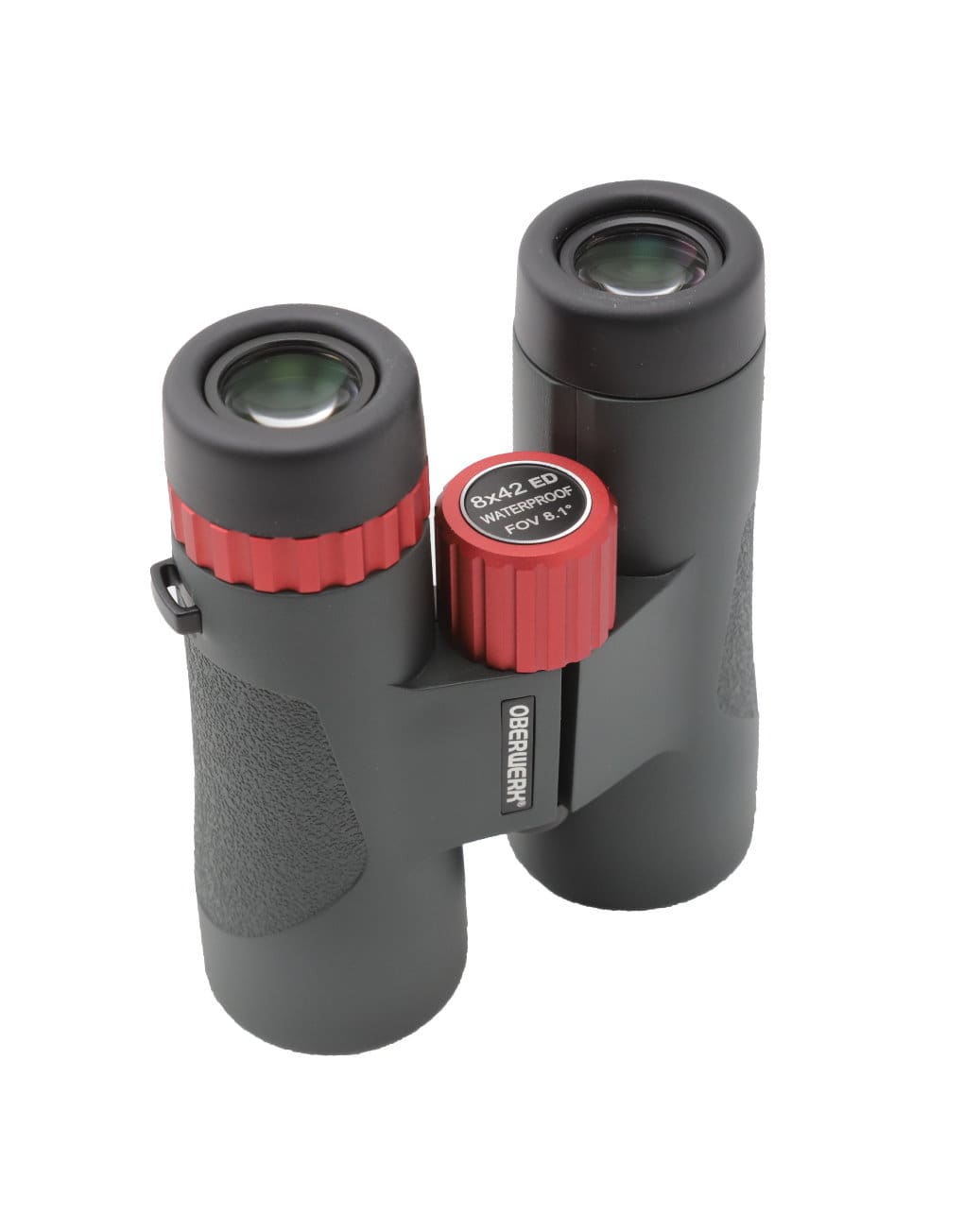
Credit: oberwerk.com
Frequently Asked Questions
What Makes Ed Binoculars Suitable For Astronomy?
ED binoculars use special glass that reduces color fringing. This improves image clarity and sharpness. They offer better contrast and detail for night sky viewing, making them ideal for astronomy enthusiasts.
How Do Ed Binoculars Compare To Standard Binoculars?
ED binoculars provide clearer, sharper images with less chromatic aberration. Standard binoculars may show color blur around bright objects. This makes ED models more effective for detailed astronomical observations.
Are Ed Binoculars Worth The Investment For Stargazing?
Yes, ED binoculars are worth it if you want crisp, detailed views. Their enhanced optics improve your overall experience. They are a valuable tool for both beginners and serious astronomers.
Can Ed Binoculars Be Used For Daytime Viewing?
Absolutely, ED binoculars enhance daytime viewing by reducing color fringing. They deliver sharp, vibrant images for birdwatching or landscape observation. Their versatility makes them a great all-around choice.
Conclusion
Ed binoculars offer great views for astronomy enthusiasts. Their design enhances clarity and detail. For stargazing, they present a compelling choice. Yet, traditional telescopes provide more power for deep space exploration. Consider your needs and preferences. Are you seeking portability and ease?
Or deeper sky insights? Both tools have unique benefits. Choosing depends on personal goals and experiences. Enjoy exploring the night sky, whatever you decide. Each star and planet offers a new adventure. Happy stargazing!