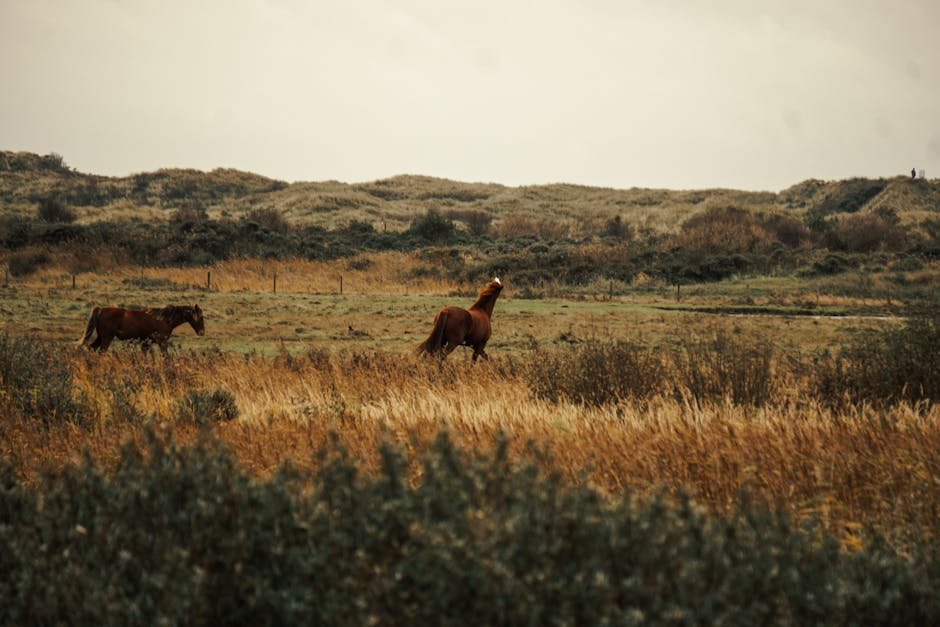
Ask a group of birders what the best field of view is for wildlife binoculars and you will not get one tidy answer. The right number depends on what you watch, where you watch it, and whether you are tracking a fast-moving bird or studying a distant animal from one spot.
That said, most wildlife viewing sits in a practical sweet spot: 300–400 feet at 1,000 yards, or roughly 5.7–7.6 degrees. Within that range, a 330–370 ft field of view works well for mixed habitats like forests, fields, and wetlands. For more on this, see our guide on best hiking binoculars with clear field of view.
This guide explains what field of view means, why it matters, which numbers to target by scenario, and how to test binoculars before you buy.
What Does Field of View Mean in Binoculars?
Field of view (FOV) is the width of the scene you can see through the binoculars at a fixed distance. It is usually listed in two ways:
- Linear FOV: “330 ft at 1,000 yards”
- Angular FOV: “6.3 degrees”
To convert between them, divide the linear FOV by 52.4. So 400 ft at 1,000 yards is about 7.6 degrees, and 315 ft is about 6.0 degrees. For more on this, see our guide on what is the best field of view for.
There is also apparent field of view, which is the true FOV multiplied by magnification. It tells you how large the view feels to your eye. A pair with a true FOV of 360 ft at 8x gives an apparent FOV of about 55 degrees — close to what many people describe as a “wide” feel. Models with an apparent FOV above 60 degrees feel especially immersive.
Why Field of View Matters in Wildlife Watching
When an animal is moving, every second counts. A wider FOV lets you find the animal more quickly because you are searching a larger area without panning the binoculars. In dense brush, that margin can mean the difference between seeing a bird and just hearing it. For more on this, see our guide on best binoculars with wide field of view for.
The practical difference is large. At 100 yards, a 400 ft/1,000 yd FOV shows a 40 ft wide scene. A 300 ft FOV shows a 30 ft wide scene. That extra width translates directly into easier tracking.
A common mistake is choosing binoculars based mainly on magnification. In practice, a moderate 8x binocular with a generous FOV is much easier to use for active wildlife than a 12x model that forces you to search through a narrow tunnel. For more on this, see our guide on best golf binoculars with laser guide.
Wildlife watchers who cover varied terrain tend to be happiest with all-round nature binoculars that keep magnification moderate and FOV generous.
The Best Field of View for Wildlife: Numbers to Aim For
For most wildlife binoculars, the ideal FOV range is:
- All-round wildlife use: 330–380 ft at 1,000 yards
- General acceptable range: 300–400 ft at 1,000 yards
- Birding in active habitats: 350–420 ft at 1,000 yards
Field of View Targets by Wildlife Scenario
| Wildlife Scenario | Recommended FOV (ft @ 1,000 yds) | Why It Works |
|---|---|---|
| Dense forest / close-range watching | 350–420 | You need to acquire the animal fast, before it moves again. |
| Birds in flight / open sky | 340–400 | A wide net makes fast, erratic flight paths easier to follow. |
| Mixed terrain / general nature | 330–380 | The best balance of scanning ability and image detail. |
| Open fields / wetlands | 300–360 | You can use extra magnification to study distant birds. |
| Distant, perched animals | 280–330 | Detail matters more than covering a huge scene. |
These are starting points, not absolute rules. A high-quality binocular with a slightly narrower FOV can feel better than a cheap wide-angle model with soft edges. For more on this, see our guide on best binoculars for stargazing and wildlife.
If birds are your main quarry, the Cornell Lab of Ornithology remains one of the most useful sources for practical field optics advice.
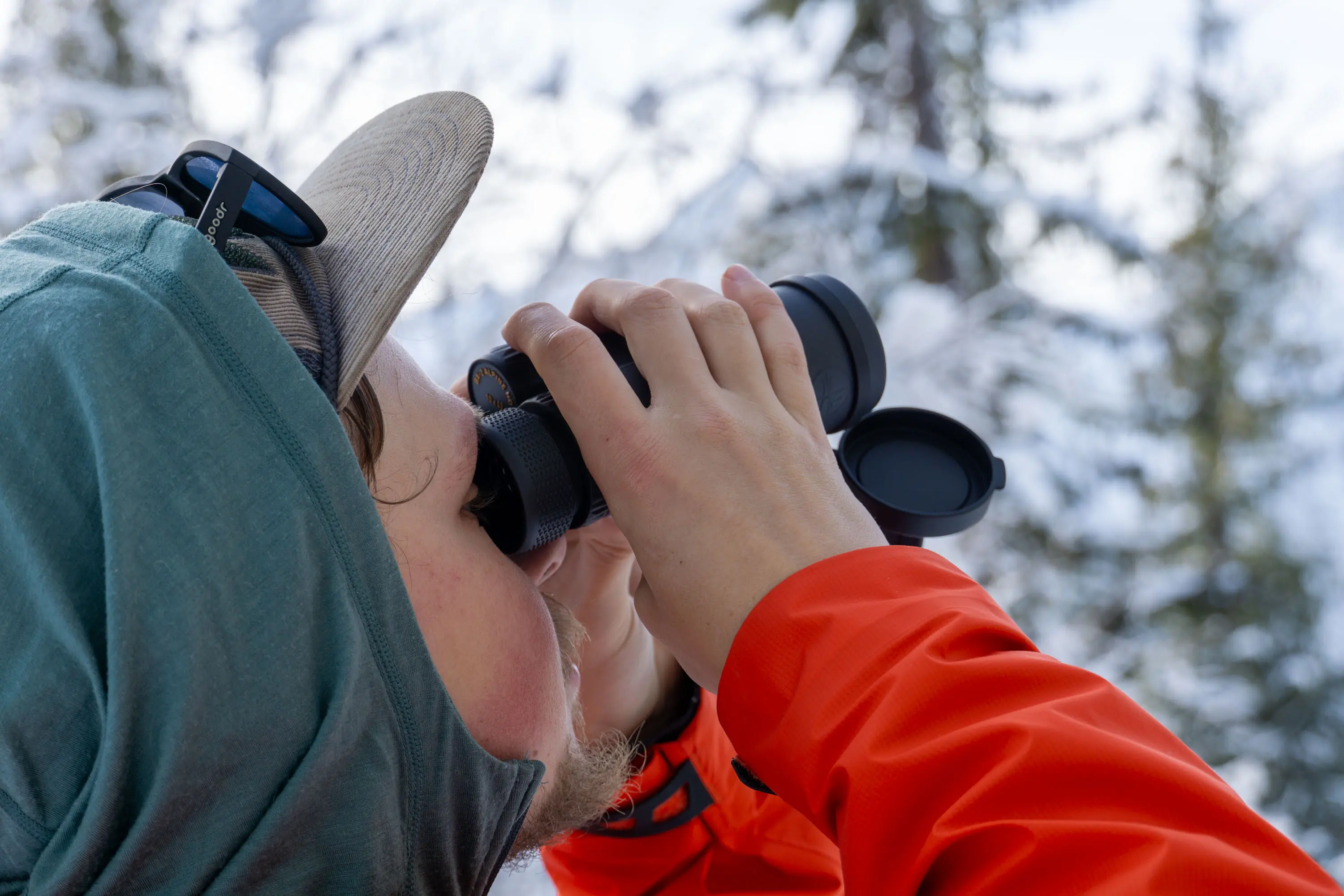 Scanning a forest edge: a wider field of view helps you catch movement before the animal disappears.
Credit: gearjunkie.com
Scanning a forest edge: a wider field of view helps you catch movement before the animal disappears.
Credit: gearjunkie.com
Why Higher Magnification Usually Means a Narrower Field of View
Magnification and true FOV work against each other. Higher power makes distant objects look larger, but it also narrows the circle of view.
Current-generation wildlife binoculars generally fall within these ranges:
- 8×42: 330–400 ft at 1,000 yards
- 10×42: 300–350 ft at 1,000 yards
- 12×50: often below 300 ft at 1,000 yards
That is why experienced birders often prefer 8x or 10x over higher powers. A 12x pair can reveal feather detail on a perched bird, but you may struggle to even find the bird first. In practice, 10x becomes more usable when a pair has a wide apparent FOV, not just a strong magnification number.
Before you settle on a power, our guide to choosing between 8x and 10x shows how the same trade-off plays out in real hiking and wildlife conditions.
Optics That Shape Field of View: Objective Size, Prisms, and Eye Relief
Objective Lens Size and Exit Pupil
The objective lens diameter does not directly set the field of view, but it affects how clearly you can see the image inside that field. It also determines the exit pupil, calculated by dividing the objective diameter by the magnification.
- 8×42: exit pupil 5.25 mm
- 8×32: exit pupil 4 mm
- 10×42: exit pupil 4.2 mm
In dim cover, models with a larger exit pupil keep the image bright enough to use the whole FOV easily. That is why 8×42 has become the standard wildlife format.
Prism Type and Design
Prism design influences how large the field of view can be before the binocular body becomes too bulky.
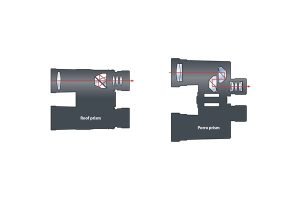
- Roof prisms: compact, weather-resistant, and common on modern wildlife binoculars. Good phase-coated roof prisms can produce excellent edge sharpness.
- Porro prisms: bulkier, but traditionally easier to design with a wide FOV at a moderate price.
Wide FOV optics require larger prisms, which adds weight. Weight also determines how often you actually bring binoculars on a hike, so hiking specialists care about the size-to-power balance as much as FOV.
Eye Relief and Glasses
Eye relief is the distance between your eye and the eyepiece where you can still see the entire image. If it is too short, you will see black edges and the effective FOV will feel much narrower.
Glasses wearers should look for 15–20 mm of eye relief, plus adjustable eyecups. If you wear spectacles, choose glasses-friendly eye relief instead of fixing on a big FOV number alone. A wide FOV is pointless if you cannot see all of it.
Field of View vs Image Quality: What You Give Up
Wide-angle binoculars can suffer from soft edges, field curvature, and chromatic aberration — the colored fringing that appears around high-contrast subjects. Budget models with very wide FOV numbers are the most likely to show these flaws.
Good optics reduce the problem. Phase-corrected prisms, flat-field eyepieces, and quality multi-coatings keep the image sharp from edge to edge. Brightness and contrast also matter because they help you separate a camouflaged animal from its background.
Lens coatings matter in the field too, especially near water or snow. Good multi-coatings, including lenses that suppress glare, make a wide FOV more usable in harsh midday light.
If you watch wildlife while hiking, trail-ready wide-view binoculars are often designed with a balance of FOV, weight, and grip that works well over long distances.
How to Test Field of View Before You Buy
Specs give you a useful starting point, but they cannot tell you how the view feels. Field-testing is the same advice the National Audubon Society gives to newcomers: a spec sheet cannot replace hands-on use.
Here is a simple side-by-side test:
- Pick a line of recognizable objects — fence posts, signs, or trees — about 50–100 yards away.
- Brace the binoculars on a post, railing, or wall.
- Count how many objects fit across the view from one edge to the other.
- Keep looking at the edge of the view and notice whether details blur or bend.
- Track a moving object, like a cyclist or a dog, and see how long it stays in view.
- Try the same test in low light to check brightness.
- Repeat with every model you are considering.
Also watch for blackouts or “rolling ball” distortion when you pan quickly. A model with an impressive FOV can fail this real-world test if the image feels unstable.
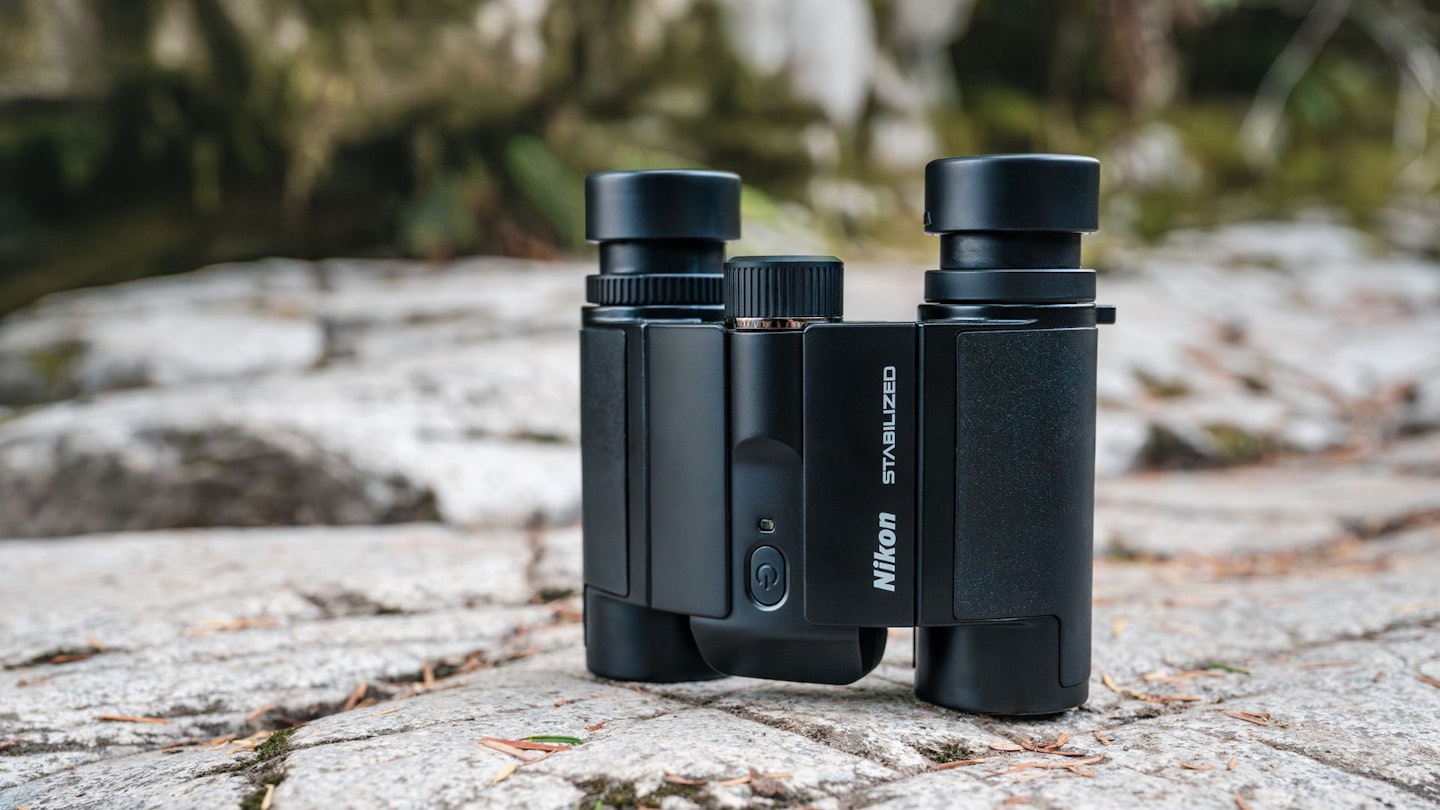 A stabilized binocular is easier to evaluate during a long field test because arm fatigue does not distort the view.
Credit: www.birdwatching.co.uk
A stabilized binocular is easier to evaluate during a long field test because arm fatigue does not distort the view.
Credit: www.birdwatching.co.uk
Frequently Asked Questions
What Is the Ideal Field of View for Wildlife Binoculars?
Most wildlife watchers do best with 330–380 ft at 1,000 yards. The wider 300–400 ft range also works well for general use. Birders who watch fast-moving birds in dense habitat often prefer 350–420 ft.
Does a Wider Field of View Reduce Image Sharpness?
It can. Wide-angle eyepieces sometimes show soft edges, especially on budget binoculars. Higher-quality prisms, phase coatings, and flat-field designs help reduce this. A high-quality 360 ft model will usually outperform a cheap 420 ft model.
Is 8x or 10x Better for Wildlife?
Use 8x for tracking quick animals in cover and while walking. Use 10x when you mostly observe distant animals from a fixed position. Compare apparent FOV as well as true FOV, because a well-designed 10x can still feel surprisingly open.
How Do I Convert Degrees to Feet at 1,000 Yards?
Multiply degrees by about 52.4 to get feet at 1,000 yards. To reverse it, divide the linear FOV by 52.4. For example, 7 degrees is roughly 367 ft at 1,000 yards.
Choose the Field of View That Matches Your Habitat
There is no universal number for wildlife binoculars. A birdwatcher in a dense forest needs a different field of view than someone glassing open valleys for elk.
For most people, the answer is a moderate 8x or 10x model with an FOV between 330 and 380 ft at 1,000 yards. That combination offers enough width to find animals quickly and enough magnification to study them once you do.
Before you buy, make a list of the habitats where you watch wildlife most and compare FOV numbers side by side. That short exercise will help you avoid a pair that feels powerful on paper but struggles in the field.