Have you ever wondered if your Ed Glass binoculars could open up the night sky for you? You might already enjoy using them for hiking or birdwatching, but what about stargazing?
Imagine spotting craters on the moon or catching a glimpse of distant planets—all with your trusty binoculars. You’ll discover whether Ed Glass binoculars are a good fit for astronomy and how to get the most out of them when looking up at the stars.
Keep reading to find out if your binoculars can turn into a gateway to the universe.

Credit: www.ebay.com
What Are Ed Glass Binoculars
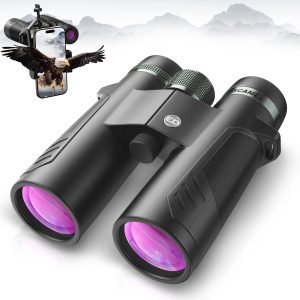
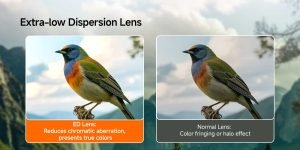
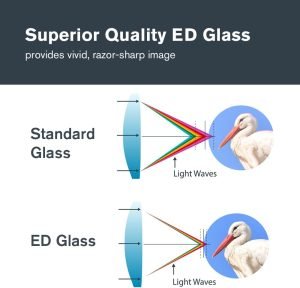
ED glass means Extra-low Dispersion. It reduces color distortion. This feature helps to see clearer images. Light bends less with ED glass. Colors stay true and natural. These binoculars offer high-quality optics. They are used for bird watching and stargazing.
ED glass provides sharp images. It improves contrast. Stars appear bright and clear. These binoculars minimize blurs. They enhance your viewing experience. You can see distant objects clearly. They make stargazing more enjoyable. ED glass is great for astronomy enthusiasts.
Binoculars Vs. Telescopes For Astronomy
Binocularsare easier to carry than telescopes. They are small and light. You can use them quickly without setup. Telescopes are bigger and need more time to prepare. This makes binoculars a good choice for quick stargazing or travel.
Magnification is stronger in telescopes. They show more detail in distant objects. Binoculars have lower magnification but a wider field of view. This means binoculars show a larger part of the sky at once. Telescopes focus on small, specific areas.
| Feature | Binoculars | Telescopes |
|---|---|---|
| Portability | Light and easy to carry | Large and heavy |
| Ease of Use | Quick to use, no setup needed | Needs setup and alignment |
| Magnification | Lower, good for wide views | Higher, shows fine details |
| Field of View | Wide, covers more sky | Narrow, focuses on small areas |
Advantages Of Ed Glass Binoculars In Stargazing
ED glass binocularsprovide sharper imagesby reducing light distortion. This means stars appear clearer and more defined. Chromatic aberrationis a common problem where colors blur or fringes appear around bright objects. ED glass cuts down on this issue, so the view feels more natural and less blurry.
Colors also look more true to life. Better color accuracyhelps stargazers see subtle shades in planets and stars. This makes the experience more enjoyable and realistic. The binoculars bring out delicate details that standard glass might miss.
Limitations Of Ed Glass Binoculars For Astronomy
ED glass binocularsusually have lower magnificationthan telescopes. This means objects in the sky appear smaller and less detailed. They work well for bird watching and landscapes but struggle with distant stars and planets.
Binoculars have a limited ability to gather light. This makes it difficult to see faint objectslike galaxies and nebulae. Deep space objects need more powerful tools to observe clearly.
- Binoculars magnify up to 10x or 12x, telescopes can go much higher.
- Light gathering is less in binoculars due to smaller lenses.
- Deep space objects often appear dim and blurry through binoculars.
Choosing The Right Ed Glass Binoculars
Choosing ED glass binocularsfor astronomy means balancing magnificationand aperture. A good range is 7x to 15x magnification. Too much magnification makes the image shaky. Aperture size controls how much light enters. Bigger apertures show more stars and details.
Look for these additional featuresto improve your experience:
- Lightweight design for easy holding during long stargazing.
- Waterproof and fog-proof for use in different weather.
- Wide field of view to see larger sky areas.
- Rubber armor for better grip and protection.

Credit: www.amazon.ca
Tips For Using Binoculars In Astronomy
Ed glass binoculars can work for basic stargazing, offering clear views of the moon and some planets. Choose models with larger lenses for better light capture and sharper images. Stability is key; use a tripod to reduce shaking and improve your astronomy experience.
Stabilizing Your View
Hold binoculars steady to avoid shaky images. Use both hands and rest your elbows on a solid surface. A tripod or a table can help keep the view stable. Even small movements can blur stars and planets. A steady hold makes details clearer and easier to see.
Best Conditions For Viewing
- Choose a dark place away from city lights.
- Pick clear nights with no clouds or fog.
- Look when the moon is new or not too bright.
- Avoid windy nights that can move your binoculars.
- Let your eyes adjust to the dark for 15 minutes.
Popular Ed Glass Binocular Models For Astronomy
Several ED glass binocularsare well-suited for astronomy. These models offer clear views of the night sky. Their extra-low dispersion glass reduces color fringing and improves sharpness.
- Nikon Monarch 5 8×42: Good for detailed views of the moon and planets.
- Vortex Viper HD 10×42: Bright images with great contrast for star clusters.
- Celestron Nature DX 8×42: Lightweight and easy to use for beginners.
- Swarovski EL 10×42: Premium optics for very clear and sharp images.
Choosing binoculars with a magnification between 8x and 10x is ideal. The lens size around 42mm balances brightness and portability. ED glass helps reduce chromatic aberration, making stars and planets look clearer.

Credit: ontariotelescope.com
Frequently Asked Questions
Can Ed Glass Binoculars Enhance Astronomy Viewing?
Yes, ED glass binoculars reduce chromatic aberration and provide sharp, clear images. This makes them suitable for casual astronomy and star gazing.
What Magnification Is Best For Astronomy Binoculars?
Binoculars with 7x to 10x magnification are ideal for astronomy. They offer a wide field of view and stable images for comfortable stargazing.
Are Ed Glass Binoculars Better Than Regular Ones For Stargazing?
Yes, ED glass binoculars offer better color accuracy and clarity. This improves the overall viewing experience compared to standard binoculars.
Can Ed Glass Binoculars See Deep Sky Objects?
ED glass binoculars can reveal bright deep sky objects like star clusters and some galaxies. However, telescopes are better for faint objects.
Conclusion
Ed glass binoculars can work well for basic astronomy. They show the moon, stars, and some planets clearly. These binoculars are easy to carry and simple to use outside. They do not replace a telescope but offer a good start.
For beginners, they provide a fun way to explore the night sky. Choose binoculars with larger lenses for better views. Remember, patience and practice improve your star-gazing experience. Try them on a clear night and enjoy the wonders above.