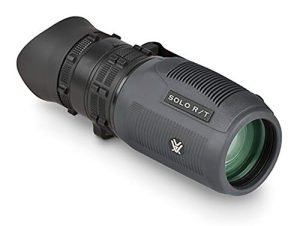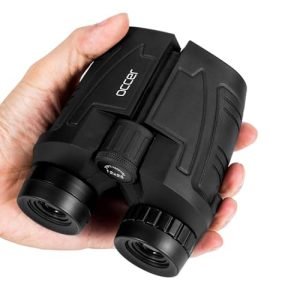
Night vision doesn’t work without IR because it relies on infrared light to illuminate dark environments. Without this invisible light source, even the most advanced monoculars can’t amplify enough ambient light to produce a usable image in total darkness.
Key Takeaways
- IR is essential for total darkness: Night vision devices need infrared illumination to “see” when no visible light is present.
- Monoculars amplify existing light: They enhance available light (moonlight, starlight), but can’t create light on their own.
- IR provides invisible illumination: Infrared light is undetectable to the human eye, making it ideal for stealth operations.
- Without IR, images appear black: In pitch-black conditions, a night vision monocular without IR will show nothing but darkness.
- IR range affects performance: The strength and range of the IR illuminator determine how far you can see in the dark.
- Modern monoculars include built-in IR: Most quality night vision monoculars come with integrated IR illuminators for reliable performance.
- Understanding IR helps you choose the right gear: Knowing how IR works ensures you pick a monocular suited to your nighttime needs.
📑 Table of Contents
Understanding How Night Vision Works
Night vision technology has revolutionized how we see in the dark. Whether you’re a hunter, security professional, or outdoor enthusiast, night vision monoculars let you navigate and observe when the sun goes down. But have you ever tried using one in complete darkness and wondered, “Why is night vision not working without IR?” The answer lies in the science behind how these devices capture and amplify light.
At its core, night vision doesn’t “create” light. Instead, it takes whatever tiny amounts of ambient light—like moonlight, starlight, or even distant artificial light—and magnifies it thousands of times. This process happens inside an image intensifier tube, a key component in most night vision monoculars. The tube converts photons (light particles) into electrons, amplifies them, and then converts them back into visible light. The result? A green-hued image that lets you see clearly in near-darkness.
But here’s the catch: if there’s absolutely no light to begin with—like in a basement, dense forest at midnight, or a windowless room—there’s nothing for the monocular to amplify. That’s where infrared (IR) comes in. Without IR illumination, your night vision device is essentially blind in total darkness. It’s like trying to read a book in a pitch-black room with no flashlight. No matter how good your eyes are, you won’t see a thing.
The Role of Infrared (IR) in Night Vision
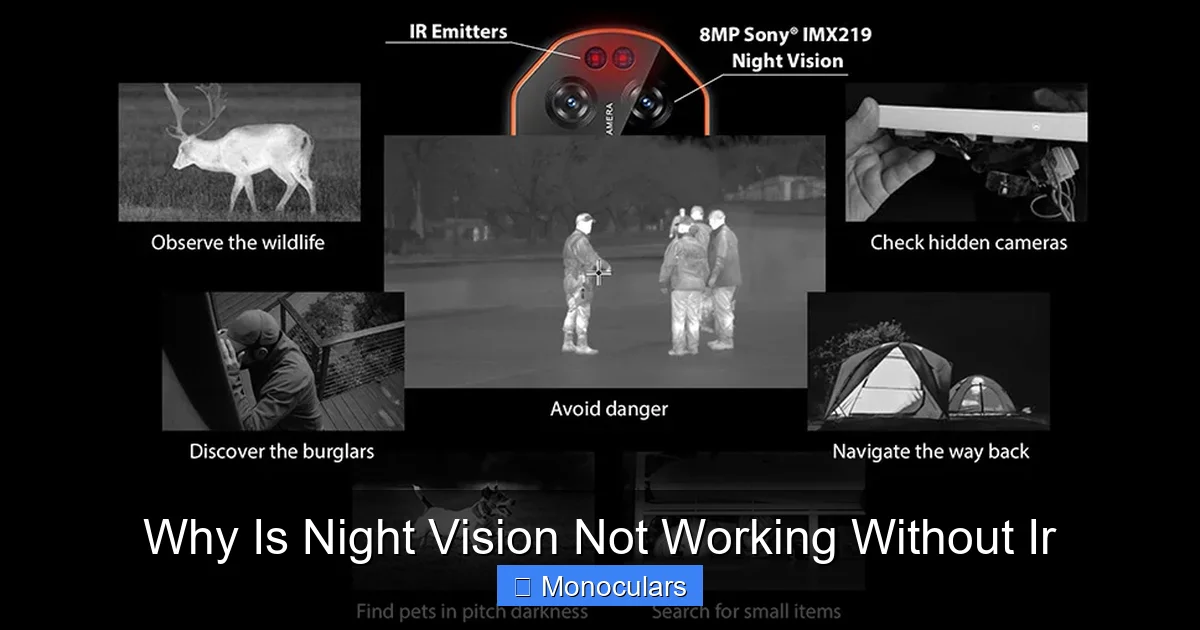
Visual guide about Why Is Night Vision Not Working Without Ir
Image source: d2kbvjszk9d5ln.cloudfront.net
So, what exactly is infrared light, and why is it so crucial? Infrared is a type of electromagnetic radiation with wavelengths longer than visible light—typically between 700 nanometers and 1 millimeter. While we can’t see IR with our eyes, many electronic sensors, including those in night vision monoculars, can detect it.
Think of IR as an invisible flashlight. When you turn on the IR illuminator on your monocular, it emits a beam of infrared light that spreads across the area you’re trying to observe. This light bounces off objects just like visible light does, but because it’s invisible to the human eye, it doesn’t give away your position. The monocular’s sensor then picks up this reflected IR light and converts it into a visible image.
This is why night vision isn’t working without IR in total darkness: there’s simply no ambient light to amplify. Even the most sensitive night vision devices can’t pull images out of thin air. They need some form of illumination—and IR provides that in a way that’s both effective and discreet.
For example, imagine you’re camping in a remote forest on a moonless night. The sky is overcast, and there are no artificial lights nearby. Without IR, your monocular would show a completely black screen. But with the IR illuminator turned on, you can clearly see trees, animals, and terrain up to 100 yards away, depending on the device’s power.
Why Monoculars Need IR in Total Darkness
Let’s dig deeper into why monoculars—especially those used for night vision—are almost useless without IR in pitch-black conditions. It all comes down to physics and the limitations of image intensification.
No Light Means No Image
Night vision monoculars are designed to amplify existing light, not generate it. In environments with even a small amount of ambient light—like starlight or distant city glow—they perform exceptionally well. But when you’re in a completely dark space, such as a cave, abandoned building, or a forest with thick canopy cover, there’s virtually no light to amplify. Without IR, the sensor receives no input, and the screen remains black.
IR Bridges the Gap
This is where the IR illuminator becomes a game-changer. By emitting infrared light, it provides the necessary illumination for the monocular to function. The IR light travels outward, hits objects, and reflects back to the device’s sensor. The monocular then processes this information and displays a clear, real-time image.
For instance, law enforcement officers often use night vision monoculars during nighttime surveillance. If they’re observing a suspect in a dark alley with no streetlights, the IR illuminator allows them to see clearly without being detected. The suspect won’t notice the IR beam because it’s invisible, but the officer gets a full view of the scene.
Built-In vs. External IR
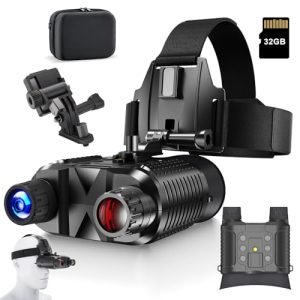
Some monoculars come with built-in IR illuminators, while others require an external IR flashlight. Built-in IR is convenient and ensures the light source is perfectly aligned with the lens. External IR units offer more power and range but can be bulkier. Choosing between them depends on your needs—whether you prioritize portability or long-range visibility.
Common Misconceptions About Night Vision
Despite how common night vision devices are today, there are still several myths and misunderstandings about how they work—especially regarding IR.
Myth 1: Night Vision Creates Light
One of the biggest misconceptions is that night vision “creates” light. In reality, it only amplifies what’s already there. Without any light—visible or infrared—the device can’t function. This is why IR is so important: it provides the light that the monocular needs to amplify.
Myth 2: All Night Vision Works in Total Darkness
Not all night vision is created equal. Generation 1 devices, for example, struggle in very low light and often require strong IR support. Higher-generation monoculars (Gen 2, Gen 3, and digital) perform better in low light but still rely on IR in complete darkness. Assuming your monocular will work like a superhero’s vision in total blackout is a recipe for disappointment.
Myth 3: IR Is Always Visible as a Red Glow
Many people think IR illuminators produce a bright red light, like a laser pointer. While some older or low-quality IR lights do emit a faint red glow, modern IR illuminators are designed to be completely invisible. High-quality monoculars use filtered IR LEDs that emit pure infrared light with no visible leakage.
Myth 4: You Don’t Need IR If You Have Great Eyesight
No matter how good your night vision is naturally, you can’t see in total darkness. The human eye needs at least a tiny amount of light to function. Night vision monoculars overcome this limitation by using technology—but they still need IR to operate when no ambient light is available.
Choosing the Right Monocular with IR
If you’re shopping for a night vision monocular, understanding the role of IR will help you make a smarter choice. Here’s what to look for:
Built-In IR Illuminator
Opt for a monocular with a built-in IR illuminator. This ensures the light source is aligned with the lens and reduces the need for extra gear. Look for adjustable IR brightness—this lets you control the range and avoid over-illuminating close objects.
IR Range and Power
Check the IR range specification. A monocular with a 50-meter IR range is fine for backyard use, but if you’re hunting or patrolling large areas, you’ll want 100 meters or more. Higher power IR illuminators provide better visibility in total darkness but may drain batteries faster.
Image Quality and Generation
Pair your IR with a high-quality image sensor. Digital night vision monoculars often offer better clarity and additional features like recording and Wi-Fi streaming. Traditional image intensifier tubes (Gen 1–3) provide excellent performance but may be heavier and more fragile.
Battery Life
Since IR uses power, battery life is crucial. Look for monoculars with long-lasting batteries or rechargeable options. Some models even have power-saving modes that dim the IR when not needed.
Durability and Weather Resistance
If you’re using your monocular outdoors, make sure it’s waterproof and shockproof. A rugged build ensures it can handle rain, drops, and rough terrain—especially important when relying on IR in remote locations.
Practical Tips for Using Night Vision with IR
Now that you understand why night vision isn’t working without IR, here are some practical tips to get the most out of your monocular:
- Always carry spare batteries: IR illuminators drain power quickly. Keep extras on hand, especially on long trips.
- Test your IR before heading out: Make sure the illuminator is working and aligned properly. A quick test in a dark room can save you frustration later.
- Use low IR brightness for close range: High IR power can wash out images at short distances. Adjust the setting based on your viewing range.
- Avoid pointing IR at reflective surfaces: Mirrors, glass, or water can cause glare or blind spots. Angle your monocular slightly to reduce reflections.
- Combine with other light sources when safe: In some situations, using a dim red flashlight (which doesn’t affect night vision) can help you navigate while keeping IR ready for observation.
Conclusion
So, why is night vision not working without IR? The simple answer is that night vision devices need light to function—and in total darkness, infrared illumination is the only reliable source. Whether you’re using a monocular for hunting, security, or exploration, IR is what transforms an otherwise useless device into a powerful tool for seeing in the dark.
Understanding this relationship between IR and night vision helps you choose the right equipment and use it effectively. Remember, no amount of technology can replace the need for light. But with the right IR support, your monocular can deliver clear, detailed images even when the world around you is pitch black.
Invest in a quality night vision monocular with a strong IR illuminator, and you’ll never be left in the dark again.
Frequently Asked Questions
Can night vision work without any light at all?
No, night vision cannot work in absolute darkness without some form of illumination. It needs either ambient light or infrared (IR) light to amplify and create an image.
Is IR light visible to the human eye?
Generally, no. Infrared light is invisible to humans, which is why it’s ideal for stealth. However, some low-quality IR illuminators may emit a faint red glow.
Do all night vision monoculars have IR?
Most modern night vision monoculars include a built-in IR illuminator, but not all. Always check the specifications before buying.
How far can IR illumination reach?
IR range varies by model, typically from 30 to over 200 meters. Higher-powered IR illuminators provide longer range but use more battery.
Can animals see IR light?
Most animals cannot see infrared light, so using IR won’t scare them away. This makes it perfect for wildlife observation and hunting.
What happens if I use night vision without IR in the dark?
The screen will appear completely black because there’s no light for the device to amplify. IR is essential for visibility in total darkness.