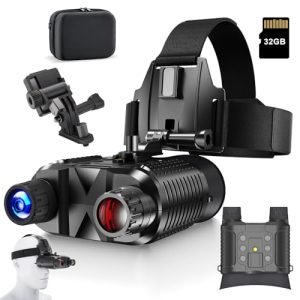
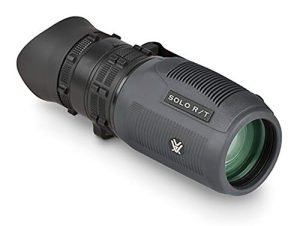
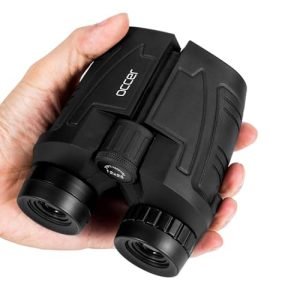
Night vision doesn’t work in total darkness because it needs at least some ambient light to function. Unlike thermal imaging, traditional night vision amplifies existing light—so when there’s absolutely none, it can’t produce a usable image.
Key Takeaways
- Night vision requires ambient light: It amplifies available light (like moonlight or starlight), not heat or motion.
- Complete darkness = no image: Without photons, image intensifier tubes can’t generate a visible picture.
- IR illuminators help—but have limits: Built-in or external infrared lights add invisible light, but range and battery life are constraints.
- Thermal imaging is different: It detects heat signatures and works in total darkness, but isn’t “night vision” in the traditional sense.
- Environmental factors matter: Fog, smoke, or dense foliage can block even available light, reducing effectiveness.
- Monocular quality varies: Higher-gen night vision devices perform better in low light but still fail in absolute blackout.
- Know your device’s limits: Understanding how your monocular works helps you use it effectively and avoid disappointment.
📑 Table of Contents
- Understanding How Night Vision Really Works
- The Science Behind the Darkness Problem
- IR Illuminators: A Partial Solution
- Thermal Imaging vs. Night Vision: Knowing the Difference
- Environmental Factors That Affect Performance
- Choosing the Right Monocular for Your Needs
- Tips to Maximize Night Vision Effectiveness
- Conclusion
Understanding How Night Vision Really Works
When most people think of night vision, they picture green-hued scenes from military movies—soldiers moving silently through pitch-black forests, spotting enemies with ease. But here’s the truth: that kind of flawless vision in total darkness is mostly Hollywood magic. Real-world night vision, especially in consumer-grade monoculars, has a critical limitation—it needs light to work.
At its core, traditional night vision technology doesn’t “see in the dark.” Instead, it *amplifies* whatever light is already present. This process happens inside a component called an image intensifier tube. When photons (tiny particles of light) enter the monocular’s lens—whether from the moon, stars, streetlights, or even distant city glow—they hit a photocathode. This converts the light into electrons. Those electrons are then accelerated and multiplied through a microchannel plate, creating a much brighter image that your eyes can see. The result? A glowing green image that lets you navigate or observe in near-dark conditions.
But here’s the catch: if there are *no* photons to begin with—meaning absolutely zero ambient light—the system has nothing to amplify. It’s like trying to turn up the volume on a silent radio. No signal in, no sound out. That’s why night vision fails in complete darkness.
The Science Behind the Darkness Problem
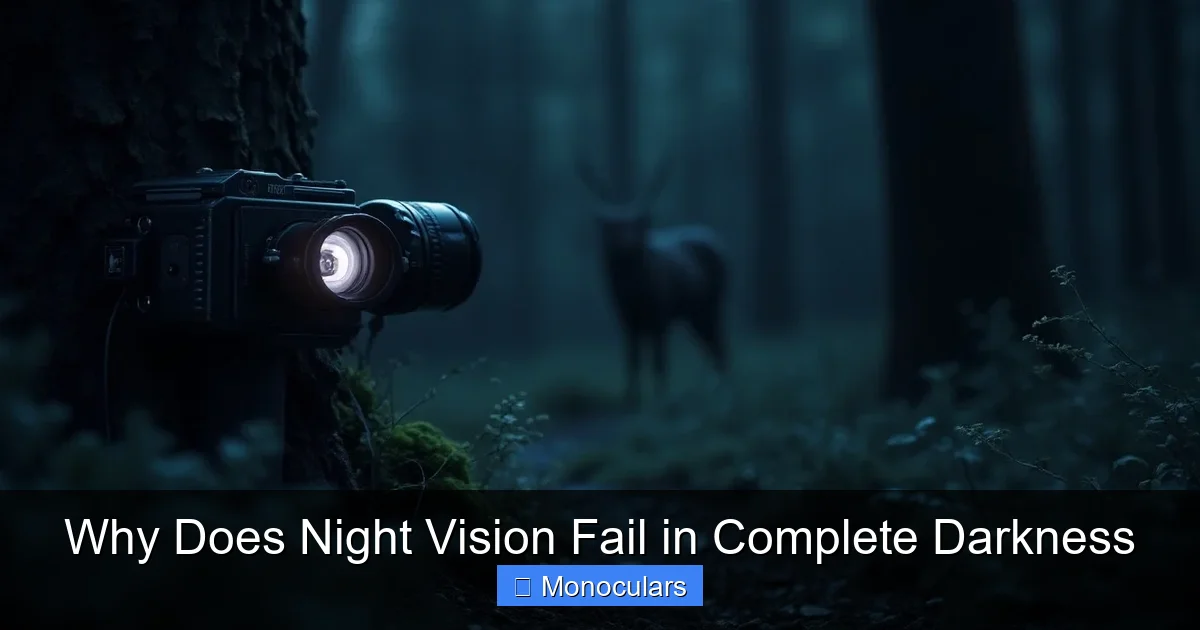
Visual guide about Why Does Night Vision Fail in Complete Darkness
Image source: birminghamcontrolcentre.co.uk
To truly grasp why night vision monoculars struggle in total blackout, let’s break down the physics. Light, even in tiny amounts, is essential. In environments like deep caves, underground bunkers, or heavily forested areas at midnight with overcast skies, ambient light can drop to near-zero levels. In these scenarios, even the most advanced Gen 3 night vision devices hit a wall.
The human eye can adapt to low light over time (a process called dark adaptation), but even our best natural vision has limits. Night vision monoculars were designed to push past those limits—but only so far. They rely on the principle of *photonic gain*: taking faint light and making it stronger. Without incoming photons, there’s no gain to be had.
Think of it like a water pump. If there’s no water in the well, no matter how powerful the pump, you won’t get a drop. Similarly, if no light enters the monocular, the intensifier tube can’t create an image—no matter how sensitive it is.
This is also why night vision performance varies so much from one environment to another. On a clear night with a full moon, a basic monocular might perform exceptionally well. But in a windowless basement or a dense jungle at 2 a.m., the same device may show nothing but black.
IR Illuminators: A Partial Solution
So, if night vision needs light to work, can we just add our own? Yes—and that’s where infrared (IR) illuminators come in. Many night vision monoculars come with built-in IR LEDs, and others allow you to attach external ones. These devices emit light in the infrared spectrum, which is invisible to the human eye but detectable by night vision optics.
When you turn on an IR illuminator, it essentially floods the area with “invisible light.” The monocular picks up this IR radiation, amplifies it, and displays a visible image. This can dramatically improve performance in dark environments—like a backyard at midnight or a remote trail with no moonlight.
But IR illuminators aren’t a magic fix. They have limited range—typically between 50 to 300 feet, depending on the model and power. Beyond that, the IR light spreads too thin to be useful. Also, they drain batteries quickly, especially high-powered ones. And in some situations—like wildlife observation or stealth operations—using an IR light can give away your position, even if it’s invisible to the naked eye.
For example, if you’re using a monocular to watch deer at night, an IR illuminator might help you see them clearly. But if those deer have their own night vision (many animals do), they might detect the IR glow and flee. It’s a trade-off between visibility and stealth.
Thermal Imaging vs. Night Vision: Knowing the Difference
One common misconception is that thermal imaging and night vision are the same thing. They’re not—and understanding the difference is key to knowing when each technology will (or won’t) work.
Night vision, as we’ve discussed, amplifies available light. Thermal imaging, on the other hand, detects heat—specifically, infrared radiation emitted by objects based on their temperature. Everything warmer than absolute zero gives off some heat, so thermal cameras can “see” in total darkness, through smoke, fog, and even light foliage.
This is why thermal monoculars (like the Pulsar or FLIR models) can spot a person hiding in bushes at night—even if there’s no visible light. The human body radiates heat, and the thermal sensor picks it up as a bright silhouette against cooler surroundings.
But thermal imaging has its own drawbacks. It doesn’t provide detailed visual information like texture or color. You can tell *that* someone is there, but not what they’re wearing or holding unless they’re very close. Also, thermal devices are generally more expensive and consume more power than traditional night vision monoculars.
So while thermal imaging *does* work in complete darkness, it’s not a direct replacement for night vision. Each has its place. If you need to identify details in low light, night vision (with some ambient light) is better. If you need to detect movement or life in total blackout, thermal is the way to go.
Environmental Factors That Affect Performance
Even when there’s some light available, real-world conditions can seriously impact how well your night vision monocular performs. It’s not just about darkness—it’s about what’s *between* you and your target.
For instance, fog, rain, or smoke scatters and absorbs light, reducing the amount that reaches your monocular. This is called atmospheric attenuation. On a foggy night, even a bright streetlight might appear dim through night vision because the light is diffused. Similarly, dense foliage can block ambient light from reaching the ground, creating pockets of near-total darkness.
Humidity also plays a role. High moisture in the air can absorb infrared light, reducing the effectiveness of IR illuminators. And in urban areas, light pollution from buildings and vehicles can actually *help* night vision by providing extra ambient light—but it can also create glare or wash out details.
Another factor is the reflectivity of surfaces. A white wall or snow-covered ground reflects more light, making it easier for night vision to work. But dark, non-reflective surfaces like asphalt or black clothing absorb light, making them harder to see.
Understanding these variables helps you set realistic expectations. If you’re planning a night hike in the woods, don’t expect your monocular to work like it does in your backyard. Check the weather, consider the terrain, and bring backup lighting if needed.
Choosing the Right Monocular for Your Needs
Not all night vision monoculars are created equal—and knowing what to look for can make a big difference in performance, especially in low-light conditions.
First, consider the generation of the device. Gen 1 monoculars are entry-level and work best in moderate low light. Gen 2 offers better resolution and sensitivity, while Gen 3 provides excellent performance in near-darkness—but at a higher cost. Gen 4 and digital night vision (like those from SiOnyx or AXION) use advanced sensors and can perform well in very low light, though they still rely on some ambient or IR light.
Look for models with built-in IR illuminators and adjustable brightness. A monocular with a wide field of view helps with situational awareness, while one with good eye relief is more comfortable for extended use.
Battery life is another key factor. IR illuminators and high-performance sensors drain power quickly. Choose a model with long battery life or one that supports rechargeable batteries.
Finally, think about your use case. Are you hunting, camping, doing security work, or just exploring? A hunter might prioritize range and stealth, while a hiker might value lightweight design and durability.
Tips to Maximize Night Vision Effectiveness
Even in challenging conditions, there are ways to get the most out of your night vision monocular:
– **Use it during twilight or moonlight:** The best time to use night vision is during civil or nautical twilight, when there’s still some natural light.
– **Avoid direct bright lights:** Sudden exposure to headlights or flashlights can damage the intensifier tube or cause temporary blindness.
– **Let your eyes adapt:** Spend 20–30 minutes in the dark before using your monocular. This improves your natural night vision and helps you see more detail.
– **Carry a backup IR illuminator:** If your monocular’s built-in IR isn’t strong enough, an external one can extend your range.
– **Keep lenses clean:** Dust, fog, or fingerprints can block light and reduce image quality.
– **Store properly:** Protect your monocular from moisture and extreme temperatures to preserve its lifespan.
Conclusion
Night vision is a remarkable technology that lets us see in conditions where the human eye fails. But it’s not magic—it’s science, and it has limits. The biggest of those limits? It needs light to work. In complete darkness, even the best night vision monocular will show nothing but black.
Understanding how your device works—and what it can and can’t do—helps you use it more effectively and avoid frustration. Whether you’re exploring the outdoors, monitoring property, or just curious about the night, knowing the difference between night vision and thermal imaging, the role of IR illuminators, and the impact of environmental factors will make you a smarter user.
So next time you’re out after dark, don’t expect your monocular to turn night into day. But with the right conditions and a little know-how, it can open up a whole new world—just not in total blackout.
Frequently Asked Questions
Can night vision work in total darkness?
No, traditional night vision cannot work in total darkness because it relies on amplifying existing light. Without any ambient light—like moonlight or starlight—there’s nothing for the device to enhance, resulting in a black image.
What’s the difference between night vision and thermal imaging?
Night vision amplifies available light to create a visible image, while thermal imaging detects heat emitted by objects. Thermal works in complete darkness, but night vision does not.
Do all night vision monoculars have IR illuminators?
Many do, especially mid- to high-range models. However, some basic or older monoculars may not include one, so check the specs before buying if you plan to use it in very dark areas.
How far can an IR illuminator reach?
Most built-in IR illuminators reach 50 to 150 feet. External, high-powered models can extend up to 300 feet or more, but effectiveness depends on battery power and environmental conditions.
Can weather affect night vision performance?
Yes. Fog, rain, snow, and smoke can scatter or absorb light, reducing the amount available for amplification. This can significantly degrade image quality, even with an IR illuminator.
Is Gen 3 night vision worth the extra cost?
Gen 3 monoculars offer superior sensitivity, resolution, and performance in very low light, making them ideal for professional or serious recreational use. If you frequently operate in near-dark conditions, the investment may be worthwhile.