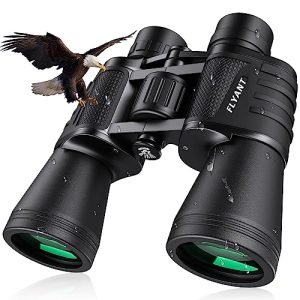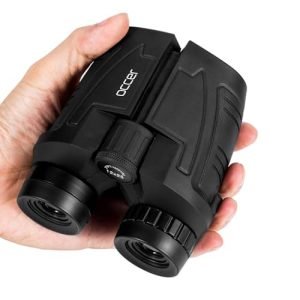
Squinting at a white ball against a bright sky is not how anyone wants to spend a round of golf. Whether you are walking the fairways at your home course or following a tournament from behind the ropes, a good pair of binoculars changes the experience completely. But golf is not birdwatching, and it is not hunting. The distances are shorter, the target is small, and you are usually standing in full daylight with a bag already on your shoulder. That means the "best" binoculars for golf are rarely the same as the best binoculars for other activities.
This guide breaks down exactly what size and specifications to look for, why they matter on a golf course, and how to avoid the most common buying mistakes. By the end, you will know which numbers to look for, which features are worth paying for, and how to use your binoculars properly without breaking etiquette or distracting the players around you. For more on this, see our guide on best waterproof and fog proof binoculars for hunting.
Why Use Binoculars on the Golf Course
On the surface, golf seems like a wide-open sport where you can see everything. In practice, a golf course is full of visual challenges. A tee shot of 280 yards leaves a ball that is a tiny speck against mottled grass. On elevated tee boxes, judging exactly where a drive finished is difficult. Watching a ball flight into a low sun or haze is even harder.
Binoculars solve those problems. They are particularly useful for:
- Spotting where tee shots finish before you walk 300 yards in the wrong direction
- Identifying balls in the rough when several players hit into the same area
- Reading the contour of a green from the fairway or a distant vantage point
- Following professional players at tournaments without missing a shot
- Locating hazards, flag positions, and yardage markers before club selection
The catch is that golf requires a specific balance of magnification, field of view, and portability. Too much magnification and the image shakes so badly you cannot hold it steady. Too little and you cannot pick out the ball at all. Too heavy and you will leave the binoculars in the car by the third hole. For more on this, see our guide on how to focus birding binoculars quickly.
What the Numbers Mean: Magnification and Objective Lens
Every binocular is described by two numbers, such as 8×25 or 10×42. The first number is magnification. The second is the objective lens diameter in millimeters. Understanding both is essential before spending any money.
Magnification: 6x, 8x, or 10x for Golf
Magnification tells you how many times closer an object appears compared with the naked eye. An 8x binocular makes a ball 200 yards away look as if it were 25 yards away. That sounds impressive, but magnification comes with trade-offs. For more on this, see our guide on best mid range low light hunting binoculars.
Higher magnification amplifies every tiny movement of your hands. At 10x or above, most people cannot hold the image steady enough to track a golf ball in flight without a tripod or a solid rest. A common mistake is buying 12x or 16x binoculars thinking they will see every blade of grass, then discovering the image dances so much it is nearly useless on the course.
For golf, the practical range is 6x to 8x, with 8x being the most popular choice.
- 6x: Wide field of view, very steady, easy to find the ball quickly. Ideal if you primarily watch from carts or follow fast-moving action.
- 8x: The best all-round compromise. Enough reach to see ball flight and landing areas clearly, while still hand-holdable for most people.
- 10x: Usable for golf, but only if the binoculars are lightweight and you have steady hands or can brace against something. The narrower field of view makes finding a small ball harder.
One practical observation from using binoculars on course: magnification matters less than you might think, because most useful golf viewing happens between 100 and 250 yards. At that distance, 8x is plenty. The extra zoom of a 10x or 12x rarely helps you find a ball faster and often makes scanning more frustrating. For more on this, see our guide on how to focus roof prism binoculars.
Objective Lens Diameter and Exit Pupil
The second number is the diameter of the front lens in millimeters. This lens gathers light. A larger objective lets in more light, which produces a brighter image — but it also adds weight and bulk.
For daylight golf, you do not need huge objective lenses. Your pupils constrict in bright conditions, so a large exit pupil is mostly wasted. The exit pupil is the objective lens diameter divided by magnification. For example:
| Configuration | Exit Pupil | Daylight Suitability |
|---|---|---|
| 8×20 | 2.5mm | Good in bright sun, dimmer in overcast or late evening |
| 8×25 | 3.1mm | Excellent for typical daylight golf |
| 8×32 | 4.0mm | Brighter, more forgiving, still portable |
| 10×42 | 4.2mm | Bright but heavier and harder to hold steady |
Because golf is played in daylight, an objective lens between 20mm and 32mm is usually ideal. Larger lenses such as 42mm or 50mm are better suited to low-light hunting or astronomy, where brightness in twilight matters far more. Carrying a 10×50 on a golf course is like bringing a spotting scope to a putting green: capable, but unnecessary weight. For more on this, see our guide on can roof prism binoculars be used for birdwatching.
The Sweet Spot for Golf
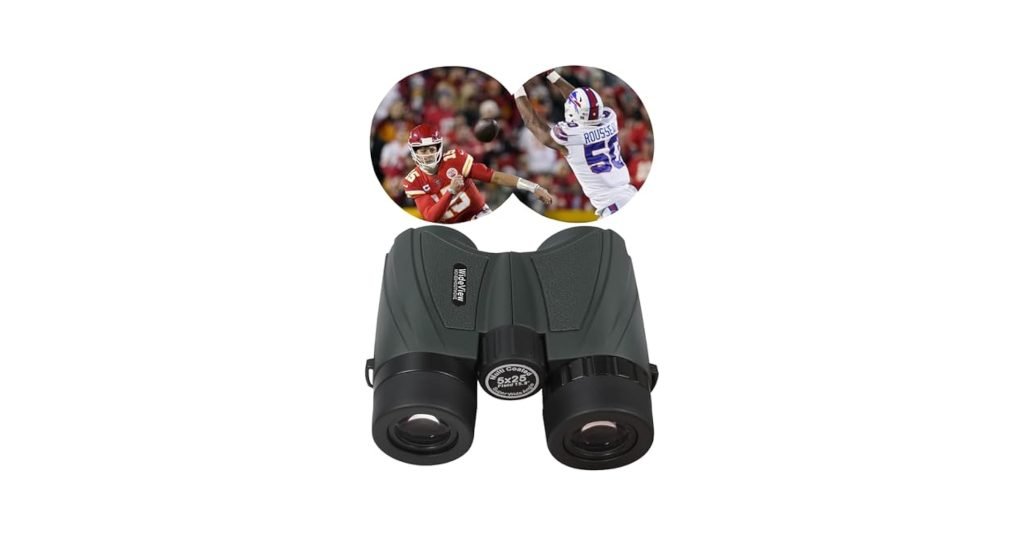
If you want one answer before we go deeper, it is this: an 8×25 or 8×32 roof-prism binocular is the sweet spot for most golfers. It delivers enough magnification to see ball flight and landing areas, a wide enough field of view to follow a shot, and a compact body that fits in a golf bag pocket or around your neck without fatigue.
Porro Prism vs Roof Prism for Golf
Binoculars come in two main optical designs. Knowing the difference helps you understand why some compact binoculars cost $40 and others cost $400.
Porro prism binoculars have the classic offset-barrel shape. They are optically efficient and inexpensive to make well, which means a $60 porro can often outperform a $200 roof prism in raw image quality. The downside for golf is bulk. Porro designs are wider and harder to slip into a pocket, and they are more prone to alignment issues if dropped.
Roof prism binoculars have straight barrels, like two small telescopes joined together. They are slimmer, lighter, and more durable, which is why they dominate the compact binocular market. Modern phase-coated roof prisms can deliver excellent sharpness in a package that genuinely fits in a golf bag. For more background on how the internal prism system works, you can read about the mechanics behind these designs.
For golf specifically, roof prism is usually the better choice simply because of portability. Most quality 8×25 and 8×32 models use roof prisms, and most golfers will carry them more often than a bulkier porro pair.
Field of View and Close Focus: Finding the Ball
Field of view (FOV) is the width of the scene you can see through the binoculars at a given distance, usually expressed in feet at 1,000 yards. A wider FOV makes it dramatically easier to find and follow a small, fast-moving golf ball.
A typical 8×25 roof-prism binocular might have a FOV of around 350 to 430 feet at 1,000 yards. A narrower 10x model might drop to 280 to 320 feet. That difference is huge when you are trying to pick up a ball in flight after someone else says "I think it went left."
Close focus matters too. If you want to inspect a ball in the rough, check a lie, or look at something only 10 or 15 feet away, you need binoculars that focus down to about 6 to 10 feet. Many compact binoculars focus closer than larger models, which is another reason they suit golf. Before buying, check the close-focus specification if you plan to use them for anything at short range.
The takeaway: prioritise a wide field of view and close focus over raw magnification. These two specs have a bigger effect on your daily experience than almost anything else.
Eye Relief: If You Wear Glasses
Eye relief is the distance from the eyepiece lens to your eye where you can still see the full field of view. If you wear glasses or sunglasses on the course, you need enough eye relief to accommodate the lens.
Look for eye relief of at least 14mm to 16mm if you wear glasses. Many compact binoculars fall short here, especially at 8×20 and 10×25 sizes. Before buying, check the specification and, ideally, test them with your sunglasses on. Twisting or folding eyecups down helps, but the underlying eye relief number is what determines whether you can see the full image.
Long eye relief is also more comfortable for everyone, not just glasses wearers, because it reduces the feeling of having to press the binoculars into your eye sockets. For a deeper look at models designed specifically for eyewear users, this guide on binoculars for people who wear glasses is a useful next step.
Weather Protection: Waterproof and Fogproof
Golf is an outdoor sport, and rounds rarely wait for perfect weather. Morning dew, drizzle, humidity, and the temperature change from an air-conditioned car to a hot fairway can all cause problems.
Waterproof binoculars are sealed with O-rings to prevent moisture from getting inside. Fogproof binoculars are purged with nitrogen or argon so internal fogging does not occur when temperatures change. For golf, waterproofing is worth having, but full waterproof and fogproof sealing is not mandatory if you only play in dry conditions. That said, many quality compact binoculars now include both features at little extra cost.
If you often play early-morning rounds with heavy dew or live in a humid climate, prioritise sealed, nitrogen-purged models. The same features that make binoculars dependable in wet weather are covered in more depth in this guide to waterproof and fogproof hunting binoculars.
 Compact, sealed binoculars are ideal for damp mornings and quick access from a golf bag.
Recommended Sizes by Golfer Type
Different golfers need different things. Here is a practical breakdown to help you narrow your choices.
| Golfer Profile | Recommended Size | Why |
|---|---|---|
| Walking golfer who wants minimal weight | 8×20 or 8×25 | Fits in a pocket, weighs under 12 oz, easy to carry for 18 holes |
| Cart golfer or tournament spectator | 8×32 or 8×42 | Brighter, more comfortable eye relief, steadier in hand |
| Senior golfer or glasses wearer | 8×32 with long eye relief | Larger exit pupil and eye relief are more forgiving |
| Budget-conscious beginner | 8×25 roof prism | Best balance of price, portability, and usable image |
| Detail-obsessed watcher | 10×32 or 10×42 | More reach, but needs steady hands or bracing |
If you are buying one pair for both golf and general outdoor use, an 8×32 is the most versatile option. It performs well during the day and remains usable in lower light, unlike an 8×20. For dedicated golf-only use, an 8×25 is hard to beat for the size.
Additional Features Worth Considering
Lens coatings. Almost all quality binoculars now have fully multi-coated lenses, which reduce glare and improve light transmission. This matters on bright sunny days when the sun is low and reflections off grass and water are strong. Look for "fully multi-coated" rather than just "coated," because the difference in contrast and color fidelity is noticeable.
Rubber armor and grip. A rubberized body protects against bumps and makes the binoculars easier to hold with sweaty hands. Golf involves a lot of walking, cart rides, and occasional drops onto turf, so a durable exterior is genuinely useful.
Twist-up eyecups. These let you adjust the eye relief quickly, whether you have glasses on or not. Fixed eyecups are harder to share between people with different vision needs.
Focus speed. Golf action happens quickly. A focus wheel that requires multiple full turns to go from near to far will frustrate you. In practice, you want a focus mechanism that is smooth and reasonably fast, so you can go from scanning the fairway to checking your glove or scorecard without delay. You can improve your technique with this guide to focusing roof-prism binoculars quickly.
 Small roof-prism models are the most practical shape for golf: slim, light, and easy to pocket.
How to Use Binoculars on the Course Without Breaking Etiquette
There is a right and wrong way to use binoculars at a golf course, especially at a professional event where marshals and players notice everything.
At your home course, the main concern is convention rather than strict rules. Most clubs allow players to use binoculars, but some have restrictions on distance-measuring devices during competition. Binoculars without built-in rangefinders are generally fine, but always check your club's local rules before a tournament round. The USGA publishes the official rules on distance-measuring devices, which is the authority to consult if you are unsure.
At a professional tournament, the etiquette is stricter. Arrive early, find your viewing spot, and raise the binoculars only when play is near. Keep movement slow and quiet. Never use them while a player is addressing the ball or during their swing, because even subtle movement in the gallery can be distracting. Lower the binoculars between shots so you can see the big picture and avoid blocking the view of the people behind you.
A practical technique for steady viewing: hold the binoculars with both hands and tuck your elbows into your ribs. If you are standing for a long time, rest your shoulder or elbow against a tree, cart roof, or fence post. Even a monopod or compact tripod can help with 10x models.
Common Mistakes to Avoid
Buying too much magnification. This is the most common error. High zoom sounds impressive in the store and disappoints on the course.
Ignoring field of view. A narrow FOV makes it very hard to find a ball against a complex background. Wider is better for golf.
Choosing heavy binoculars. If they are uncomfortable around your neck, you will stop carrying them, and then they are useless.
Skipping eye relief checks. If you wear any kind of glasses, this should be one of your first filters. A model with great optics but short eye relief will drive you mad.
Assuming price equals quality. Some older designs with modest glass can still perform well, while some expensive compacts trade image quality for tiny size. Test or buy from a retailer with returns.
Using cheap lens cloths. Wiping lenses with a dry shirt or paper towel scratches coatings over time. Keep a proper microfiber cloth in your bag.
Budget: What You Should Expect to Spend
Golf binoculars span a wide price range, and you do not need to spend a fortune to get something genuinely useful.
- Under $50: Basic 8×25 roof-prism models exist, but optical quality and build are hit or miss. Fine for occasional casual use, but expect a narrower sweet spot in focus and lower contrast.
- $50 to $150: This is the value zone. Many reputable brands offer waterproof, fully multi-coated 8×25 and 8×32 models here that will serve most golfers well for years.
- $150 to $350: Better glass, wider fields of view, smoother focus mechanisms, and more durable construction. Worth it if you play or spectate often.
- $350 and up: Premium compacts with excellent color fidelity, edge-to-edge sharpness, and premium warranties. A luxury, not a necessity, for most golfers.
If you want to use the same pair for early-morning or dusk viewing, spending a bit more for a brighter model with a larger objective lens makes sense. You can also look at mid-range models built for lower light, which often cross over well for golf.
Care and Maintenance
Golf courses are dusty, grassy, and sometimes wet environments. Basic care will extend the life of your binoculars significantly.
- Clean lenses only when needed. Use a blower or soft brush first, then a microfiber cloth and lens cleaning solution. Never wipe dry lenses hard.
- Store them dry. After a humid or rainy round, leave the binoculars out of their case overnight so moisture can evaporate.
- Protect the eyecups. Twist-up eyecups are usually the first thing to break. Close or retract them before storing in a tight pocket.
- Check the strap. A neck strap that fails mid-round is avoidable. Inspect attachment points periodically.
For more detail on keeping optics clean without damaging coatings, this guide on cleaning eyepieces has step-by-step advice that applies to golf binoculars too.
 A hard case, soft pouch, and microfiber cloth help protect compact optics between rounds.
Frequently Asked Questions
What size binoculars work best for golf?
Compact binoculars with 8x magnification and a 25mm to 32mm objective lens are the best all-around choice. They balance reach, brightness, field of view, and portability for daylight viewing.
Are 10×42 binoculars too big for golf?
They are usable, but heavier and harder to hold steady than smaller models. A 10×42 is better for low-light hunting or spectating from a fixed spot than for walking 18 holes.
Do I need waterproof binoculars for golf?
Not strictly, but it is a worthwhile feature if you play early mornings, in humid climates, or in occasional rain. Sealed, nitrogen-purged models prevent internal fogging and moisture damage.
Can I use binoculars with sunglasses on?
Yes, if the eye relief is long enough. Look for at least 14mm to 16mm of eye relief and twist-up eyecups. Testing with your actual sunglasses is the best way to confirm.
Are compact binoculars harder to hold steady?
They can be, because less weight means less inertia. However, their wider field of view and lower magnification often make the image feel steadier than a heavier, higher-powered model.
Is a monocular better than binoculars for golf?
A monocular is lighter and more pocketable, but binoculars provide a more natural, comfortable viewing experience over several hours. For occasional quick looks, a monocular can work; for following a full round, binoculars are easier on the eyes.
Conclusion
The best binoculars for golf are not the biggest or most powerful. They are the pair you can carry comfortably for 18 holes, hold steady in one hand, and raise to your eyes without fumbling. For most golfers, that means an 8×25 or 8×32 roof-prism model with fully multi-coated lenses, a wide field of view, and at least 14mm of eye relief if you wear glasses.
Choose waterproofing if you play in damp conditions, prioritise close focus if you want to inspect lies in the rough, and resist the urge to buy more magnification than you need. A compact pair in the $50 to $150 range will serve most players superbly, and it will also work for casual birdwatching, travel, and outdoor events.
The goal is clear: spend less time squinting and more time seeing exactly where your ball went. Pick the right size, keep it clean, and your binoculars will earn a permanent spot in your golf bag. When you are ready to compare specific models, start with a reliable waterproof option that can handle morning dew and light rain without missing a round.