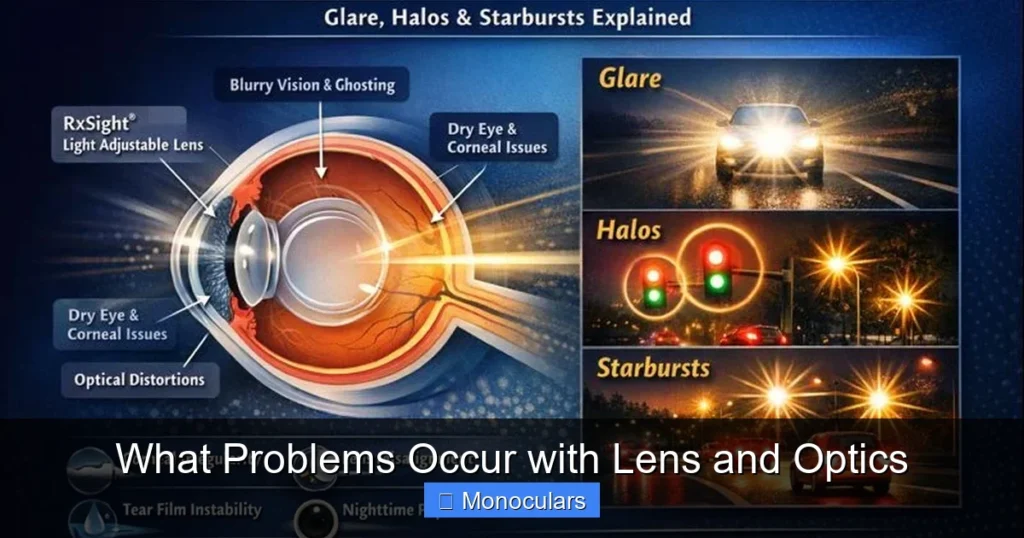
Lens and optics issues can seriously impact your monocular experience, causing blurry images, glare, and color distortion. Understanding these common problems—like fogging, scratches, and chromatic aberration—helps you choose better gear and maintain it properly for clear, reliable viewing.
Key Takeaways
- Fogging and condensation: Moisture buildup inside or on lenses due to temperature changes can block vision; use anti-fog coatings and proper storage.
- Scratches and surface damage: Even minor scratches on lens surfaces reduce clarity; handle optics with lens caps and microfiber cloths.
- Chromatic aberration: Color fringing around objects happens when lenses fail to focus all wavelengths; look for ED or fluorite glass in high-quality monoculars.
- Lens flare and ghosting: Caused by stray light reflecting inside the barrel; multi-coated lenses and lens hoods help reduce this issue.
- Misalignment and collimation errors: If optical elements are out of alignment, images appear double or distorted; avoid dropping or rough handling.
- Dust and debris accumulation: Particles on lenses or inside the barrel degrade image quality; clean regularly with proper tools.
- Poor build quality and sealing: Low-quality materials lead to faster wear and moisture ingress; choose monoculars with O-ring sealing and durable housings.
📑 Table of Contents
- Introduction to Lens and Optics Problems in Monoculars
- Fogging and Condensation: The Invisible Enemy
- Scratches and Surface Damage: The Silent Image Killers
- Chromatic Aberration: When Colors Bleed
- Lens Flare and Ghosting: When Light Bounces Back
- Misalignment and Collimation Errors: When Things Go Out of Sync
- Dust, Debris, and Internal Contamination
- Conclusion: Protecting Your Optics for Long-Term Clarity
Introduction to Lens and Optics Problems in Monoculars
Monoculars are compact, powerful tools for outdoor enthusiasts, birdwatchers, hikers, and even tactical users. They offer magnification in a lightweight, portable design—perfect for spotting distant wildlife or scanning landscapes. But like any optical device, monoculars aren’t immune to problems. Whether you’re using a budget model or a high-end optic, issues with lens and optics can quickly turn a great viewing experience into a frustrating one.
Understanding what problems occur with lens and optics is the first step toward better performance and longer product life. From foggy lenses to color distortions, these issues stem from design flaws, environmental factors, or improper care. The good news? Most of these problems are preventable—or at least manageable—with the right knowledge and habits. In this guide, we’ll walk through the most common lens and optics problems, why they happen, and how to avoid or fix them.
Fogging and Condensation: The Invisible Enemy
One of the most frequent complaints among monocular users is fogging. This happens when moisture condenses on the lens surfaces, either inside or outside the device. It’s especially common when moving from a cold environment to a warm one—like stepping out of an air-conditioned car into humid outdoor air.
Visual guide about What Problems Occur with Lens and Optics
Image source: library.88guru.com
Why Fogging Happens
Fogging occurs due to temperature differences. When warm, moist air hits a cold lens, water droplets form—just like on a bathroom mirror after a hot shower. Internal fogging is even more problematic because it means moisture has gotten inside the monocular, often due to poor sealing or damage to the O-rings.
How to Prevent and Fix Fogging
To avoid fogging, store your monocular in a dry, temperature-stable environment. Use silica gel packs in your gear bag to absorb excess moisture. Many high-quality monoculars are nitrogen-purged and O-ring sealed to prevent internal fogging—look for these features when buying. If your lens fogs up, let it acclimate slowly to room temperature before wiping. Never use heat sources like hair dryers, as rapid temperature changes can damage coatings.
Pro tip: Apply an anti-fog solution designed for optics. These sprays create a thin film that reduces surface tension, preventing droplets from forming. Just be sure to use a product made for lenses—household anti-fog sprays may contain chemicals that damage coatings.
Scratches and Surface Damage: The Silent Image Killers
Even the tiniest scratch on a lens can degrade image quality. While monoculars are built for durability, they’re not indestructible. Scratches often come from improper cleaning, storing without lens caps, or accidental drops.
Common Causes of Scratches
Using rough cloths, tissues, or clothing to wipe lenses is a major culprit. Sand, dirt, or dust particles can act like sandpaper when rubbed across the surface. Even placing the monocular face-down on a hard surface can cause micro-scratches over time.
How to Protect and Clean Lenses
Always use a microfiber cloth designed for optics. These are soft, lint-free, and gentle on coatings. For stubborn smudges, use a lens cleaning solution or pre-moistened lens wipes. Never spray liquid directly on the lens—apply it to the cloth first.
Store your monocular with lens caps on, and consider a protective case. If you’re hiking or in dusty environments, a neoprene cover adds an extra layer of protection. Remember: prevention is easier than repair. Most scratches can’t be fixed without professional recoating or lens replacement, which can be costly.
Chromatic Aberration: When Colors Bleed
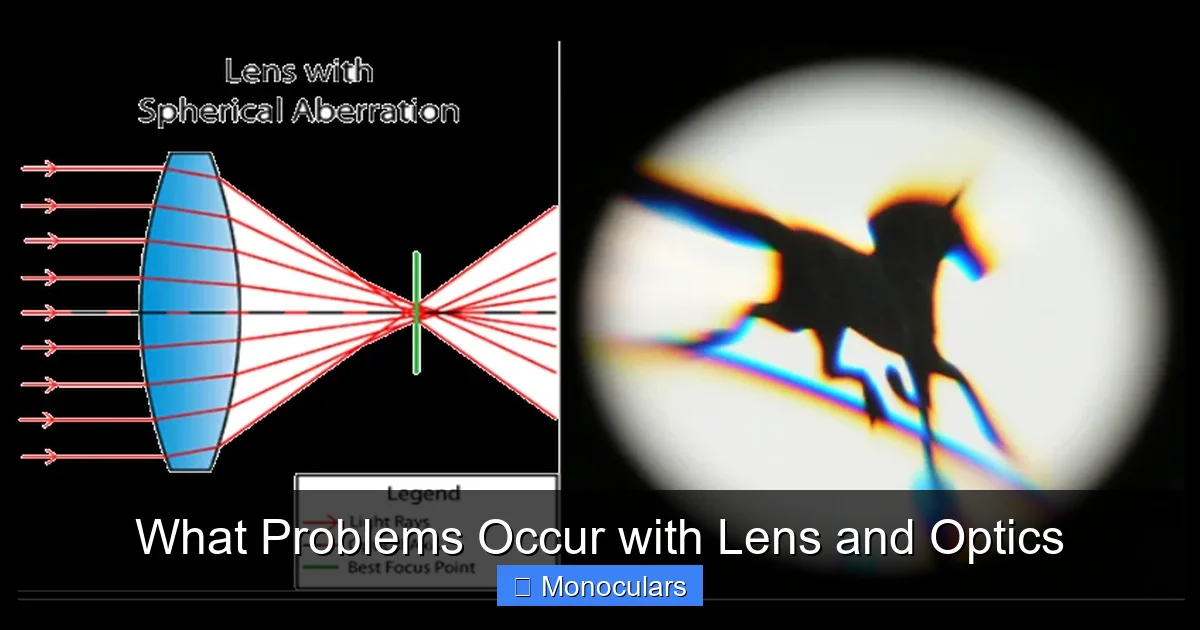
Have you ever looked through your monocular and noticed rainbow-like fringes around bright objects? That’s chromatic aberration—a common optics problem where lenses fail to focus all colors to the same point.
Understanding Chromatic Aberration
Lenses bend light to create an image, but different wavelengths (colors) bend at slightly different angles. Blue and red light, for example, focus at different distances, causing color fringing—especially at high magnifications or in high-contrast scenes.
How to Minimize Chromatic Aberration
The best defense is choosing a monocular with high-quality glass. Look for terms like “ED glass” (extra-low dispersion) or “fluorite-coated elements.” These materials reduce color separation and deliver sharper, more natural images. While no lens eliminates chromatic aberration completely, premium optics come very close.
If you already own a monocular with this issue, try reducing magnification or avoiding high-contrast scenes (like a dark bird against a bright sky). While not a perfect fix, it can lessen the effect. Upgrading to a better model may be the best long-term solution.
Lens Flare and Ghosting: When Light Bounces Back
Lens flare appears as bright streaks or circles in your field of view, often when pointing the monocular toward a strong light source like the sun. Ghosting refers to faint duplicate images or halos around bright objects. Both are caused by internal reflections within the lens system.
What Causes Flare and Ghosting?
Stray light enters the monocular and bounces between lens elements and the barrel interior. This is more likely in monoculars with fewer lens coatings or poor internal baffling. Wide-angle designs and bright sunlight increase the risk.
Reducing Flare and Ghosting
Multi-coated or fully multi-coated lenses are essential. These coatings reduce reflections by allowing more light to pass through and less to bounce around. Look for monoculars that advertise “fully multi-coated optics” for the best performance.
Use a lens hood or shade your monocular with your hand when viewing near bright light. Avoid pointing it directly at the sun. If flare occurs, reposition slightly to minimize the angle of incoming light. While you can’t eliminate it entirely, these steps significantly reduce the problem.
Misalignment and Collimation Errors: When Things Go Out of Sync
Monoculars rely on precise alignment of lenses and prisms. If these components shift—due to impact, poor manufacturing, or thermal stress—the image can appear double, blurry, or distorted. This is known as misalignment or collimation error.
Signs of Misalignment
You might notice that objects appear to “jump” when you move your eye, or that the image seems split down the middle. At high magnifications, even slight misalignment becomes obvious. This issue is more common in cheaper monoculars with loose internal mounts.
How to Prevent and Address Misalignment
Handle your monocular with care. Avoid dropping it or exposing it to extreme temperature changes, which can warp internal components. If you suspect misalignment, don’t try to fix it yourself—opening the device can cause further damage.
Contact the manufacturer or a professional repair service. Some high-end brands offer collimation services. For budget models, it may be more cost-effective to replace the unit. Always check reviews and build quality before purchasing to reduce the risk.
Dust, Debris, and Internal Contamination
Dust and tiny particles can accumulate on lens surfaces or, worse, inside the monocular. While external dust is easy to clean, internal contamination is a serious issue that affects image clarity and can lead to mold or corrosion over time.
How Dust Gets In
Poor sealing, worn O-rings, or damage to the housing can allow dust and moisture to enter. Even breathing on the eyepiece can introduce moisture and particles over time.
Keeping Your Monocular Clean
Use a blower brush or air blower to remove loose dust before wiping. For internal issues, prevention is key. Choose monoculars with robust sealing and avoid exposing them to sandy or dusty environments when possible. If you notice internal dust or fungus, stop using the device and seek professional cleaning.
Regular maintenance—like checking seals and storing in a clean case—goes a long way. Remember: once dust is inside, it’s nearly impossible to remove without disassembly.
Conclusion: Protecting Your Optics for Long-Term Clarity
Lens and optics problems can turn a promising monocular into a disappointing tool. But with awareness and proper care, you can avoid most of these issues. From fogging and scratches to chromatic aberration and misalignment, each problem has solutions—whether through smart purchasing, careful handling, or regular maintenance.
The key is to invest in quality optics with features like multi-coated lenses, nitrogen purging, and durable builds. Treat your monocular like the precision instrument it is: clean it gently, store it properly, and protect it from extreme conditions. By understanding what problems occur with lens and optics, you’ll enjoy clearer, sharper views for years to come.
Frequently Asked Questions
Why does my monocular lens keep fogging up?
Fogging happens when moisture condenses on cold lens surfaces due to temperature changes. It’s often caused by moving from a cold to warm environment. Prevent it by using anti-fog coatings, proper storage, and choosing nitrogen-purged, sealed monoculars.
Can scratches on a monocular lens be repaired?
Minor surface scratches may not affect image quality much, but deep ones usually can’t be fixed without professional recoating or lens replacement. Prevention is best—always use lens caps and clean with microfiber cloths.
What causes color fringes around objects in my monocular?
This is chromatic aberration, caused when lenses fail to focus all light colors at the same point. It’s more common in lower-quality optics. Look for monoculars with ED or fluorite glass to minimize this issue.
How do I reduce lens flare when using my monocular in bright sunlight?
Use a lens hood or shade the monocular with your hand. Choose models with fully multi-coated lenses, which reduce internal reflections. Avoid pointing it directly at the sun.
Is it normal to see double images in a monocular?
No, double images usually indicate misalignment of internal lenses or prisms. This can result from impact or poor manufacturing. Contact the manufacturer for repair or consider upgrading to a better model.
Can dust inside my monocular be cleaned?
Internal dust is difficult to remove and often requires professional disassembly. Prevent it by choosing well-sealed monoculars and avoiding dusty environments. Regular external cleaning helps reduce the risk.