Buying a night vision monocular can be tricky if you don’t know what to look for. Many shoppers fall into traps like prioritizing price over quality or ignoring critical specs. This guide helps you avoid those mistakes and make a smart, informed purchase.
Key Takeaways
- Don’t choose based on price alone: Cheap monoculars often lack durability, image clarity, and battery life. Invest in quality for long-term use.
- Ignore misleading “night vision” claims: Some devices use digital sensors, not true night vision tech. Know the difference between generations and sensor types.
- Overlooking battery life and power options: A monocular that dies mid-use is useless. Check battery type, runtime, and whether it supports rechargeable or replaceable batteries.
- Neglecting field of view and magnification: High magnification isn’t always better. A narrow field of view can make tracking moving objects difficult in the dark.
- Skipping build quality and weather resistance: Outdoor use demands rugged construction. Look for waterproof, fog-proof, and shock-resistant designs.
- Not testing ergonomics and ease of use: A heavy or awkward monocular can be hard to hold steady. Comfort and intuitive controls matter during extended use.
- Forgetting about image resolution and sensor type: Higher resolution and Gen 2+ sensors deliver clearer, brighter images. Don’t settle for blurry or grainy visuals.
📑 Table of Contents
- Introduction: Why Your Night Vision Monocular Choice Matters
- Mistake #1: Prioritizing Price Over Performance
- Mistake #2: Falling for Misleading “Night Vision” Labels
- Mistake #3: Ignoring Battery Life and Power Options
- Mistake #4: Overlooking Field of View and Magnification
- Mistake #5: Skipping Build Quality and Weather Resistance
- Mistake #6: Not Testing Ergonomics and Ease of Use
- Conclusion: Make a Smart, Informed Choice
Introduction: Why Your Night Vision Monocular Choice Matters
Imagine you’re out on a nighttime hike, tracking wildlife, or securing your property after dark. You pull out your night vision monocular, eager to see clearly in the shadows—only to be met with a grainy, dim image that fades after ten minutes. Frustrating, right? This scenario is more common than you think, and it usually stems from avoidable buying mistakes.
Night vision monoculars are powerful tools, but they’re not all created equal. Whether you’re a hunter, security professional, or outdoor enthusiast, choosing the right device can mean the difference between spotting a deer at 200 yards and missing it entirely. Unfortunately, many buyers focus on the wrong features—like flashy marketing or low price—and end up with a gadget that underperforms when it matters most.
Mistake #1: Prioritizing Price Over Performance
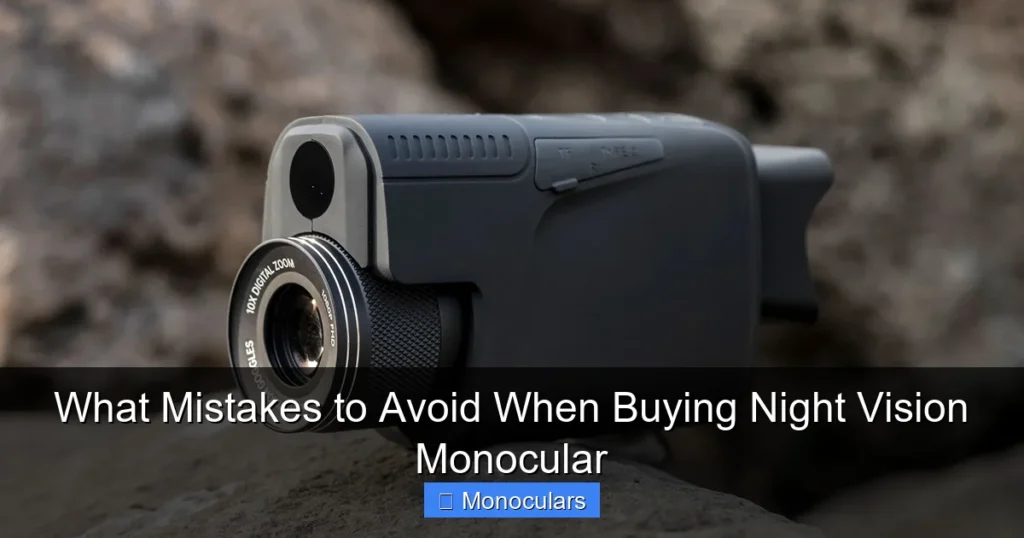
It’s tempting to grab the cheapest night vision monocular you can find, especially if you’re new to the technology. But here’s the truth: you often get what you pay for. Budget models may advertise “night vision” capabilities, but they frequently rely on basic digital sensors that amplify available light—like moonlight or starlight—rather than using true infrared or image intensifier tubes.
Visual guide about What Mistakes to Avoid When Buying Night Vision Monocular
Image source: bestpickinsider.com
What to Look for Instead
Instead of focusing on price, consider the value over time. A mid-range monocular with a Gen 2 image intensifier tube may cost more upfront but will last years and perform reliably in total darkness when paired with an IR illuminator. For example, the Pulsar Edge GS Super 1+ offers excellent clarity and durability for under $500—far better than a $100 model that struggles in low light.
Also, check warranty and customer support. Reputable brands like ATN, Sightmark, and Yukon Advanced Optics offer solid warranties and responsive service, which adds long-term value.
Mistake #2: Falling for Misleading “Night Vision” Labels
Not all night vision is created equal. Some companies slap the term “night vision” on devices that are essentially digital cameras with night mode. These may work in twilight but fail in near-total darkness. True night vision monoculars use image intensifier tubes (IITs) or thermal imaging sensors, which are far more effective.
Understanding Night Vision Generations
Night vision technology is categorized into generations (Gen 1, Gen 2, Gen 3, etc.). Here’s a quick breakdown:
- Gen 1: Entry-level, works in moderate low light. Affordable but limited range and clarity.
- Gen 2: Better resolution, longer range, and improved performance in darker conditions. Ideal for most users.
- Gen 3: Military-grade, exceptional clarity and sensitivity. Expensive but top-tier.
Always check the generation or sensor type before buying. A “night vision” label without specs is a red flag.
Digital vs. Analog Night Vision
Digital night vision monoculars use CMOS sensors and LCD screens. They’re lighter and often cheaper but can suffer from lag, lower resolution, and shorter battery life. Analog models with IITs provide smoother, more natural images with better contrast. For serious use, analog is usually the better choice.
Mistake #3: Ignoring Battery Life and Power Options
There’s nothing worse than your monocular dying mid-mission. Yet, many buyers overlook battery specs. A device that runs for only 2–3 hours may be fine for short trips but useless for overnight surveillance or extended wildlife observation.
Check Battery Type and Runtime
Look for monoculars that use standard batteries (like AA or CR123A) or built-in rechargeable lithium-ion packs. Rechargeable models are convenient but ensure they have a USB-C or micro-USB port for easy charging. For example, the ATN X-Sight 4K Pro offers up to 18 hours of runtime with its internal battery—perfect for all-night use.
Also, consider whether the device supports external power banks. Some high-end models let you plug in a power source via USB, extending usability in the field.
Power-Saving Features Matter
Features like auto shut-off, adjustable brightness, and standby mode can significantly extend battery life. A monocular that turns off after 5 minutes of inactivity saves power without sacrificing readiness.
Mistake #4: Overlooking Field of View and Magnification
High magnification sounds great—until you can’t find your target because the field of view is too narrow. Magnification and field of view are inversely related: the higher the zoom, the smaller the area you can see.
Finding the Right Balance
For most users, a magnification of 3x to 5x is ideal. It provides enough zoom to identify objects at 100–200 yards while maintaining a wide enough field of view to track movement. For example, a 5x monocular with a 10° field of view lets you scan a large area quickly—critical when spotting animals or intruders.
Avoid monoculars with 8x or higher magnification unless you’re using a tripod. Handheld high-zoom devices are hard to stabilize, leading to shaky, unusable images.
Adjustable vs. Fixed Magnification
Some models offer variable zoom (e.g., 3–12x), which sounds flexible but can reduce image quality at higher settings. Fixed magnification often delivers sharper, more consistent performance. Choose based on your primary use case.
Mistake #5: Skipping Build Quality and Weather Resistance
Night vision monoculars are often used in harsh environments—rain, snow, dust, and drops are common. A flimsy plastic body or weak lens housing can ruin your device in seconds.
Look for Rugged Construction
Opt for monoculars with magnesium alloy or reinforced polymer bodies. These materials are lightweight yet durable. Check for rubber armor coating, which improves grip and absorbs shock.
Weatherproofing Is Non-Negotiable
At minimum, your monocular should be water-resistant (IPX4 or higher) and fog-proof (nitrogen-purged to prevent internal condensation). For extreme conditions, look for IPX7 or IPX8 ratings, meaning the device can withstand submersion.
For instance, the Sightmark Wraith Mini is IPX7-rated and built to handle rain, snow, and rough handling—ideal for hunters and outdoor adventurers.
Mistake #6: Not Testing Ergonomics and Ease of Use
A monocular might have all the right specs, but if it’s uncomfortable to hold or has confusing controls, you won’t use it. Ergonomics matter, especially during long observation sessions.
Weight and Size
Heavier monoculars (over 1.5 lbs) can cause hand fatigue. Look for compact models under 12 oz if you plan to carry it all day. The Yukon NVMT 2.5×50 weighs just 10.5 oz and fits easily in a backpack.
Intuitive Controls
Buttons should be easy to locate and press with gloves on. Touchscreens can be problematic in cold or wet conditions. Physical dials and toggles are more reliable in the field.
Eye Relief and Diopter Adjustment
If you wear glasses, ensure the monocular has long eye relief (15mm or more) and a adjustable diopter. This lets you fine-tune focus for your vision without removing your glasses.
Conclusion: Make a Smart, Informed Choice
Buying a night vision monocular doesn’t have to be overwhelming—if you know what to avoid. Steer clear of cheap imitations, misleading labels, and poor build quality. Focus on real performance metrics like sensor type, battery life, and weather resistance. Remember, the best monocular isn’t the flashiest or the cheapest—it’s the one that works when you need it most.
Take your time, read reviews, and consider your specific needs. Whether you’re scanning a forest trail or monitoring your backyard, the right night vision monocular can give you a crucial edge in the dark. Avoid these common mistakes, and you’ll be well on your way to a purchase you’ll be happy with for years to come.
Frequently Asked Questions
What’s the difference between Gen 1 and Gen 2 night vision?
Gen 1 is entry-level night vision with limited range and clarity, suitable for basic use in moderate low light. Gen 2 offers better resolution, longer detection range, and improved performance in darker conditions, making it ideal for serious outdoor or security applications.
Can I use a night vision monocular in total darkness?
Most traditional night vision monoculars need some ambient light (like moonlight) to function. However, models with built-in infrared (IR) illuminators can work in total darkness by projecting invisible IR light that the sensor detects.
Are digital night vision monoculars any good?
Digital night vision can be effective and is often more affordable and lightweight. However, they may have lower resolution, image lag, and shorter battery life compared to analog models with image intensifier tubes.
How far can a night vision monocular see?
Range depends on the model and conditions. Entry-level monoculars may detect objects up to 100 yards, while high-end Gen 2 or Gen 3 models can identify targets at 300+ yards with an IR illuminator.
Do I need a special license to own a night vision monocular?
In most countries, including the U.S., civilian ownership of night vision devices is legal. However, export restrictions may apply, and some high-end Gen 3 models require special permits for international shipping.
Can I use a night vision monocular during the day?
Most traditional night vision monoculars with image intensifier tubes should not be used in daylight, as bright light can damage the sensor. Digital models are generally safe for daytime use, but check the manufacturer’s guidelines.