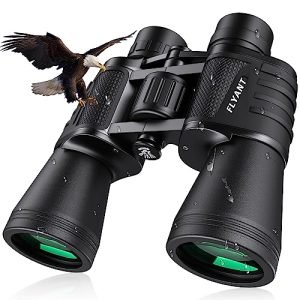
Tracking moving objects at night is challenging due to low light, reduced contrast, and slower eye response. Factors like age, eye health, and equipment limitations also play a role. Understanding these causes helps you choose the right tools, like high-quality monoculars, to enhance nighttime observation.
Have you ever tried to follow a bird in flight or a deer crossing a field at dusk—only to lose sight of it almost instantly? You’re not alone. Many people experience difficulty tracking moving objects at night, even when they have good daytime vision. It’s a common challenge for hunters, wildlife observers, security personnel, and even casual stargazers. The problem isn’t just about being in the dark—it’s about how our eyes and brains process motion when light is scarce.
Nighttime tracking is a complex interplay of biology, environment, and technology. Our eyes are built for daylight. They rely on cone cells in the retina to detect color and fine detail, but these cells need bright light to function well. When the sun goes down, our vision shifts to rod cells, which are more sensitive to light but less capable of distinguishing shapes and movement clearly. This transition, while helpful for basic night vision, creates a noticeable drop in our ability to follow fast-moving targets. Add in factors like aging, eye strain, or poor-quality optics, and the challenge becomes even greater.
Understanding what causes difficulty tracking moving objects at night is the first step toward solving it. Whether you’re scanning the woods for game or monitoring a property after dark, knowing the science behind your vision—and how tools like monoculars can help—can make a big difference. In this article, we’ll explore the key reasons behind nighttime tracking struggles and offer practical tips to improve your experience.
Key Takeaways
- Low light reduces visual acuity: The human eye struggles to detect motion in dim conditions because rod cells, responsible for night vision, are less sensitive to detail and color.
- Poor contrast makes objects blend in: At night, moving targets often lack contrast against dark backgrounds, making them harder to distinguish.
- Peripheral vision is less effective: While peripheral vision helps detect motion, it’s less sharp than central vision, especially in darkness.
- Eye fatigue and aging impact performance: As we age, pupils shrink and lenses yellow, reducing light intake and slowing focus adjustments.
- Equipment quality matters: Low-quality optics in monoculars or binoculars can worsen tracking by introducing glare, blur, or insufficient magnification.
- Environmental factors play a role: Light pollution, weather, and obstructions like trees or fog can further hinder nighttime tracking.
- Using the right monocular helps: High-end monoculars with large objective lenses, multi-coated optics, and image stabilization improve tracking ability in low light.
📑 Table of Contents
How the Human Eye Works in Low Light
Our eyes are remarkable, but they have limits—especially when it comes to seeing in the dark. During the day, bright light activates cone cells in the retina, allowing us to see vibrant colors and sharp details. But as light fades, the eye switches to rod cells, which are far more sensitive to dim light but don’t process color or fine detail well. This shift is why everything looks gray and blurry at night.
The Role of Rod and Cone Cells
Rod cells are concentrated around the edges of the retina, which is why we often detect movement better out of the corner of our eye. However, they’re not great at tracking fast motion or identifying shapes. Cone cells, on the other hand, are packed into the center of the retina (the fovea) and are responsible for high-resolution vision—but they need plenty of light. At night, with fewer cones active, our ability to follow a moving object drops significantly.
Dark Adaptation and Pupil Dilation
When you step into a dark area, your pupils dilate to let in more light. This process, called dark adaptation, can take up to 30 minutes to reach full effectiveness. During this time, your eyes are still adjusting, making it hard to track anything that moves quickly. Even after adaptation, the amount of light reaching your retina is minimal, limiting how well you can see motion.
Why Motion Tracking Fails at Night
Tracking a moving object requires your eyes to detect changes in position rapidly and smoothly. In daylight, this happens almost effortlessly. But at night, several factors interfere with this process.
Reduced Visual Acuity
Visual acuity—the clarity of your vision—drops sharply in low light. Even with perfect eyesight, you might only see at 20/40 or worse in dim conditions. This means small or distant moving objects become nearly invisible. For example, a rabbit hopping across a field might appear as a faint blur or disappear entirely.
Delayed Neural Processing
Your brain takes longer to process visual information in the dark. The signals from rod cells are slower and less precise than those from cones. This delay can cause a lag between when an object moves and when your brain registers it—making it seem like the object “jumps” or vanishes.
Limited Field of View
While peripheral vision helps detect motion, it’s not designed for detailed tracking. At night, when central vision is weak, relying on the edges of your sight can lead to misjudging speed or direction. A bird flying across your field of view might seem to change course suddenly, even if it’s moving in a straight line.
The Impact of Age and Eye Health
As we age, our eyes undergo natural changes that affect nighttime vision. These changes can make tracking moving objects even more difficult.
Pupil Size and Light Intake
Younger people have larger pupils that can open wider in the dark, allowing more light in. With age, pupils tend to shrink and don’t dilate as much. This reduces the amount of light reaching the retina, making night vision poorer. A 60-year-old may let in only half the light of a 20-year-old under the same conditions.
Cataracts and Lens Yellowing
The lens of the eye can become cloudy with age (cataracts) or yellowed, scattering light and reducing contrast. This makes it harder to distinguish moving objects from their background. Even early-stage lens changes can affect tracking ability, especially in low-light environments.
Eye Fatigue and Strain
Staring into the dark for long periods can cause eye fatigue. Dry eyes, headaches, and blurred vision are common symptoms. When your eyes are tired, they’re less responsive to motion, making tracking even more challenging.
Environmental and External Factors
It’s not just biology—your surroundings play a big role in how well you can track objects at night.
Light Pollution and Glare
Artificial lights from streetlamps, buildings, or vehicles can create glare or wash out the natural darkness. This “light pollution” reduces contrast and makes it harder to see faint moving objects. For example, a deer near a road might be harder to spot because of nearby headlights.
Weather and Atmospheric Conditions
Fog, rain, snow, or humidity can scatter light and reduce visibility. Even a clear night with high humidity can make distant objects appear hazy. These conditions blur outlines and make motion harder to detect.
Obstructions and Terrain
Trees, bushes, hills, and buildings can block your line of sight. A moving object might disappear behind an obstacle and reappear somewhere else, making it seem like it vanished or teleported. This is especially common in wooded or uneven terrain.
How Monoculars Can Help Overcome These Challenges
While biology and environment set limits, the right tools can dramatically improve your ability to track moving objects at night.
Amplifying Available Light
High-quality monoculars gather more light than the human eye can. Models with large objective lenses (42mm or larger) capture more ambient light, brightening the image. This helps you see details and motion that would otherwise be invisible.
Enhancing Contrast and Clarity
Multi-coated lenses reduce glare and improve contrast, making moving objects stand out against dark backgrounds. Some monoculars also use infrared or night vision technology to illuminate scenes in total darkness.
Stabilization and Magnification
Image-stabilized monoculars reduce shake, which is crucial when tracking fast-moving targets. Higher magnification (7x to 10x) brings distant objects closer, but too much can narrow the field of view. A balance is key—look for models with wide-angle lenses for better tracking.
Choosing the Right Monocular
Not all monoculars are created equal. For nighttime use, prioritize:
- Large objective lens (42mm+)
- Fully multi-coated optics
- High light transmission (90%+)
- Image stabilization (if available)
- Compact and lightweight design for portability
Brands like Vortex, Leupold, and Bushnell offer excellent options for low-light observation.
Practical Tips for Better Nighttime Tracking
Beyond equipment, small adjustments in technique can make a big difference.
Use Peripheral Vision Wisely
Since rod cells are concentrated in the periphery, try looking slightly to the side of the object you’re tracking. This “averted vision” technique can help you detect motion more easily.
Minimize Head and Eye Movement
Sudden movements can cause motion blur. Keep your head steady and use smooth, controlled sweeps when scanning an area.
Allow Time for Dark Adaptation
Avoid bright lights before and during nighttime observation. Use red-filtered flashlights, which preserve night vision better than white light.
Practice Regularly
Like any skill, tracking improves with practice. Spend time in low-light environments to train your eyes and brain to respond better to motion.
Conclusion
Difficulty tracking moving objects at night is a common issue rooted in the biology of human vision, environmental conditions, and equipment limitations. Low light reduces visual acuity, slows neural processing, and weakens contrast—making it hard to follow fast-moving targets. Age-related changes and eye fatigue further compound the problem. However, understanding these challenges opens the door to effective solutions.
Using high-quality monoculars with superior light-gathering ability, multi-coated optics, and stabilization can dramatically improve your nighttime tracking performance. Combined with smart techniques like averted vision and dark adaptation, you can overcome many of the natural limitations of night vision. Whether you’re a hunter, wildlife enthusiast, or security professional, investing in the right tools and knowledge will help you see more—and track better—when the sun goes down.
Frequently Asked Questions
Why is it harder to see moving objects at night?
At night, your eyes rely on rod cells, which are sensitive to light but poor at detecting detail and motion. Combined with reduced contrast and slower brain processing, this makes tracking moving objects much more difficult than in daylight.
Can monoculars really help with nighttime tracking?
Yes, high-quality monoculars gather more light, improve contrast, and stabilize images, making it easier to see and follow moving objects in low-light conditions. Look for models with large lenses and multi-coated optics.
Does age affect night vision and tracking ability?
Absolutely. As we age, pupils shrink, lenses yellow, and light intake decreases. These changes reduce visual acuity and make it harder to track motion at night, especially after age 50.
What’s the best way to use peripheral vision for tracking?
Try looking slightly to the side of the object you want to track. This “averted vision” technique uses the rod-rich areas of your retina, which are better at detecting motion in low light.
How long does it take for eyes to adjust to darkness?
Full dark adaptation can take up to 30 minutes. Avoid bright lights during this time, and use red-light flashlights to preserve your night vision while moving around.
Are night vision monoculars worth the investment?
If you frequently observe or track objects at night, yes. Night vision or thermal monoculars can reveal details invisible to the naked eye, greatly enhancing safety and effectiveness in low-light environments.