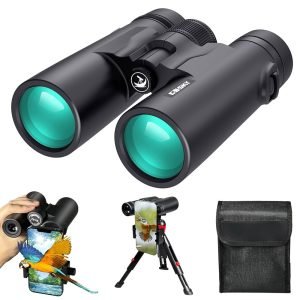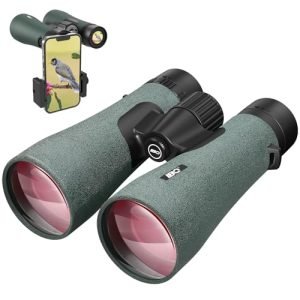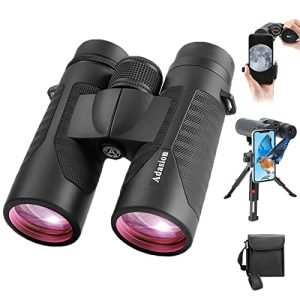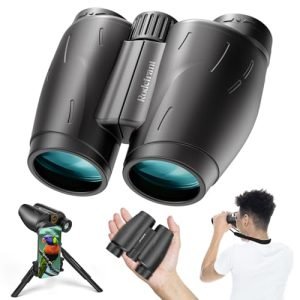
Ever wonder why some people always have optics handy for a quick look, while others pack theirs away and forget them? It often comes down to the simple choice between a pocket monocular and compact binoculars. Deciding which gets carried more isn't just about size; it’s about how seamlessly they fit into your everyday life and your specific viewing needs.
In our research, we found that the real difference lies in convenience versus immersive experience. While a pocket monocular can offer a field of view as narrow as 5.5 degrees, compact binoculars might provide a wider 6.5 degrees, significantly impacting how much you can scan at once. Let’s explore which one might become your most-used companion.
Quick Answer
Pocket monoculars get carried more often due to their superior portability and ease of use. They fit easily into a pocket or small pouch for instant access. Compact binoculars offer a more comfortable and immersive viewing experience but are slightly bulkier.
What's the Real Difference Between Monoculars and Compact Binoculars?
At their core, both pocket monoculars and compact binoculars are optical instruments designed to magnize distant objects. However, their form factor, intended use, and user experience are quite distinct. A monocular uses a single eyepiece, meaning you view the world through one eye.
This design philosophy leads to exceptionally small and lightweight devices, often fitting into the palm of your hand. They’re built for quick, opportunistic observations. Compact binoculars, on the other hand, feature two eyepieces, one for each eye, mimicking the design of full-sized binoculars but in a scaled-down, more portable package.
This dual-eyepiece setup provides a more natural, binocular vision experience, which is generally considered more comfortable for extended use and offers a greater sense of depth perception.
The choice between them isn't about which is "better" in an absolute sense, but which aligns more closely with your lifestyle and how you plan to use optics. For example, if you're looking for a tool to quickly spot a distant bird or read a sign across a crowded event, a monocular's instant deployability shines. Aggregate reviews show users often appreciate that a monocular can be operated one-handed, allowing them to maintain balance or hold other items.
Conversely, if your goal is to sit for a while and study intricate details, like identifying specific bird species or enjoying a landscape, the stereo vision and wider field of view provided by compact binoculars can be a significant advantage, making longer viewing sessions far less fatiguing. This difference in user comfort and application is the primary driver behind which device sees more frequent use in daily carry.
Pocket Monocular: The Ultra-Portable Option
The pocket monocular is the champion of unconspicuous carrying. Its defining characteristic is its single eyepiece, which drastically reduces its size and weight compared to binoculars. Think of it as a miniaturized telescope that you can slip into a shirt pocket, jacket pocket, or even a small coin purse.
This extreme portability makes it an ideal choice for people who want optical enhancement without the bulk of traditional binoculars. Manufacturer specifications often highlight dimensions that are less than 5 inches in length and weigh mere ounces, sometimes as little as 3-4 ounces. This makes them feel almost negligible when you're carrying them around.
The design of a pocket monocular lends itself to immediate use. There’s no unfolding, no adjusting two barrels, and often no need for two hands. You simply pull it out, bring it to your eye, and look.
This rapid deployment is invaluable in situations where opportunities for observation are fleeting. For instance, while hiking, you might spot a rare animal at the edge of a clearing; a monocular allows you to get a quick look and then resume your activity without significant interruption. Similarly, at an outdoor event, you can easily zoom in on a distant speaker or performer without fumbling.
This "always ready" capability is a primary reason why many users report carrying their monocular more frequently than any other optical device.
Pocket Monocular Pros and Cons
Here's a straightforward look at the upsides and downsides of relying on a pocket monocular.
Pros:
- Ultimate Portability: Exceptionally small and lightweight, easily fitting into pockets, purses, or small pouches.
- Rapid Deployment: Can be brought to the eye and used with one hand almost instantly.
- Discreet: Less obtrusive than binoculars, making it suitable for situations where you don't want to draw attention.
- Affordability: Many good quality pocket monoculars are available at lower price points compared to equivalent binoculars.
- Simplicity: Easy to operate, making it user-friendly for beginners.
Cons:
- Limited Viewing Comfort: Extended use with one eye can lead to eye strain and fatigue.
- Narrower Field of View: Often has a smaller field of view than compact binoculars, making it harder to track moving subjects.
- No Depth Perception: Viewing with a single eye does not provide the stereoscopic vision or 3D effect that binoculars offer.
- Image Quality Variability: While good models exist, the quality of optics in very small, inexpensive monoculars can sometimes be a compromise.
Who Needs a Pocket Monocular?
A pocket monocular is best suited for individuals who prioritize extreme portability and convenience above all else. It's an excellent companion for:
- Casual Sightseers: Those who enjoy spotting details on buildings, reading distant signs, or getting a closer look at a faraway object without wanting to carry a larger device.
- Hikers and Backpackers: Anyone looking to save space and weight in their pack for essentials. It's perfect for those quick peeks at wildlife or scenery without the commitment of larger gear.
- Event Goers: Useful for concerts, sporting events, or parades where you might want a closer view of the action but don't want to be encumbered by binoculars.
- Outdoor Enthusiasts on the Move: If your activity involves constant movement and requires quick glances rather than prolonged observation, a monocular is ideal. This includes activities like casual birding on a nature walk where you might quickly identify a bird before it flies off.
- Beginners to Optics: Its simplicity makes it a great entry point for those new to using optical devices.
Compact Binoculars: The Comfortable Viewer
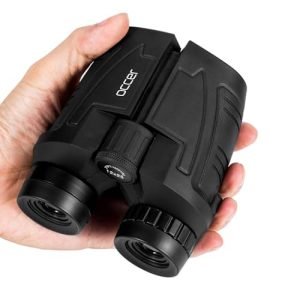
Compact binoculars bridge the gap between full-sized optics and the ultra-minimalist monocular. While still designed for portability, they maintain the fundamental dual-eyepiece structure of traditional binoculars. This means you look through them with both eyes, which offers a more natural and comfortable viewing experience, especially for longer durations.
Manufacturer specifications often cite weights ranging from 10 to 20 ounces, and lengths that might be around 4 to 6 inches. Despite being larger than a pocket monocular, they are significantly more manageable than standard binoculars, easily fitting into a larger jacket pocket, a small backpack, or a dedicated case.
The primary advantage of compact binoculars over monoculars lies in their binocular vision. Looking through two eyepieces provides stereoscopic vision, which creates a sense of depth and three-dimensionality. This makes scenes feel more real and immersive, which is highly desirable for activities like wildlife observation or landscape viewing.
Furthermore, using both eyes distributes the visual effort, significantly reducing eye strain compared to prolonged monocular use. This comfort factor is often the deciding element for users who plan to spend extended periods observing, whether that's birdwatching for an afternoon or scanning a wide vista. The wider field of view, which can extend to 6.5 degrees or more depending on the model, also aids in spotting and tracking moving subjects, a common requirement in birding and wildlife spotting.
Compact Binocular Pros and Cons
Here’s a balanced view of what compact binoculars bring to the table.
Pros:
- Superior Viewing Comfort: Dual-eyepiece viewing is more natural and reduces eye strain during extended use.
- Enhanced Depth Perception: Provides a 3D view, making scenes more immersive and realistic.
- Wider Field of View: Generally offers a broader field of view, making it easier to find and track subjects.
- Better Image Quality Potential: The larger objective lenses (though still compact) can often accommodate better optical coatings and glass, leading to brighter and sharper images.
- Ideal for Extended Observation: A great choice for activities requiring prolonged viewing, like serious birdwatching or nature photography scouting.
Cons:
- Bulkier Than Monoculars: While compact, they are still larger and heavier than pocket monoculars, requiring more dedicated carrying space.
- Slightly Slower Deployment: Usually requires two hands and a moment to unfold and adjust.
- Can Be Less Discreet: The more traditional binocular shape might draw more attention in certain settings.
- Higher Price Point Potential: While affordable options exist, premium compact binoculars can rival the cost of full-sized models.
Who Needs Compact Binoculars?
Compact binoculars are an excellent choice for individuals who want a balance of portability and a quality viewing experience, particularly for activities that involve sustained observation. They are ideal for:
- Dedicated Birdwatchers and Wildlife Enthusiasts: Those who spend significant time identifying and observing birds and animals will appreciate the comfort and field of view. For those serious about birding, consider our guide on the best binoculars for beginner birdwatchers.
- Nature Lovers: Anyone who enjoys immersing themselves in the natural world and wants to appreciate details without carrying heavy gear. They are particularly useful for activities like best binoculars for nature walks.
- Outdoor Adventurers: For hikers, campers, or general outdoor explorers who want to enhance their view of the surroundings without the burden of full-sized binoculars. For rugged conditions, models like best waterproof binoculars for rugged terrain are worth exploring.
- Travelers: When space is at a premium but you still want to capture distant sights, compact binoculars are a smart choice. They can offer a good view for best binoculars for parade viewing or scenic overlooks.
- Hunters: Many hunters prefer compact binoculars for their balance of performance and portability, especially during hunts like best binoculars for hog hunting at dusk or best binoculars for hunting in poor light.
Carrying Them: The Practical Comparison
When we talk about which device "gets carried more," we're really talking about how easily and how often you'll actually have it with you when an opportunity arises. This is where the trade-offs between pocket monoculars and compact binoculars become most apparent. The sheer lack of bulk associated with a monocular makes it an almost unconscious addition to your everyday carry.
It requires minimal thought to bring along, and it occupies virtually no meaningful space. This convenience factor is a massive influence on how frequently it's used.
On the other hand, while compact binoculars are designed for portability, they still represent a conscious packing decision. You need to be prepared to carry them, perhaps in a specific pocket, a small bag, or a dedicated case. This slight increase in effort means they might be left behind more often if you're not specifically planning an outing where they'll be useful.
However, for those who value the enhanced viewing experience, the comfort of using both eyes, and the increased field of view, the slightly greater effort to carry compact binoculars is often well worth it. The decision hinges on whether the "always ready" nature of the monocular or the superior visual experience of binoculars is more important to you for your intended use.
Pocket Monocular: Effortless Carry and Quick Peeks
The pocket monocular wins hands down on the "effortless carry" front. Its minuscule size and light weight mean you can take it virtually anywhere without it being a burden. Think of it this way: if you're already stepping out for a quick walk, grabbing your keys, and checking your phone, you can easily slip a monocular into that same pocket.
There's no mental checklist item like "don't forget the binoculars." This constant accessibility means it's more likely to be pulled out for those spontaneous moments of curiosity, spotting a hawk soaring overhead, identifying a distant cloud formation, or getting a closer look at an interesting sign.
This ease of deployment also translates to quick peeks. When you see something interesting, you don't want to be fumbling with gear. A monocular can be brought to your eye in seconds.
This makes it perfect for situations where your observation time is limited. For example, if you’re attending an outdoor event and want to get a better look at a performer on stage, or if you’re on a hike and glimpse something in the underbrush, the monocular allows for an instant look-and-put-away action. This efficiency is a huge part of why many users report having their monocular with them more often than any other optical tool.
It’s the ultimate grab-and-go gadget for those who appreciate having a little extra visual power at a moment's notice.
Compact Binoculars: Prioritizing Viewing Experience
While pocket monoculars excel at being taken everywhere, compact binoculars often win the battle for "frequency of intentional use" when the quality of observation matters more than sheer convenience. They are built for situations where you anticipate spending a longer time observing, and the comfort and depth of that experience are key. The dual-eyepiece design, which offers stereoscopic vision, provides a much more immersive and natural way to view the world.
This is particularly crucial for activities like serious birdwatching, where identifying subtle plumage details or behaviors requires prolonged, comfortable viewing. Our guide to the best binoculars for forest birdwatching highlights why this immersive quality is so valued.
The slightly larger size of compact binoculars, compared to pocket monoculars, allows for better optics and often a wider field of view. This broader perspective makes it easier to locate and follow moving subjects, a significant advantage when observing birds in flight or wildlife in their natural habitat. For instance, when hunting, particularly at dusk or in challenging light, having clear, detailed vision is paramount.
Models like the best binoculars for hunting in snow are designed for these specific, often lengthy, observational needs. While they might not be something you casually slip into a shirt pocket for a brief glance, compact binoculars are the go-to choice when you’re heading out for an activity where seeing more, and seeing it more comfortably, is the main goal.
Pocket Monocular vs. Compact Binoculars: Side-by-Side
Let's put these two types of optics head-to-head on the critical factors that influence which one you'll actually end up carrying. The decision often boils down to a trade-off between ultimate portability and a more comfortable, immersive viewing experience. It’s not just about the numbers; it’s about how those numbers translate into your real-world use.
Understanding these differences will help you pinpoint which device is the right companion for your specific adventures.
Size and Weight: The Deciding Factor for Some
When we look at sheer size and weight, the pocket monocular is the undisputed champion. Its design, featuring only a single eyepiece, allows for a drastically reduced footprint. Many pocket monoculars can be as small as a lipstick tube or a small flashlight, easily disappearing into a pocket or a small pouch.
This makes them incredibly unobtrusive. For example, manufacturer specifications often list weights under 4 ounces, making them almost imperceptible when carried. This minimal impact on your personal load is a primary reason they frequently get carried more often.
Compact binoculars, while still designed to be portable, are inherently larger and heavier due to their dual-eyepiece design and generally larger objective lenses (though still smaller than full-sized binoculars). They typically range from 10 to 20 ounces. While they can fit into a larger jacket pocket or a small bag, they are a more noticeable addition to your gear.
This difference in physical presence means that for individuals prioritizing absolute minimalism in their carry, the monocular is the clear choice. For activities like long-distance trekking or when every ounce counts, this size and weight advantage is paramount, influencing which device is chosen for the journey.
Viewing Comfort: Why Two Eyes Often Win
The difference in viewing comfort between a monocular and binoculars is significant, especially for prolonged use. Looking through a monocular means using only one eye. While convenient for a quick glance, this can lead to eye strain and fatigue if you try to observe for an extended period.
Your brain has to work harder to maintain focus with one eye, and this can be tiring. Aggregate reviews often mention discomfort after just a few minutes of continuous use.
Compact binoculars, by utilizing two eyepieces, offer a much more natural and comfortable viewing experience. This dual-eye approach leverages binocular vision, which is how humans are naturally designed to see. This distributes the visual workload across both eyes, significantly reducing strain.
Furthermore, binocular vision provides a sense of depth perception, making the scene appear more three-dimensional and immersive. This enhancement is invaluable for activities like birdwatching or landscape observation, where appreciating the subtle spatial relationships in a scene can greatly enrich the experience. For users planning to spend more than just a few moments observing, the comfort of compact binoculars often outweighs the ultimate portability of a monocular.
Ease of Use: Speed vs. Immersion
When it comes to ease of use, it’s a tale of two different philosophies: speed versus immersion. The pocket monocular is built for speed. Its single eyepiece and compact form factor mean you can deploy it almost instantly.
You simply pull it out, bring it to your eye, and you’re viewing. This one-handed operation is incredibly convenient for quick, opportunistic observations. You can be walking, standing, or even holding something else, and still manage to get a look through a monocular with minimal fuss.
This makes it ideal for situations where you might only have a few seconds to catch a glimpse of something interesting.
Compact binoculars, while not difficult to use, require a slightly more deliberate process. You typically need two hands to hold them steady and unfold them. There’s also the brief moment of bringing both eyes up to the eyepieces.
This process, while still quick, takes a fraction longer than with a monocular. However, the payoff is a more immersive experience. The dual eyepieces provide a wider field of view and a stereoscopic effect that a monocular cannot replicate.
This allows for more in-depth observation and a greater appreciation of the scene. For users who are intentionally seeking a more engaged viewing experience, this slight increase in deployment time is a minor trade-off for the enhanced immersion and visual comfort that compact binoculars provide.
Pocket Monocular vs. Compact Binoculars: Side-by-Side
Size and Weight: The Deciding Factor for Some
When we look at sheer size and weight, the pocket monocular is the undisputed champion. Its design, featuring only a single eyepiece, allows for a drastically reduced footprint. Many pocket monoculars can be as small as a lipstick tube or a small flashlight, easily disappearing into a pocket or a small pouch.
This makes them incredibly unobtrusive. For example, manufacturer specifications often list weights under 4 ounces, making them almost imperceptible when carried. This minimal impact on your personal load is a primary reason they frequently get carried more often.
Compact binoculars, while still designed to be portable, are inherently larger and heavier due to their dual-eyepiece design and generally larger objective lenses (though still smaller than full-sized binoculars). They typically range from 10 to 20 ounces. While they can fit into a larger jacket pocket or a small bag, they are a more noticeable addition to your gear.
This difference in physical presence means that for individuals prioritizing absolute minimalism in their carry, the monocular is the clear choice. For activities like long-distance trekking or when every ounce counts, this size and weight advantage is paramount, influencing which device is chosen for the journey.
Viewing Comfort: Why Two Eyes Often Win
The difference in viewing comfort between a monocular and binoculars is significant, especially for prolonged use. Looking through a monocular means using only one eye. While convenient for a quick glance, this can lead to eye strain and fatigue if you try to observe for an extended period.
Your brain has to work harder to maintain focus with one eye, and this can be tiring. Aggregate reviews often mention discomfort after just a few minutes of continuous use.
Compact binoculars, by utilizing two eyepieces, offer a much more natural and comfortable viewing experience. This dual-eye approach leverages binocular vision, which is how humans are naturally designed to see. This distributes the visual workload across both eyes, significantly reducing strain.
Furthermore, binocular vision provides a sense of depth perception, making the scene appear more three-dimensional and immersive. This enhancement is invaluable for activities like birdwatching or landscape observation, where appreciating the subtle spatial relationships in a scene can greatly enrich the experience. For users planning to spend more than just a few moments observing, the comfort of compact binoculars often outweighs the ultimate portability of a monocular.
Ease of Use: Speed vs. Immersion
When it comes to ease of use, it’s a tale of two different philosophies: speed versus immersion. The pocket monocular is built for speed. Its single eyepiece and compact form factor mean you can deploy it almost instantly.
You simply pull it out, bring it to your eye, and you’re viewing. This one-handed operation is incredibly convenient for quick, opportunistic observations. You can be walking, standing, or even holding something else, and still manage to get a look through a monocular with minimal fuss.
This makes it ideal for situations where you might only have a few seconds to catch a glimpse of something interesting.
Compact binoculars, while not difficult to use, require a slightly more deliberate process. You typically need two hands to hold them steady and unfold them. There’s also the brief moment of bringing both eyes up to the eyepieces.
This process, while still quick, takes a fraction longer than with a monocular. However, the payoff is a more immersive experience. The dual eyepieces provide a wider field of view and a stereoscopic effect that a monocular cannot replicate.
This allows for more in-depth observation and a greater appreciation of the scene. For users who are intentionally seeking a more engaged viewing experience, this slight increase in deployment time is a minor trade-off for the enhanced immersion and visual comfort that compact binoculars provide.
Pocket Monocular: Effortless Carry and Quick Peeks
The pocket monocular wins hands down on the "effortless carry" front. Its minuscule size and light weight mean you can take it virtually anywhere without it being a burden. Think of it this way: if you're already stepping out for a quick walk, grabbing your keys, and checking your phone, you can easily slip a monocular into that same pocket.
There's no mental checklist item like "don't forget the binoculars." This constant accessibility means it's more likely to be pulled out for those spontaneous moments of curiosity, spotting a hawk soaring overhead, identifying a distant cloud formation, or getting a closer look at an interesting sign.
This ease of deployment also translates to quick peeks. When you see something interesting, you don't want to be fumbling with gear. A monocular can be brought to your eye in seconds.
This makes it perfect for situations where your observation time is limited. For example, if you’re attending an outdoor event and want to get a better look at a performer on stage, or if you’re on a hike and glimpse something in the underbrush, the monocular allows for an instant look-and-put-away action. This efficiency is a huge part of why many users report having their monocular with them more often than any other optical tool.
It’s the ultimate grab-and-go gadget for those who appreciate having a little extra visual power at a moment's notice.
Compact Binoculars: Prioritizing Viewing Experience
While pocket monoculars excel at being taken everywhere, compact binoculars often win the battle for "frequency of intentional use" when the quality of observation matters more than sheer convenience. They are built for situations where you anticipate spending a longer time observing, and the comfort and depth of that experience are key. The dual-eyepiece design, which offers stereoscopic vision, provides a much more immersive and natural way to view the world.
This is particularly crucial for activities like serious birdwatching, where identifying subtle plumage details or behaviors requires prolonged, comfortable viewing. Our guide to the best binoculars for beginner birdwatchers highlights why this immersive quality is so valued.
The slightly larger size of compact binoculars, compared to pocket monoculars, allows for better optics and often a wider field of view. This broader perspective makes it easier to locate and follow moving subjects, a significant advantage when observing birds in flight or wildlife in their natural habitat. For instance, when hunting, particularly at dusk or in challenging light, having clear, detailed vision is paramount.
Models like the best waterproof hunting binoculars with strap are designed for these specific, often lengthy, observational needs. While they might not be something you casually slip into a shirt pocket for a brief glance, compact binoculars are the go-to choice when you’re heading out for an activity where seeing more, and seeing it more comfortably, is the main goal.
Which Option Is Best for Your Adventures?
Ultimately, the question of whether a pocket monocular or compact binoculars will be carried more often hinges on the specific context of your adventures and your personal preferences. There isn't a single "better" option; rather, there's the option that's better suited to how you intend to use it. If your primary concern is having a tool that is incredibly easy to bring along and quick to deploy for spontaneous observations, the monocular likely wins.
However, if your planned activities involve sustained viewing where comfort and detail are paramount, the compact binoculars are the more logical, and likely more frequently used, choice for those specific outings.
For the Minimalist and "Always Ready" Crowd
If your personal philosophy leans towards carrying the least amount of gear possible without sacrificing utility, a pocket monocular is your ideal companion. Its incredibly small size and minimal weight mean it can be tucked away into virtually any pocket or bag, or even attached to a lanyard or carabiner without adding noticeable bulk. This "set it and forget it" approach to carrying means you’re far more likely to have it on your person during everyday activities.
Whether you’re going for a casual stroll, attending an outdoor festival like those requiring best binoculars for parade viewing, or simply want to get a closer look at wildlife in your backyard, the monocular is the perfect tool for quick, opportunistic observations. Its ease of one-handed operation further enhances its appeal for those who value swift access and minimal fuss.
For the Nature Enthusiast and Detail Seeker
Conversely, if your passion lies in deep engagement with nature, wildlife, or detailed observation, compact binoculars are often the preferred choice for those dedicated outings. While they require a slightly more conscious effort to pack than a pocket monocular, their superior viewing comfort and immersive capabilities make them ideal for longer observation sessions. For instance, a serious birdwatcher might opt for compact binoculars for an afternoon in the woods, prioritizing the ability to comfortably scan for extended periods and appreciate subtle differences in bird species.
These are the kinds of scenarios where the wider field of view and depth perception offered by binoculars become invaluable, enhancing the overall experience. This is why, even if they aren't carried everywhere, they are frequently carried on purpose for activities like best binoculars for forest birdwatching or during challenging conditions like those found when needing best binoculars for hunting in snow.
Common Mistakes to Avoid When Choosing
When trying to decide between a pocket monocular and compact binoculars, there are a few common missteps that can lead to disappointment. One frequent error is assuming that because a monocular is smaller, it's automatically better for all situations. This overlooks the significant difference in viewing comfort and immersion that binoculars offer.
If you plan on using your optics for more than just a few fleeting moments, the eye strain from a monocular can quickly make it an undesirable tool, regardless of how easy it is to carry. Conversely, some individuals might purchase compact binoculars, expecting them to be as feather-light and pocketable as a monocular, only to find them too bulky for their intended casual carry.
Another mistake is focusing solely on magnification. While magnification is important, it’s only one piece of the puzzle. A high-magnification monocular with a narrow field of view and poor image quality can be less useful than a lower-magnification monocular or binocular with a wider field and clearer optics.
Always consider the overall package: lens coatings, build quality, and field of view alongside magnification. For example, when looking for gear for challenging environments, features like best fog proof binoculars with lightweight design offer a critical balance of usability and durability that simple magnification alone cannot convey. Understanding your intended use case is key to avoiding these common pitfalls.