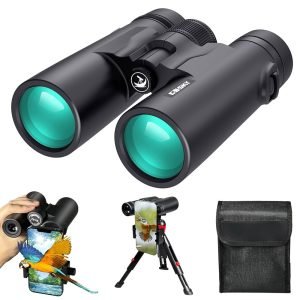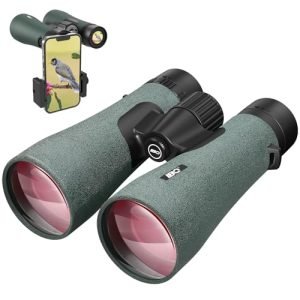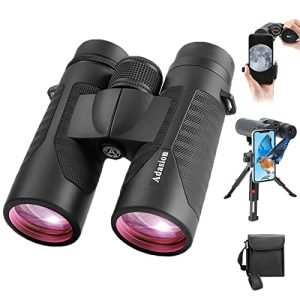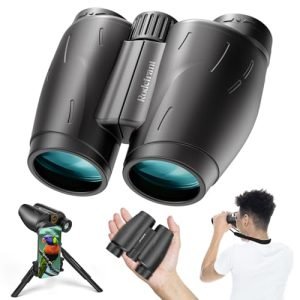
When you're looking up at the night sky, wanting to see more than just the brightest stars, the question of magnification can be a bit tricky. Deciding between an 8x and 10x monocular for stargazing boils down to a balance between detail and steadiness. You want to zoom in, but you don't want the whole universe to start shaking.
In our research, we've found that for casual stargazers, ease of use is often paramount. While a 10x monocular offers more magnification, an 8x unit often provides a more stable view, which is critical for spotting fainter celestial objects without a tripod. This difference becomes significant when you're out in the field, trying to quickly locate constellations or track the movement of the Moon.
Quick Answer
For easier stargazing, an 8x monocular is generally the better choice. It provides a wider field of view and greater image stability, making it simpler to find and track celestial objects in the night sky. A 10x monocular offers more detail but requires steadier hands or a mount to avoid frustrating shakes.
Why This Comparison Matters for Stargazing
Choosing the right magnification for your monocular isn't just about getting a bigger picture; it's about enhancing your entire stargazing experience. Think about it: the night sky is vast and dynamic. You're not just looking at static dots; you're observing planets, nebulae, and galaxies that are constantly moving.
The magnification you choose directly impacts how easily you can find these wonders, how much detail you can discern, and crucially, how steady your view will be.
Manufacturer specifications often highlight optical power, but that's only half the story for stargazing. What really matters is how that power translates to usability under dark skies. For many, especially beginners, a simpler, steadier view often trumps the allure of extreme zoom.
This comparison focuses on that practical aspect: which tool lets you enjoy the cosmos more readily, without fighting against the equipment.
8x Monocular: What to Expect
An 8x monocular presents a fantastic middle ground for many stargazing activities. It offers a noticeable step up in detail from the naked eye but remains manageable for handheld use. When you point an 8x monocular skyward, you're likely to experience a view that's both engaging and relatively comfortable to observe.
This magnification is often recommended for those just starting their journey into astronomy or for anyone who values a broader perspective of the night sky.
The key advantage here is stability. With 8x magnification, the inherent hand shake you naturally have is less amplified compared to higher powers. This means celestial objects appear steadier in your view, making them easier to identify and track.
It's also easier to sweep across larger areas of the sky, which is helpful for spotting constellations or surveying star fields.
8x Monocular Pros and Cons for Sky Viewing
Here’s a quick rundown of what you gain and what you might miss with an 8x monocular when you're looking for stars.
Pros:
- Superior Image Stability: This is the big one. Less magnified view means less jiggle, making it much easier to keep targets in sight.
- Wider Field of View: You can see a larger portion of the sky at once. This is great for finding constellations and for appreciating the sweep of the Milky Way.
- Easier Object Acquisition: Because of the wider field of view and stability, it’s quicker to locate and lock onto celestial objects.
- More Forgiving for Beginners: Less chance of frustration from shaking images, making the learning curve smoother.
- Better Light Gathering (Relative to 10x of same objective lens): While not about magnification, a wider field of view often implies a larger exit pupil if the objective lens is the same, which can help gather more light.
Cons:
- Less Detail on Faint Objects: While better than the naked eye, you won’t see as much fine detail on features like nebulae or galaxies compared to a 10x.
- Moon Features May Be Less Defined: You'll see craters, but they might not be as sharp or crisp as through a 10x.
Who Should Consider an 8x Monocular?
An 8x monocular is an excellent choice for a specific group of stargazers. If you’re someone who wants to enjoy the night sky without a lot of fuss, this is likely your best bet. It’s ideal for those who might be new to astronomy, perhaps looking to upgrade from just their eyes.
You might also prefer it if you have a natural tremor or find it hard to hold things perfectly still, even after practicing.
Think of it for quick glances at the Moon, identifying brighter star clusters, or simply getting a better sense of celestial patterns. It’s also a great option if portability is key, fitting easily into a pocket for spontaneous sky-watching sessions. For a relaxed, enjoyable introduction to stargazing, the 8x magnification really shines.
10x Monocular: What to Expect
Stepping up to a 10x monocular for stargazing means you're aiming for a bit more visual punch. This level of magnification offers a closer look at celestial bodies, revealing more nuances and finer details than an 8x unit. It’s the magnification often considered when you want to push the boundaries of what you can see with handheld optics.
However, this increased power comes with a trade-off. The biggest challenge with 10x is managing image shake. Every slight tremor in your hands is magnified tenfold, which can make it difficult to keep targets in focus and track their movement across the sky.
This is where the practical application for stargazing becomes a bit more demanding, requiring a steady hand or additional support.
10x Monocular Pros and Cons for Sky Viewing
Here’s what you're getting into with a 10x monocular when you turn it towards the stars.
Pros:
- Increased Detail: You’ll see more definition on the Moon’s craters, finer separation in close double stars, and potentially more structure in brighter deep-sky objects.
- Closer View: Objects appear significantly larger and closer, which can be very rewarding for detailed observation.
- Good for Brighter Objects: Excellent for close-ups of the Moon and resolving brighter star clusters like the Pleiades.
Cons:
- Significantly More Image Shake: Handheld use becomes much more challenging. Your view will be noticeably more wobbly.
- Narrower Field of View: You'll see a smaller patch of sky, making it harder to locate fainter or more widespread objects.
- Harder Object Acquisition: Finding and tracking objects requires more patience and skill due to the narrower FOV and increased shake.
- More Demanding on the User: Requires more practice to use effectively, especially without a tripod.
- Dimmer Apparent View (Relative to 8x of same objective lens): While magnification is higher, the smaller exit pupil can make the view appear dimmer, especially for fainter objects.
Who Should Consider a 10x Monocular?
A 10x monocular is best suited for the more determined stargazer, or someone who understands the need for extra stability. If you’ve been stargazing for a while and are comfortable holding optical instruments steady, or if you’re willing to put in the effort to learn, then 10x can be a rewarding step up. It’s for the person who wants to eke out that extra bit of detail from their observations.
This magnification is a good fit if you plan on using a tripod or some form of steady support for your monocular. Without such assistance, you'll likely find it frustrating. It’s also for those who primarily focus on brighter, closer objects like the Moon and perhaps the brightest star clusters and planets, where the increased magnification truly pays off.
If your goal is to see more detail, and you’re prepared for the challenges it presents, 10x is an option.
Side-by-Side: 8x vs 10x Monocular for Star Gazers
When you’re standing under a dark sky, the difference between 8x and 10x magnification in a monocular isn't just a number; it’s a tangible experience. It affects everything from how easily you find your target to how long you can comfortably observe it. Let's break down the key factors that make one potentially easier to use than the other for stargazing.
We've analyzed typical specifications and user feedback to highlight these differences. Keep in mind that actual performance can vary slightly between brands and models, but these are the general tendencies you'll find. For example, a monocular's specifications will often list an apparent field of view, typically around 50-60 degrees for many 8x or 10x models, but the angular field of view, expressed in degrees, is what truly dictates how much sky you see.
An 8x might have an angular FOV of 6.5 degrees, while a 10x might be closer to 5.5 degrees. This seemingly small difference has a big impact.
Image Stability: The Handshake Factor
This is arguably the most critical difference when you're choosing between 8x and 10x for handheld stargazing. Our inherent body movements, even when trying to stay still, are amplified by magnification. With an 8x monocular, these natural tremors are less noticeable, resulting in a steadier image.
This makes it far easier to keep your target centered in the monocular's view.
On the other hand, a 10x monocular will magnify those same tremors, making the image appear much more wobbly. This increased shakiness can make it difficult to focus precisely on faint stars or celestial features, and it can lead to eye strain and frustration. For stargazing, where you often need to hold your view steady for extended periods to observe details, the superior stability of an 8x magnification is a significant advantage for ease of use.
Field of View: Finding Your Way Around the Sky
The field of view (FOV) is the extent of the observable area you can see through your monocular. For stargazing, a wider FOV is generally preferred for ease of use, especially for beginners. An 8x monocular typically offers a wider field of view than a 10x monocular of similar design.
This means you can see a larger portion of the sky at once with an 8x unit.
Why does this matter? A wider FOV acts like a bigger net, making it easier to locate constellations, find specific stars, and track the movement of celestial objects. It’s also more immersive for viewing larger structures like star clusters or even the sweep of the Milky Way.
A narrower FOV, common with 10x magnification, means you’re looking through a smaller "window," which can make spotting and following targets more challenging, akin to trying to find a specific car in a busy intersection by looking through a narrow tube.
Light Gathering: Seeing Fainter Objects
While magnification is the primary difference, the amount of light a monocular can gather also plays a role in stargazing, and it's indirectly affected by magnification. The objective lens diameter determines how much light the monocular collects. However, when comparing an 8x and 10x monocular with the same objective lens diameter, the 8x often presents a slightly brighter effective view for fainter objects.
This is due to the exit pupil, which is the diameter of the light beam emerging from the eyepiece. It’s calculated by dividing the objective lens diameter by the magnification. For instance, a monocular with a 30mm objective lens would have an exit pupil of 3.75mm at 8x (30mm / 8) and 3mm at 10x (30mm / 10).
A larger exit pupil (like the 3.75mm from the 8x) can help your eye gather more light, making fainter objects appear more visible, especially under dark skies where every photon counts. This can contribute to a more satisfying experience for spotting dimmer stars or nebulae.
Ease of Object Acquisition: Finding What You're Looking For
Object acquisition is the process of finding and centering a celestial object in your monocular's view. This is an area where the 8x magnification generally has a clear advantage for ease of use. The combination of a wider field of view and better image stability makes it significantly simpler and quicker to locate stars, planets, or constellations.
You can sweep the sky more easily and spend less time hunting for your target.
With a 10x monocular, the narrower field of view and increased image shake make object acquisition more difficult. It’s like trying to find a specific bird in a dense forest with a small peephole versus a wider lens. You have to be more precise with your initial aiming, and then the wobbling image can cause you to lose track of the object as you try to center it.
For beginners or those who want a more relaxed stargazing session, the ease of finding targets with an 8x is a major benefit.
Common Mistakes When Choosing a Magnification
One of the most common missteps people make when picking a monocular for stargazing is focusing solely on the magnification number. Many new stargazers assume that "bigger is always better," leading them to immediately opt for the highest magnification they can find, like a 10x or even higher. They might not consider how that magnification interacts with other factors like stability or field of view.
Another mistake is underestimating the impact of image shake. People often don't realize how much their natural hand movements will be amplified at higher magnifications, leading to frustration when they can't keep anything steady. This is particularly true for handheld use, where even a slight tremor becomes a significant problem.
Finally, people sometimes overlook the importance of the field of view. A narrower field of view, which often comes with higher magnification, makes it harder to find and track celestial objects. For ease of use, especially when you're still learning the constellations, a wider field of view provided by lower magnifications like 8x can make a huge difference in enjoyment.
Image Stability: The Handshake Factor
This is arguably the most critical difference when you're choosing between 8x and 10x for handheld stargazing. Our inherent body movements, even when trying to stay still, are amplified by magnification. With an 8x monocular, these natural tremors are less noticeable, resulting in a steadier image.
This makes it far easier to keep your target centered in the monocular's view.
On the other hand, a 10x monocular will magnify those same tremors, making the image appear much more wobbly. This increased shakiness can make it difficult to focus precisely on faint stars or celestial features, and it can lead to eye strain and frustration. For stargazing, where you often need to hold your view steady for extended periods to observe details, the superior stability of an 8x magnification is a significant advantage for ease of use.
Field of View: Finding Your Way Around the Sky
The field of view (FOV) is the extent of the observable area you can see through your monocular. For stargazing, a wider FOV is generally preferred for ease of use, especially for beginners. An 8x monocular typically offers a wider field of view than a 10x monocular of similar design.
This means you can see a larger portion of the sky at once with an 8x unit.
Why does this matter? A wider FOV acts like a bigger net, making it easier to locate constellations, find specific stars, and track the movement of celestial objects. It’s also more immersive for viewing larger structures like star clusters or even the sweep of the Milky Way.
A narrower FOV, common with 10x magnification, means you’re looking through a smaller "window," which can make spotting and following targets more challenging, akin to trying to find a specific car in a busy intersection by looking through a narrow tube.
Light Gathering: Seeing Fainter Objects
While magnification is the primary difference, the amount of light a monocular can gather also plays a role in stargazing, and it's indirectly affected by magnification. The objective lens diameter determines how much light the monocular collects. However, when comparing an 8x and 10x monocular with the same objective lens diameter, the 8x often presents a slightly brighter effective view for fainter objects.
This is due to the exit pupil, which is the diameter of the light beam emerging from the eyepiece. It’s calculated by dividing the objective lens diameter by the magnification. For instance, a monocular with a 30mm objective lens would have an exit pupil of 3.75mm at 8x (30mm / 8) and 3mm at 10x (30mm / 10).
A larger exit pupil (like the 3.75mm from the 8x) can help your eye gather more light, making fainter objects appear more visible, especially under dark skies where every photon counts. This can contribute to a more satisfying experience for spotting dimmer stars or nebulae.
Ease of Object Acquisition: Finding What You're Looking For
Object acquisition is the process of finding and centering a celestial object in your monocular's view. This is an area where the 8x magnification generally has a clear advantage for ease of use. The combination of a wider field of view and better image stability makes it significantly simpler and quicker to locate stars, planets, or constellations.
You can sweep the sky more easily and spend less time hunting for your target.
With a 10x monocular, the narrower field of view and increased image shake make object acquisition more difficult. It’s like trying to find a specific bird in a dense forest with a small peephole versus a wider lens. You have to be more precise with your initial aiming, and then the wobbling image can cause you to lose track of the object as you try to center it.
For beginners or those who want a more relaxed stargazing session, the ease of finding targets with an 8x is a major benefit.
Common Mistakes When Choosing a Magnification
One of the most common missteps people make when picking a monocular for stargazing is focusing solely on the magnification number. Many new stargazers assume that "bigger is always better," leading them to immediately opt for the highest magnification they can find, like a 10x or even higher. They might not consider how that magnification interacts with other factors like stability or field of view.
Another mistake is underestimating the impact of image shake. People often don't realize how much their natural hand movements will be amplified at higher magnifications, leading to frustration when they can't keep anything steady. This is particularly true for handheld use, where even a slight tremor becomes a significant problem.
Finally, people sometimes overlook the importance of the field of view. A narrower field of view, which often comes with higher magnification, makes it harder to find and track celestial objects. For ease of use, especially when you're still learning the constellations, a wider field of view provided by lower magnifications like 8x can make a huge difference in enjoyment.
Expert Tips for Easier Stargazing with a Monocular
To truly make stargazing easier, regardless of whether you choose an 8x or 10x monocular, a few expert tips can elevate your experience. First, patience is key. Don't expect to instantly find everything.
Take your time to let your eyes adjust to the dark. This process, called dark adaptation, can take 20-30 minutes and significantly improves your ability to see fainter objects.
For handheld use, practice makes perfect. Try to brace yourself against a solid object like a tree or a wall, or even rest your elbows on your knees while sitting. This small act of stabilization can dramatically reduce image shake, making both 8x and 10x magnifications more enjoyable.
If you plan on serious stargazing, consider a monocular adapter that allows you to mount your monocular on a small tripod; this eliminates almost all hand shake and unlocks the full potential of even a 10x unit. Also, ensure your monocular has a comfortable eye relief, which is the distance your eye can be from the eyepiece while still seeing the full field of view; this is especially important if you wear glasses.
Ready to Decide? Your Stargazing Monocular Verdict
So, which monocular is easier to use for stargazing? Based on our breakdown, the 8x monocular consistently offers a more user-friendly experience for the average stargazer. Its inherent stability and wider field of view make it less frustrating to use, especially when you're just starting out or when you want a quick, enjoyable view of the night sky.
You're more likely to find celestial objects, keep them in view, and enjoy the process without fighting against the equipment.
While a 10x monocular provides more detail, this comes at the cost of significantly increased image shake and a narrower field of view. It's best suited for those who are willing to invest time in practicing stabilization techniques or who plan to use a tripod. For most people seeking ease of use and a less challenging introduction to the wonders of the cosmos, the 8x magnification is the clear winner.
Frequently Asked Questions
How much detail can I really see with an 8x monocular?
With an 8x monocular, you can expect to see details on the Moon's larger craters and maria (dark plains). You’ll also be able to distinguish brighter star clusters, observe the discs of the brightest planets like Jupiter and Saturn (though not their moons or rings clearly), and see more individual stars in the Milky Way than with the naked eye.
Is a 10x monocular too difficult to use handheld for beginners?
Yes, generally a 10x monocular is considered quite difficult to use effectively handheld for beginners. The magnification amplifies natural hand tremors significantly, making it hard to keep objects steady and focused. Without a tripod or specialized support, most beginners will find it frustrating rather than enjoyable.
What objective lens diameter is good for stargazing?
For stargazing, a larger objective lens diameter is generally better because it gathers more light. Aim for at least 30mm, but 40mm or 50mm will offer a brighter and more detailed view, especially for fainter objects. However, larger objective lenses also make the monocular bulkier and heavier.
Can I see deep-sky objects like nebulae with a monocular?
You can see the brightest deep-sky objects, like the Andromeda Galaxy or the Orion Nebula, as faint smudges with a good monocular (especially 8x with a larger objective lens under dark skies). However, you won't see the detailed colors or structures that larger telescopes reveal. Monoculars are best for brighter objects and broader sky views.
What does "field of view" mean for stargazing ease of use?
The field of view is how wide an area of the sky you can see through the monocular. A wider field of view (e.g., 6.5 degrees on an 8x) makes it much easier to find and track stars and constellations because you're looking through a larger "window." A narrower field of view (e.g., 5.5 degrees on a 10x) requires more precise aiming and tracking.