Have you ever gazed up at the night sky and wished you could see the stars and planets more clearly? You’re not alone.
Many stargazers yearn for a closer look at the wonders above, and that’s where high-powered monoculars come in. Imagine transforming your backyard or balcony into a front-row seat to the cosmos, all with a simple handheld device. These monoculars can open up a whole new universe for you, revealing details you never thought possible.
But knowing how to use them effectively can make all the difference between a blurry dot and a breathtaking celestial body. Curious to discover how this compact tool can elevate your astronomy experience? Stick around, as we delve into practical tips and insights that will have you starry-eyed in no time.
Choosing The Right Monocular
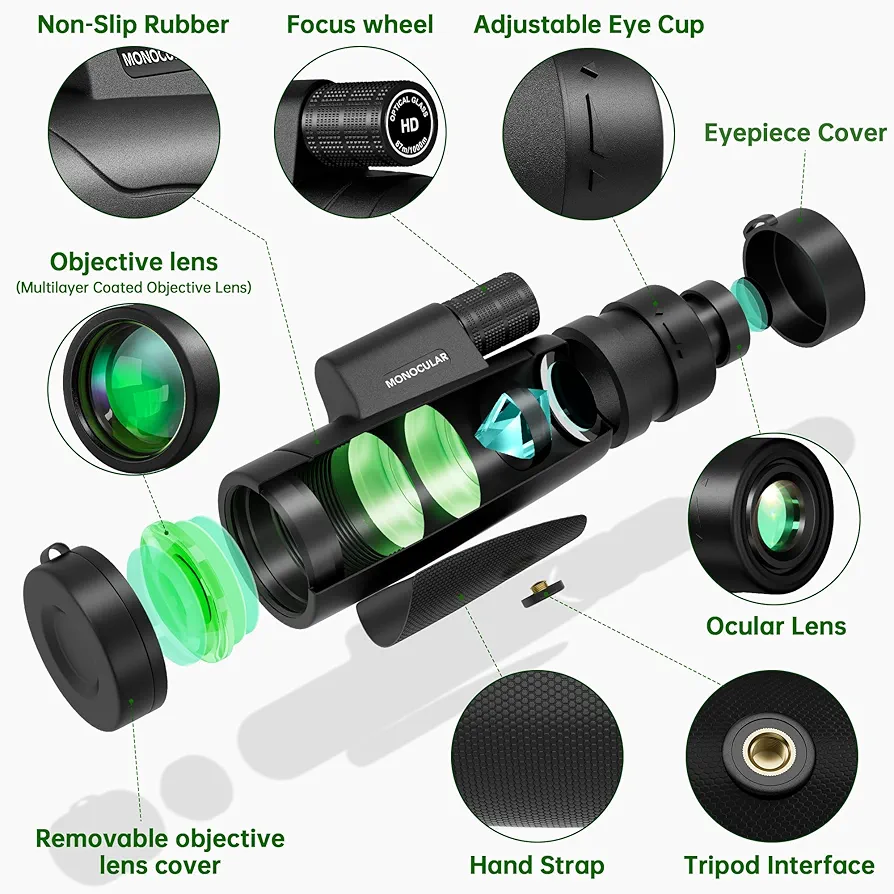
Magnificationshows how much closer objects appear. For astronomy, choose 10x to 15x magnification.
Aperturemeans the size of the lens. Bigger apertures let in more light. This helps to see stars better.
Good lens qualitymakes images clear and bright. Coatings on lenses reduce glare and improve light flow.
Keep portabilityin mind. A light monocular is easy to carry outside at night.
Weight affects how steady you can hold the monocular. Choose one that feels comfortable in your hand.

Credit: www.amazon.in
Setting Up For Night Viewing
Choose a place far from city lights for the best view. Dark areas let you see stars clearly. Avoid street lamps or bright houses nearby. A quiet, open field or park works well.
Hold the monocular steady to avoid blurry images. Use a tripod or rest your arm on a solid surface. This keeps the view stable and sharp.
Turn the focus ring slowly until the image is clear. Adjust the eye relief to fit your eye comfortably. This helps reduce eye strain during long viewing sessions.
Locating Celestial Objects
Star maps and astronomy apps help you find stars and planets easily. They show the night sky and mark objects you can see with your monocular. Some apps use your phone’s GPS to guide you to the exact spot in the sky.
Planets shine with steady light, unlike stars which twinkle. Bright planets like Venus and Jupiter are easy to spot. Check the date and time to know which planets are visible.
Tracking moving objects like satellites or the International Space Station is exciting. These objects move quickly across the sky. Use apps that alert you when they pass overhead.
- Use apps or star maps for accurate sky positions.
- Planets appear as bright, steady points of light.
- Stars twinkle due to Earth’s atmosphere.
- Satellites move fast and follow a straight path.
- Set reminders for satellite or ISS sightings.

Credit: www.tiktok.com
Maximizing Image Clarity
Atmospheric conditionsaffect image clarity greatly. Choose nights with clear skiesand low humidity. Avoid nights with strong wind or heavy clouds. Using your monocular early in the evening or late at night helps. The air is usually calmer then. Keep away from bright city lights to reduce light pollution.
Glare and reflections can blur your view. Use a lens hoodto block stray light. Avoid pointing your monocular near bright lights. Hold the monocular steady to reduce shaking, which can cause reflections. Wearing a dark hat or shade can also help reduce glare.
Clean lenses gently for the best image. Use a soft brush or air blower to remove dust first. Then use a microfiber cloth with lens cleaner for smudges. Avoid rough materials or harsh cleaners. Store your monocular in a dry case to prevent dust and moisture build-up.
Advanced Techniques
Using tripodswith high-powered monoculars helps keep the view steady. It reduces hand shake and lets you see stars clearly. Choose a tripod with an adjustable height and a stable base. Attach the monocular firmly to avoid wobbling during observation.
Attaching cameras to monoculars allows for astrophotography. Use an adapter to connect the camera lens to the eyepiece. This way, you can capture images of the moon, planets, and stars. Make sure the camera settings are set for low light and long exposure.
Combining monoculars with other optical toolsexpands what you can see. Use filters to reduce glare and enhance details. A star map or app can help locate objects. Pairing with binoculars or telescopes offers different views and magnifications.

Credit: www.tiktok.com
Safety Tips For Nighttime Use
Protecting your eyes during nighttime use is very important. Avoid looking directly at bright lights. Use your monocular only for dark sky objects. Bright lights can hurt your eyes or cause discomfort. Take breaks to rest your eyes every 15 minutes.
Navigating terrain in the dark can be tricky. Carry a small flashlight with red light to keep night vision. Watch out for rocks, roots, or uneven ground. Walk slowly and carefully to avoid trips and falls.
Weather can change fast at night. Check the forecast before going out. Dress warmly and bring extra layers. Avoid using monoculars in rain or heavy fog to protect the lenses and your vision.
Frequently Asked Questions
What Are The Best High-powered Monoculars For Astronomy?
The best monoculars for astronomy offer high magnification and clear optics. Look for models with 10x to 20x zoom and large objective lenses for brightness. Brands like Celestron and Vortex provide reliable, affordable options ideal for stargazing and moon observation.
How Do I Stabilize A Monocular For Clear Astronomy Views?
Use a tripod or a stable surface to prevent shaking. Hold the monocular firmly and breathe steadily. Even slight movements blur the image, so stability is crucial for detailed star and planet viewing during long observation sessions.
Can High-powered Monoculars Replace Telescopes For Beginners?
High-powered monoculars are portable and easier to use than telescopes. They work well for wide-field views like the moon and star clusters. However, telescopes provide higher magnification and better detail for deep-sky objects, making them ideal for advanced astronomy.
What Settings Improve Monocular Performance In Astronomy?
Choose the highest magnification that maintains image clarity. Adjust focus slowly to sharpen details. Use a dark location to reduce light pollution. These settings help enhance the view of stars, planets, and the moon through your monocular.
Conclusion
High-powered monoculars make astronomy clear and fun. They bring distant stars and planets closer to you. With practice, you will learn to find objects quickly. Remember to keep your hands steady for sharp images. Choose a dark spot away from city lights.
Enjoy the quiet moments under the vast night sky. Astronomy with a monocular opens a new world of discovery. Start small, stay patient, and watch the universe unfold.