When you’re shopping for a compact monocular, the numbers and terms on the specs sheet can feel like a foreign language. But understanding these details is key to picking the right one for your needs.
Imagine confidently choosing a monocular that gives you crystal-clear views, fits perfectly in your hand, and performs exactly how you want it to. This guide will break down those specs into simple, clear points you can use right now. By the end, you’ll know exactly what to look for and how to spot a great compact monocular without any guesswork.
Keep reading—you’re about to make your next purchase smarter and easier than ever.
Understanding Monocular Specifications
The magnificationtells how much closer objects appear. For example, 8x means objects look eight times nearer. Higher magnification is not always better. It can make images shakier and darker.
The objective lens diametershows the size of the front lens in millimeters. A larger lens lets in more light. This helps you see clearer and brighter images, especially in low light.
- Magnification: How much closer the view is
- Objective Lens Diameter: Size of the front lens in mm
- Bigger lens = Brighter and clearer images
- Higher magnification = Closer view but can be shaky
Magnification Power Explained
Magnification powertells how much closer objects appear through the monocular. A 10x magnification means the object looks 10 times nearer than with the naked eye. Higher magnification shows more detail but can make the image shaky.
Choosing the right magnification depends on what you want to see. For bird watching or sports, 8x to 10x works well. For hiking or casual use, 6x or 7x is easier to hold steady. Very high magnification is best for distant targets but can be harder to use without a tripod.
Magnification affects the field of view. Higher power narrows the view, so you see less area at once. Lower power gives a wider scene, which helps track moving objects. Also, higher magnification usually means less brightness in the image.
Objective Lens Diameter Importance
The objective lens diameteris a key number on compact monoculars. It shows how wide the front lens is. A larger diameter means the lens can catch more light.
This helps to make images look brighter and clearer, especially in low light or at night. A small lens might work well in daylight but may struggle in dim places.
The size is usually shown in millimeters, like 25mm or 30mm. A bigger number means better light gatheringbut also a slightly bigger and heavier monocular.
Choosing the right diameter depends on where and how you will use the monocular. For dark or cloudy conditions, a bigger lens is best.
Field Of View Insights
Wide field of viewshows more area at once. It helps to see a large space without moving the monocular. This is good for watching birds or sports. A narrow field of viewshows less area but with more detail. It is better for spotting far objects clearly.
Field of view is measured in feet or meters at a specific distance, like 1000 yards or meters. It tells how wide the view is across that distance. For example, a field of view of 300 feet at 1000 yards means you can see 300 feet wide area far away.
| Type | Field of View | Best For |
|---|---|---|
| Wide | 300+ feet at 1000 yards | Bird watching, sports, general use |
| Narrow | Less than 200 feet at 1000 yards | Long-distance spotting, detailed viewing |
Exit Pupil And Its Role
The exit pupilis the small circle of light seen when looking through the eyepiece. It shows how much light passes from the lens to your eye.
Its size matters a lot for low light conditions. A bigger exit pupil means more light enters your eye. This helps you see better in dim places like at dusk or dawn.
Compact monoculars usually have an exit pupil size ranging from 1mm to 5mm. Larger sizes are better for night use, while smaller ones work fine in bright daylight.
| Exit Pupil Size (mm) | Best Use |
|---|---|
| 1 – 2 | Bright daylight |
| 3 – 4 | Dusk and dawn |
| 4 – 5 | Low light, night |
Credit: gununiversity.com
Close Focus Distance
Close focus distancetells how near you can see an object clearly. This is key for viewing small details up close. A short close focus means you can see things like insects or flowers sharply.
Compact monoculars with a close focus distance under 10 feet offer great versatility. You can use them for birdwatching, hiking, or sports. They help spot details in nature or at events without moving too close.
Monoculars with longer close focus distances work better for distant objects. But they may miss fine details nearby. Choose close focus based on what you want to see most.
- Short close focus (5-10 feet): Best for close-up views
- Medium close focus (10-20 feet): Good for mixed use
- Long close focus (20+ feet): Ideal for faraway objects only
Eye Relief Considerations
Eye reliefis the distance between your eye and the monocular’s lens. It affects how comfortable you feel when using the device. Comfort is key, especially for people who wear glasses. Glasses add space between your eye and the lens, so more eye relief is needed.
Optimal eye relieffor eyeglass wearers is usually around 15mm or more. This allows them to see the full image without moving the monocular too close to their glasses. Short eye relief can cause a smaller field of view and strain the eyes.
| Eye Relief (mm) | Comfort Level | Best For |
|---|---|---|
| Less than 10 | Low | Non-eyeglass wearers |
| 10 – 15 | Moderate | Some eyeglass wearers |
| 15 or more | High | Most eyeglass wearers |

Credit: www.amazon.com
Lens Coating Types
Anti-reflective coatingsreduce glare on lenses. They help more light pass through the glass. This makes images clearer and brighter. These coatings protect the lens surface too. You get better views in bright sunlight or low light.
Multi-coated lenseshave several layers of coatings. Each layer cuts down reflections even more. This means sharper pictures with less haze. Colors look more natural and vibrant. These lenses work well in many weather conditions.
- Improves light transmission
- Reduces glare and reflections
- Enhances image sharpness and color
- Protects lens from scratches and dirt
Waterproof And Fogproof Features
Waterproofand fogprooffeatures keep your monocular safe in wet and cold weather. These features stop water and moisture from entering the device. This helps keep the lens clear and your view sharp.
Waterproof means the monocular can stay dry even in rain or snow. Fogproof means it won’t fog up inside when temperatures change fast. Both features are important for outdoor use.
| Feature | Benefit |
|---|---|
| Waterproof | Protects from rain, snow, and splashes |
| Fogproof | Prevents fog inside the lens from temperature changes |
Check the specs for ratings like IPX7or nitrogen-filled. These show the level of weather resistance. A good rating means the monocular is made for tough outdoor conditions.
Construction And Durability
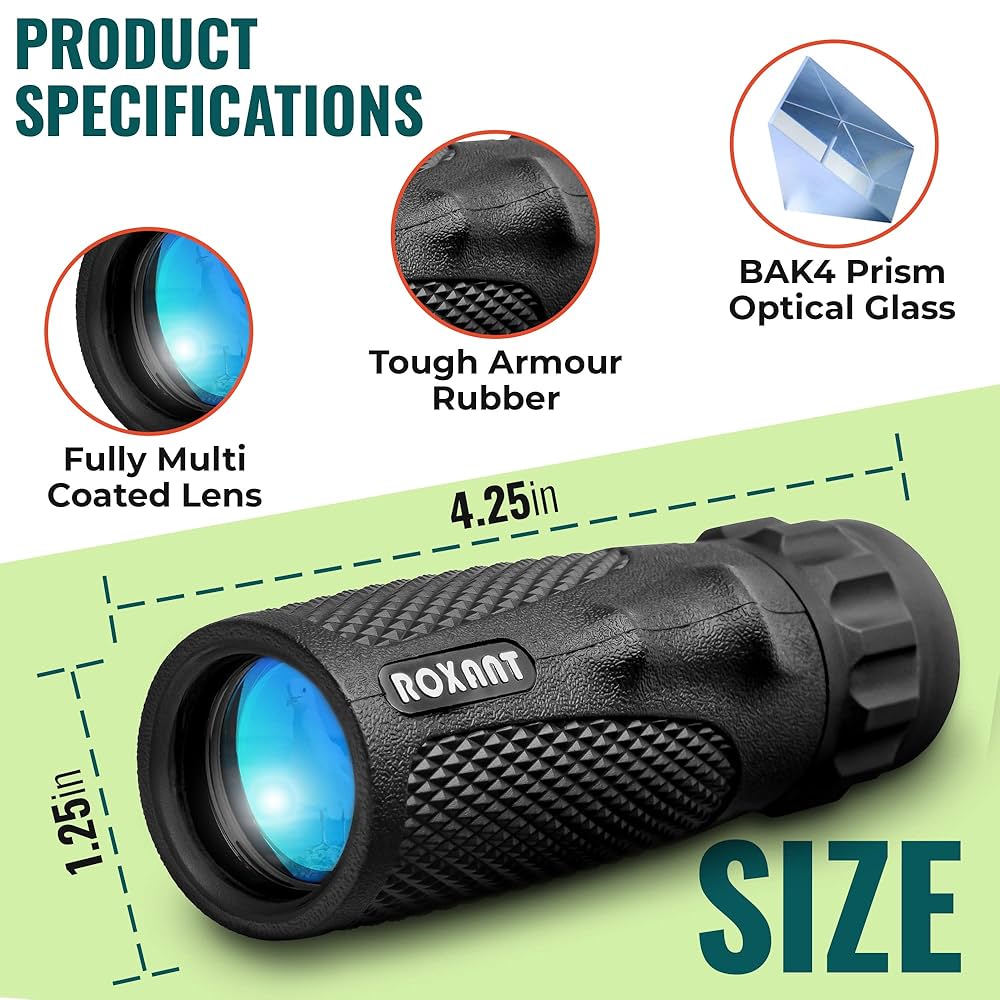
Compact monoculars often use aluminumor plasticin their build. Aluminum is lightweightand strong. Plastic makes the device lighterbut may be less durable. The lens covers are usually made from rubberor silicone. These materials protect the lens from scratchesand dust.
Rubber coatingson the body add extra gripand shock resistance. Some monoculars also have waterproof sealsto keep moisture out. This helps in rainyor humidconditions.
| Material | Effect on Durability |
|---|---|
| Aluminum | Strong, resists dents, but a bit heavier |
| Plastic | Lightweight, less durable, can crack |
| Rubber Coating | Protects from shocks and improves grip |
| Waterproof Seals | Prevents water damage, good for outdoors |
Choosing The Right Monocular
Choosing a compact monocular means matching its specs with your needs. Focus on magnificationand lens size. Higher magnification shows more detail but can be harder to hold steady. Larger lens size lets in more light for clearer views in dim places.
Weight and size matter for carrying comfort. Smaller and lighter models fit easily in pockets or bags. Check if the monocular is waterproofor fog-prooffor outdoor use.
Price often reflects features. More expensive models may have better optics, coatings, or durability. Decide which specs are most important and find a balance between cost and quality.
| Feature | What It Means | Why It Matters |
|---|---|---|
| Magnification | How much closer things appear | Higher = more detail, but shaky image |
| Lens Diameter | Size of the front lens in mm | Bigger = brighter, clearer images |
| Waterproof/Fog-proof | Protection from weather | Good for outdoor use in rain or fog |
| Weight | How heavy the monocular is | Lighter is easier to carry all day |
Credit: gununiversity.com
Frequently Asked Questions
What Do The Numbers On Compact Monoculars Mean?
The numbers indicate magnification and objective lens diameter. For example, 8×25 means 8 times magnification with a 25mm lens. Higher magnification shows distant objects closer, while a larger lens gathers more light for better clarity.
How To Understand The Field Of View On Monoculars?
Field of view (FOV) shows the width of the visible area at a distance. It’s usually in feet at 1000 yards or meters at 1000 meters. A wider FOV helps locate and track objects easier, especially when moving.
Why Is Eye Relief Important In Compact Monoculars?
Eye relief is the distance from the eyepiece to your eye for a full view. Longer eye relief benefits eyeglass wearers by providing comfort and a full image without black edges. Check specs if you wear glasses.
What Does Waterproof Rating Mean In Monocular Specs?
Waterproof ratings indicate protection against water damage. A rating like IPX7 means the monocular can handle immersion in water up to 1 meter for 30 minutes. This is vital for outdoor use in wet conditions.
Conclusion
Reading specs on compact monoculars helps you choose the right one. Focus on key details like magnification, lens size, and field of view. These numbers tell you how clear and wide your sight will be. Don’t forget about weight and size, especially for travel or hiking.
Understanding specs makes your buying decision easier and smarter. Keep this guide handy next time you shop for a monocular. Clear vision starts with knowing what those numbers mean. Simple and useful.