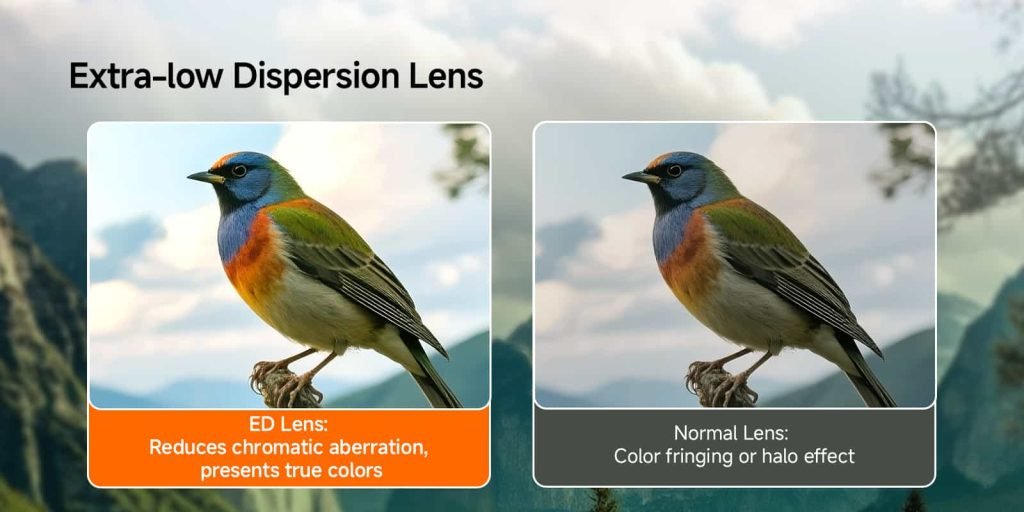
Have you ever looked through your binoculars and noticed strange color fringes around objects? That annoying blur is called chromatic aberration, and it can ruin your viewing experience.
But don’t worry—there are simple ways you can reduce or even avoid it. You’ll discover easy tips and tricks to get clearer, sharper images through your binoculars. Keep reading, and you’ll learn how to enjoy your outdoor adventures with crystal-clear vision every time.

Credit: www.reddit.com
Understanding Chromatic Aberration
Chromatic aberrationhappens when lenses do not focus all colors at the same point. This causes colors to blur or show fringes around objects. It is often seen as color edgesin binocular images.
The cause is that different colors of light bend differentlywhen passing through the lens glass. Blue light bends more than red light. This difference makes the image less sharp.
Image qualitysuffers because of this effect. It can make details look fuzzy and colors look wrong. This is a big problem for people who want clear and accurate views.
| Aspect | Effect of Chromatic Aberration |
|---|---|
| Sharpness | Reduced, edges look blurry |
| Color Accuracy | Colors show unwanted fringes |
| Viewing Comfort | Eye strain due to blurred details |

Credit: swoptics.co.uk
Choosing The Right Binoculars
Choosing binoculars with high-quality lenseshelps reduce chromatic aberration. Look for lenses made with extra-low dispersion (ED) glass. This type of glass controls color fringing better than regular glass. Good lens coatings also improve light transmission and reduce glare. Multi-coated lenses are the best choice for clear, sharp images.
Prism types affect image quality and color accuracy. Roof prisms are compact but need precise alignment and coatings to avoid color issues. Porro prisms are bulkier but often provide better color correction naturally. Binoculars with phase-corrected roof prisms or high-quality Porro prisms help reduce chromatic aberration effectively.
Adjusting Binocular Settings
Proper focusingcan reduce chromatic aberration in binoculars. Turn the focus wheel slowly until the image is clear. Avoid forcing the wheel as it may damage the lens.
Adjust the binoculars to match your eye relief. This distance is the space between your eyes and the eyepiece. Too much or too little distance causes color fringing and blurriness.
- Keep your eyes centered on the eyepiece.
- Move the binoculars closer or farther for the best view.
- Use the diopter adjustment to fine-tune one side if needed.
Using Filters And Accessories
Polarizing filtershelp reduce glare and improve image clarity. They block unwanted light waves, making colors appear more natural and sharp. This reduces chromatic aberrationby limiting stray light that causes color fringing. Using these filters also enhances contrast in bright conditions. They are easy to attach and remove from binocular lenses.
Additional lens attachmentscan correct color distortions. These include achromatic lenses that combine different glass types to reduce color errors. Some attachments are designed to fit specific binocular models, improving focus and sharpness. They work by aligning light waves better, which cuts down on color blurring.
| Accessory | Function | Benefit |
|---|---|---|
| Polarizing Filter | Reduces glare and stray light | Improves color accuracy and contrast |
| Achromatic Lens | Combines glass types to reduce color errors | Sharpens images and limits fringing |
| Lens Hood | Blocks side light | Reduces flare and improves clarity |
Maintenance And Care
Keep binocular lenses clean to avoid blurry images and color fringing. Use a soft brush or air blower to remove dust gently. Avoid touching lenses with fingers to prevent smudges. Clean lenses with a microfiber cloth and lens cleaner made for optics. Wipe gently in a circular motion to protect lens coatings.
Store binoculars in a dry, cool place. Use the carrying case to protect them from dust and scratches. Avoid leaving binoculars in direct sunlight or hot areas, which can damage lenses. Keep binoculars away from moisture to stop mold growth inside. Always put lens caps on when not in use.
Credit: www.opticswarehouse.co.uk
Expert Recommendations
Top binocular brandsoffer models with special lenses to reduce chromatic aberration. These lenses use extra-low dispersion glass to limit color fringing. Brands like Nikon, Zeiss, and Swarovski often include this feature.
User reviews often mention clarity and sharpness as key benefits of good binoculars. Many users report less eye strain and better viewing comfort with these brands. They praise the reduction of color blurs around objects.
| Brand | Key Feature | User Feedback |
|---|---|---|
| Nikon | Extra-low dispersion lenses | Clear images with minimal color blur |
| Zeiss | Advanced lens coatings | Sharp views and good color accuracy |
| Swarovski | High-quality glass elements | Bright images and reduced chromatic aberration |
Frequently Asked Questions
What Causes Chromatic Aberration In Binoculars?
Chromatic aberration occurs when lenses fail to focus all colors at the same point. This results in color fringing and blurred images in binoculars.
How Can Lens Coatings Reduce Chromatic Aberration?
Special lens coatings minimize color fringing by reducing light dispersion. High-quality coatings improve image clarity and color accuracy in binoculars.
Are Ed Glass Lenses Effective Against Chromatic Aberration?
Yes, Extra-low Dispersion (ED) glass lenses significantly reduce chromatic aberration. They enhance sharpness and color fidelity for clearer, more precise viewing.
Can Adjusting Focus Help Avoid Chromatic Aberration?
Proper focusing can reduce visible color fringing slightly but won’t eliminate it. Using better optics is the most effective solution.
Conclusion
Avoiding chromatic aberration in binoculars improves your viewing experience. Choose binoculars with good lens coatings and quality glass. Adjust focus carefully to reduce color fringing around objects. Using binoculars with extra-low dispersion lenses helps a lot. Regularly clean your lenses for clear, sharp images.
Paying attention to these tips ensures clearer, sharper views every time. Enjoy nature’s beauty without distracting color edges or blurs. Simple steps make a big difference in binocular performance. Keep these ideas in mind for better, clearer vision outdoors.