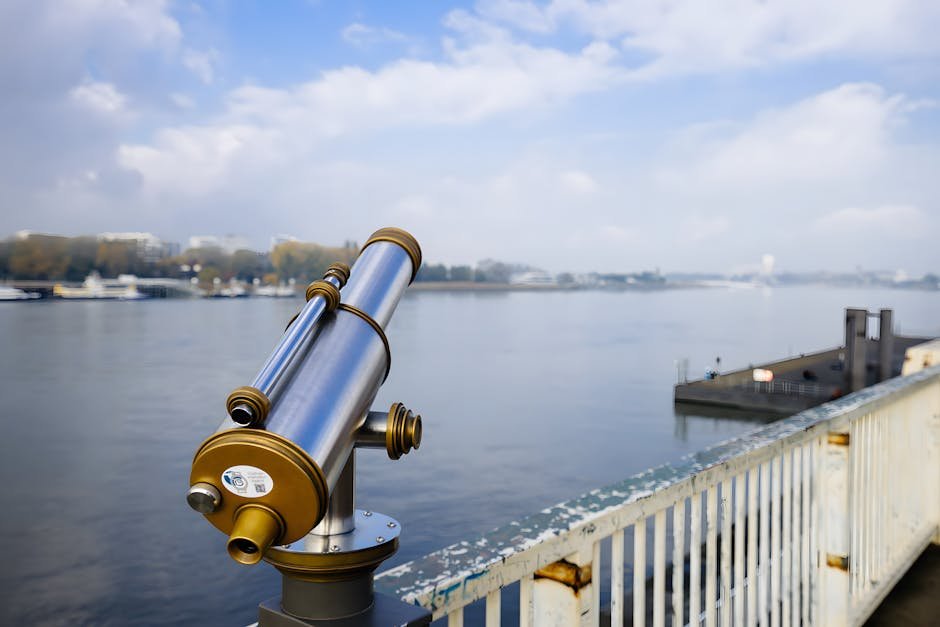
Have you ever wondered just how far surveillance binoculars can see? Whether you’re planning a hiking trip, watching wildlife, or keeping an eye on your property, knowing the true range of these powerful tools can make all the difference.
You might think bigger numbers mean better vision, but there’s more to it than meets the eye. You’ll discover what affects how far you can see, how to choose the right binoculars for your needs, and tips to get the clearest view possible.
Keep reading to unlock the secrets behind the distance and clarity of surveillance binoculars—your next adventure or security plan depends on it.
Basics Of Surveillance Binoculars
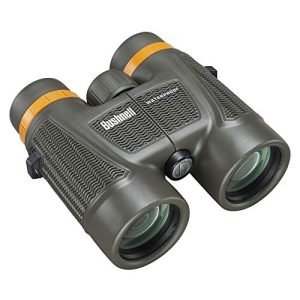
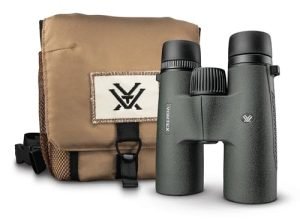
Surveillance binoculars help people see far away objects clearly. They are used for watching wildlife, security, and outdoor activities.
These binoculars have special features that make distant views sharp and clear. Knowing how they work helps you pick the right one.
Key Features
Surveillance binoculars have features that improve vision and comfort. Good quality lenses and strong build are very important.
Many models include night vision, image stabilization, and waterproof bodies. These features help in different weather and light conditions.
- Clear lenses for sharp images
- Waterproof and fog-proof design
- Night vision for low light
- Image stabilization to reduce shake
- Comfortable grips and adjustable focus
Types Of Binoculars
There are several types of binoculars used for surveillance. Each type fits certain needs and environments.
Porro prism and roof prism are the most common types. Porro prism binoculars offer a wider view. Roof prism binoculars are compact and lightweight.
- Porro Prism:Wide field of view, bulkier
- Roof Prism:Slim design, easy to carry
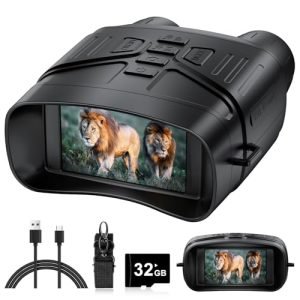
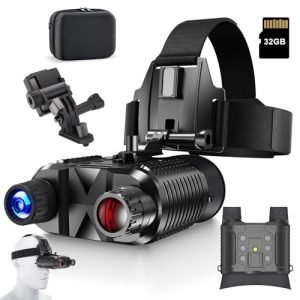
- Night Vision:See in darkness using infrared
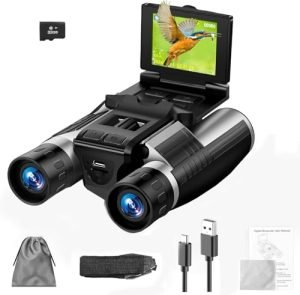
- Digital Binoculars:Combine optics with cameras
Magnification And Lens Size
Magnification shows how much closer objects appear. Lens size affects how much light enters the binoculars.
Higher magnification means you see farther but the image may shake more. Larger lenses gather more light for a brighter view.
| Specification | Effect |
|---|---|
| Magnification (e.g., 8x, 10x) | How many times closer the object appears |
| Lens Diameter (e.g., 42mm, 50mm) | Amount of light entering the binoculars |
| Field of View | Width of the visible area at a distance |
| Exit Pupil Size | Brightness of the image, lens diameter divided by magnification |
Factors Affecting Viewing Distance
Surveillance binoculars help you see objects at a distance. The distance you can see depends on many factors. These factors affect the clarity and sharpness of what you view.
Understanding these factors helps you choose the right binoculars. It also helps to know what to expect in different conditions.
Lens Quality And Coatings
The lens quality is very important for clear vision. High-quality glass reduces distortion and improves sharpness. Lens coatings help to reduce glare and improve light transmission.
- High-quality glass gives better clarity.
- Multi-coated lenses reduce reflections.
- Anti-reflective coatings increase light transmission.
- Good coatings help in low light conditions.
Atmospheric Conditions
The air between you and the object affects how far you can see. Dust, fog, rain, and heat waves can blur the image. Clear, dry air allows for the longest viewing distances.
| Condition | Effect on Viewing Distance |
| Clear Air | Best visibility, farthest distance |
| Fog | Significantly reduces distance |
| Rain | Blurs image, shortens distance |
| Heat Waves | Causes shimmering, reduces clarity |
| Dust or Smoke | Blocks light, lowers distance |
Lighting And Time Of Day
Good lighting improves how far you can see. Daylight is best because it provides strong light. Early morning and late evening have less light, which reduces distance.
- Bright daylight offers the best visibility.
- Low light reduces image clarity and range.
- Shadows and glare can affect viewing quality.
- Night viewing often requires special night-vision binoculars.
Max Range Capabilities
Surveillance binoculars vary widely in how far they can see. Their range depends on lens size, technology, and environment.
Understanding these range limits helps you choose the right binoculars for your needs.
Typical Range Limits
Most standard surveillance binoculars have a maximum effective range between 500 and 1500 meters. This range works well for general observation tasks.
- Compact models reach up to 500 meters clearly.
- Mid-range binoculars perform well up to 1000 meters.
- Larger lenses improve visibility beyond 1500 meters in daylight.
High-end Models
High-end surveillance binoculars can see much farther. They use advanced optics and coatings to enhance clarity and distance.
| Model Type | Max Range (Meters) | Features |
| Professional Optics | 2000-3000 | Large lenses, high magnification |
| Military Grade | 3000-5000 | Enhanced stabilization, rugged build |
| Specialized Spotting | Above 5000 | Integrated rangefinder, digital zoom |
Night Vision And Thermal Options
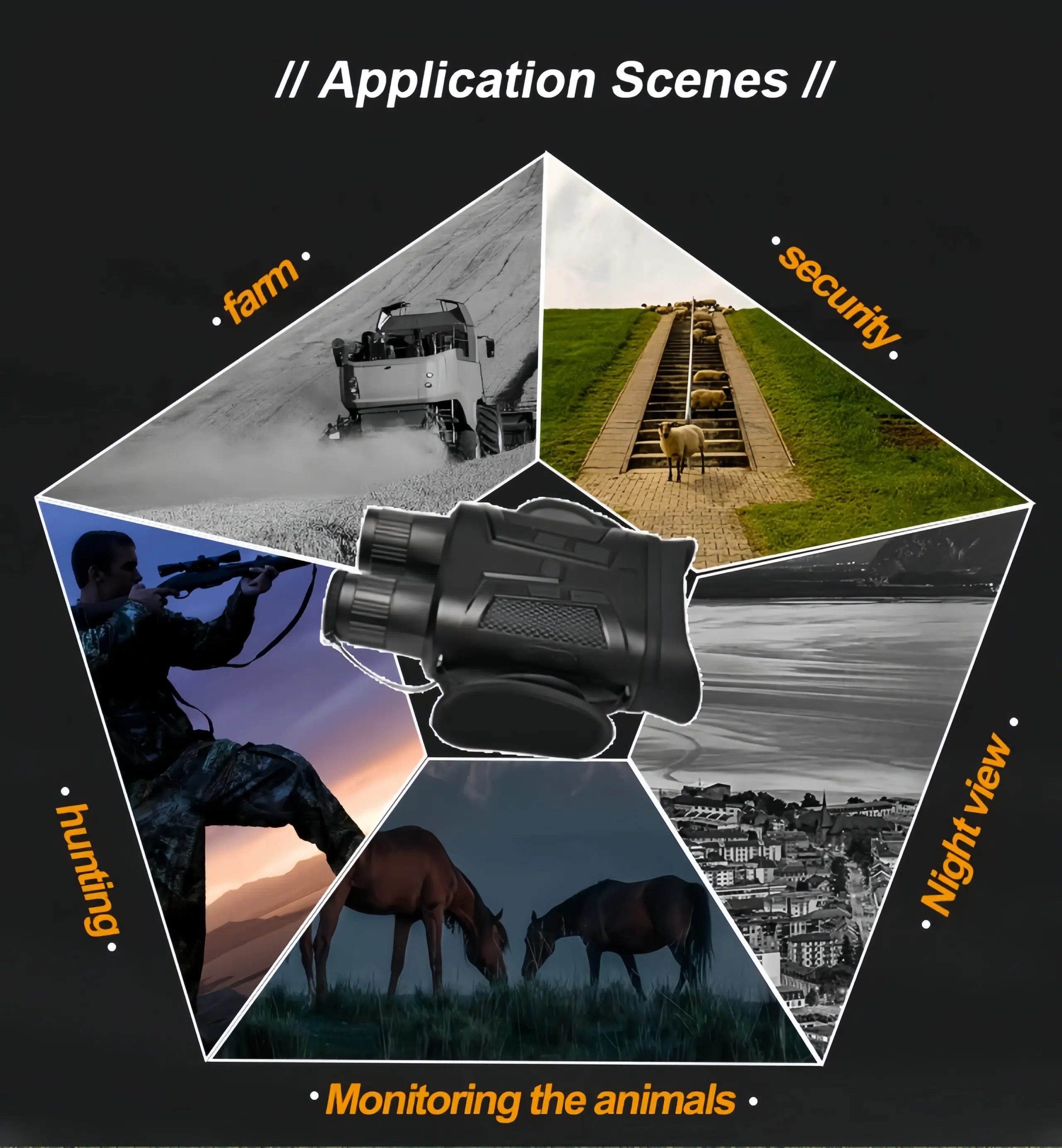
Night vision and thermal binoculars extend visibility in darkness and poor weather. They detect heat or amplify low light.
- Night vision models see up to 300 meters in total darkness.
- Thermal binoculars detect heat signatures beyond 1000 meters.
- Both types work well for security and wildlife observation at night.
Credit: www.usnighthawk.com
Practical Uses Of Long-range Binoculars
Long-range binoculars help people see faraway objects clearly. They are useful in many daily activities and jobs.
These binoculars offer sharp images even at great distances. They help users observe details that are hard to see with the naked eye.
Wildlife Observation
Long-range binoculars let nature lovers watch animals without disturbing them. They can see birds, deer, and other wildlife from a safe distance.
These binoculars are helpful for tracking animal behavior and movements. They give clear views even in dense forests or wide open fields.
- Spot animals high in trees or far away
- Observe nests or dens without getting close
- Help photographers frame wildlife shots better
Security And Surveillance
Security teams use long-range binoculars to watch over large areas. They help spot suspicious activity from a distance.
These binoculars improve safety by allowing early detection of threats. They are useful for border patrol, event security, and law enforcement.
- Monitor crowds during public events
- Check perimeters of buildings or properties
- Assist in search and rescue operations
Outdoor Adventures
Hikers, campers, and hunters find long-range binoculars useful. They help spot trails, landmarks, and animals far away.
These binoculars improve safety by helping users see the terrain ahead. They also make outdoor experiences more enjoyable by showing distant views clearly.
- Identify safe paths and obstacles
- Spot wildlife or game animals
- Enjoy scenic views from a distance
Tips To Maximize Viewing Distance
Surveillance binoculars can see far, but their power depends on many factors. Proper use helps you get the best view.
These tips focus on handling, setup, and conditions to improve your viewing distance.
Proper Handling And Setup
Hold binoculars steadily to avoid shaking. Use both hands and rest your elbows on a firm surface.
Adjust the eyepieces and focus slowly for a clear image. Make small changes to avoid losing sight of the target.
- Grip binoculars firmly with both hands
- Keep elbows close to your body
- Adjust interpupillary distance for comfort
- Focus slowly for sharp images
Using Tripods And Stabilizers
Tripods reduce hand shake and keep binoculars steady. They help with long viewing sessions and distant targets.
Stabilizers or mounts improve stability when tripods are not available. Use them for clearer and sharper images.
- Use a tripod for steady viewing
- Choose a tripod with adjustable height
- Try handheld stabilizers for mobility
- Check that mounts fit your binoculars securely
Maintaining Optimal Conditions
Clear weather improves how far you can see. Avoid fog, rain, or heavy dust when using binoculars.
Good lighting helps too. Early morning or late afternoon light often gives the best viewing conditions.
- Use binoculars in clear, dry weather
- Avoid haze and heavy air pollution
- View during good daylight hours
- Keep lenses clean for sharp images

Credit: www.celestron.com

Credit: www.shutterstock.com
Frequently Asked Questions
How Far Can Surveillance Binoculars Typically See?
Surveillance binoculars usually see between 500 to 1,000 yards clearly. High-end models may reach over 2,000 yards. Distance depends on lens quality, magnification, and lighting conditions.
What Factors Affect Binoculars’ Viewing Distance?
Viewing distance depends on lens size, magnification power, lighting, and atmospheric conditions. Larger lenses gather more light, improving clarity at longer ranges.
Are Night Vision Binoculars Effective For Long Distances?
Yes, night vision binoculars use infrared technology to see in darkness. Their effective range varies from 100 to 300 yards depending on the model.
Can Weather Impact Surveillance Binocular Visibility?
Absolutely. Fog, rain, and haze reduce visibility significantly. Clear, dry conditions provide the best viewing distance for surveillance binoculars.
Conclusion
Surveillance binoculars offer impressive viewing distances. Their range varies with models and conditions. High-quality lenses allow users to see distant details clearly. Weather and lighting also affect visibility. Choose binoculars based on your specific needs. Consider factors like magnification and lens size.
Understanding these elements ensures optimal use. Surveillance tasks become more efficient with the right tools. Always prioritize quality and functionality. This makes all the difference in observation. Investing in good binoculars enhances viewing experiences significantly. So, find the right pair and explore the world around you.