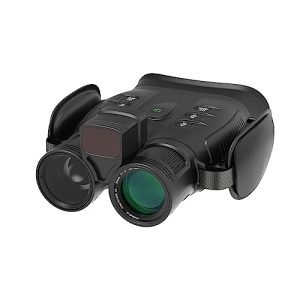
Have you ever wondered how thermal tactical binoculars let you see in complete darkness or through thick fog? These powerful tools reveal hidden details that your eyes alone can’t catch.
Whether you’re out in the wild, on a security mission, or just curious, understanding how these binoculars work can change the way you see the world around you. Keep reading, and you’ll discover the simple science behind their magic and how they can give you a clear advantage when it matters most.

Credit: www.ruimtevoorautisme.nl
Basics Of Thermal Imaging
Thermal imaging lets us see heat that objects give off. It turns heat into pictures we can see.
Thermal tactical binoculars use this technology to help spot things in dark or smoky places.
Infrared Radiation And Heat Detection
Everything with heat sends out invisible waves called infrared radiation. Our eyes cannot see these waves.
Thermal binoculars detect these waves and change them into images. Hot objects look bright, cold ones look dark.
- Infrared radiation is heat energy we cannot see
- Thermal devices sense this energy
- They create images based on temperature differences
Thermal Vs. Night Vision
Thermal binoculars see heat, not light. Night vision uses light, even small amounts, to create images.
Night vision works best in low light. Thermal works anytime, day or night, through smoke or fog.
- Thermal detects heat and works in total darkness
- Night vision needs some light to see
- Thermal works through obstacles like smoke
Common Uses For Thermal Binoculars
People use thermal binoculars for many activities that need clear vision in the dark.
They help find animals, spot people, and improve safety in tricky conditions.
- Wildlife watching at night
- Search and rescue missions
- Security and surveillance
- Hunting in low light
- Firefighting through smoke

Credit: www.blackwoodoutdoors.co.uk
Core Components Of Thermal Binoculars
Thermal tactical binoculars help users see heat signatures. They work by detecting infrared radiation from objects. These binoculars show images based on temperature differences.
Understanding the main parts of thermal binoculars helps to know how they function. The key components include the thermal sensor, optical system, and display technology.
Thermal Sensor And Detector
The thermal sensor detects infrared radiation emitted by objects. It converts this radiation into an electronic signal. The detector is sensitive to heat and works in total darkness.
- Infrared sensor captures heat energy
- Detector changes heat into electrical signals
- Signal sent to processing unit for image creation
Optical System And Lenses
The optical system focuses infrared radiation onto the sensor. Lenses made from special materials allow infrared light to pass through. The quality of lenses affects image clarity.
| Component | Function |
| Objective Lens | Collects infrared radiation |
| Relay Lens | Focuses radiation onto sensor |
| Eyepiece Lens | Magnifies the image for viewing |
Display Technology
The display shows the thermal image to the user. Common displays include LCD or OLED screens. These screens convert electrical signals into visible images.
Display features include:
- High contrast to show heat differences
- Adjustable brightness for day and night use
- Clear resolution for easy target identification
How Thermal Binoculars Capture Images
Thermal binoculars allow users to see heat emitted by objects. They capture invisible heat signatures and turn them into clear images.
This technology helps in many fields, including security and wildlife observation. Understanding how these devices work reveals their usefulness.
Heat Signature Detection Process
Thermal binoculars detect infrared radiation given off by warm objects. Sensors inside the device absorb this heat energy.
- Infrared sensors detect heat from objects and living beings.
- These sensors convert heat into electrical signals.
- The strength of the heat affects the signal intensity.
- Colder objects emit less infrared radiation and show differently.
Image Processing And Enhancement
After detection, the signals go through processing to create a visible image. The device improves details and contrast.
| Step | Function |
| Signal Conversion | Transforms heat signals into digital data |
| Noise Reduction | Removes unwanted interference |
| Contrast Adjustment | Highlights important heat differences |
| Image Sharpening | Makes edges and shapes clearer |
Real-time Image Display
The processed image appears on a screen inside the binoculars. This lets users see heat patterns instantly.
Real-time display helps in quick decisions and clear observation. The screen updates images as the user moves the binoculars.
- Immediate feedback on target location
- Easy tracking of moving objects
- Improved situational awareness
Key Features And Specifications
Thermal tactical binoculars use heat signatures to show images in the dark or through obstacles. They help users see targets clearly in low light or no light conditions.
Understanding their key features helps you know how they work and what to expect from these devices.
Resolution And Refresh Rate
Resolution defines how clear the image appears through the binoculars. Higher resolution gives sharper images with more detail. Refresh rate shows how often the image updates per second. A higher refresh rate means smoother motion and less blur.
- Resolution is measured in pixels, often 320×240 or 640×480.
- Refresh rate usually ranges from 30Hz to 60Hz.
- Higher values improve image quality and viewing comfort.
Detection Range And Field Of View
The detection range shows how far you can spot a heat source using the binoculars. Field of view (FOV) is the width of the scene visible through the device. A wider FOV helps scan large areas quickly.
| Specification | Typical Range |
| Detection Range | 500 to 2000 meters |
| Field of View | 5° to 15° |
Battery Life And Power Sources
Battery life affects how long the binoculars operate before needing a recharge or new batteries. Power sources vary depending on the model and use case.
- Battery life usually lasts between 4 and 10 hours.
- Rechargeable batteries are common and eco-friendly.
- Some models use replaceable AA or CR123 batteries.
- Power-saving modes extend battery life.
Advantages In Tactical Applications
Thermal tactical binoculars detect heat from objects and living beings. They work by sensing infrared radiation, which is not visible to the human eye.
This ability helps users see clearly in dark, smoky, or foggy conditions. Tactical teams use these binoculars to improve safety and efficiency.
Nighttime Surveillance
Thermal binoculars allow clear vision in complete darkness. They show heat signatures of people, animals, and vehicles.
This makes it easier to spot threats or targets without using visible light. Users can monitor areas quietly and safely at night.
- Detects hidden persons in darkness
- Works through smoke and fog
- Improves stealth during patrols
Search And Rescue Operations
Thermal binoculars help find lost or injured people quickly. Heat signatures stand out against cold backgrounds.
Rescue teams can cover large areas faster and locate survivors in tough conditions like forests or rubble.
- Spot humans through dense vegetation
- Find people in low visibility
- Speed up rescue missions
Wildlife Monitoring And Security
Thermal binoculars track animals by their body heat. This helps monitor wildlife without disturbing them.
Security teams use these binoculars to detect intruders or protect property at night.
- Observe animals from a distance
- Detect unauthorized persons
- Enhance night security measures
Maintenance And Care Tips
Thermal tactical binoculars need regular care to work well. Proper maintenance keeps the optics clear and the device ready for use.
Following simple steps helps extend the life of your binoculars and ensures accurate thermal imaging every time.
Cleaning The Optics
Clean lenses gently to avoid scratches. Use a soft brush or air blower to remove dust first.
- Use lens cleaning solution and microfiber cloth for smudges
- Do not use household cleaners or rough materials
- Clean only when necessary to avoid damage
Battery Management
Manage batteries carefully to keep your binoculars powered and safe. Remove batteries if you won’t use the device for a long time.
| Battery Tip | Description |
| Check charge level | Before use, ensure batteries are fully charged |
| Use recommended types | Only use batteries specified by the manufacturer |
| Store separately | Keep spare batteries in a dry, cool place |
| Remove when idle | Prevent leaks by removing batteries during storage |
Storage Recommendations
Store binoculars in a dry and cool place. Avoid extreme temperatures and humidity that can harm electronics.
- Use a protective case to prevent dust and damage
- Keep away from direct sunlight or heat sources
- Store in a place with stable temperature and low moisture
Choosing The Right Thermal Tactical Binoculars
Thermal tactical binoculars help you see heat signatures in the dark or through obstacles. Picking the right pair depends on your specific needs and budget.
Understanding key features and brands will guide you to a good choice for your activities.
Assessing Your Needs
First, think about how you will use the binoculars. Will you use them for hunting, security, or search and rescue?
- Check the range you need to see clearly.
- Decide if you need video recording or image capture.
- Consider the size and weight for carrying comfort.
- Look for weatherproof or rugged designs if used outdoors often.
Budget Considerations
Thermal binocular prices vary widely. Set a budget before you start looking.
| Price Range | Typical Features | Use Case |
| Under $500 | Basic thermal imaging, short range | Casual use, beginners |
| $500 – $1500 | Better image quality, longer range, some recording | Hobbyists, security |
| Above $1500 | High resolution, long range, advanced features | Professional or tactical use |
Top Brands And Models
Some brands are known for quality and reliability in thermal optics. Check user reviews and expert opinions.
- FLIR: Offers many models with clear images and durable build.
- ATN: Known for smart features and good value.
- Pulsar: Popular for tactical use and solid performance.
- Leupold: Provides rugged options for serious users.
Credit: betalight-tactical.com
Frequently Asked Questions
What Technology Powers Thermal Tactical Binoculars?
Thermal tactical binoculars use infrared sensors to detect heat emitted by objects. They convert thermal energy into visible images, allowing clear vision in darkness or obscured conditions.
How Do Thermal Binoculars Enhance Night Vision?
These binoculars detect temperature differences, creating detailed images in total darkness. They help users spot heat signatures of animals, humans, or objects unseen by regular night vision.
Are Thermal Tactical Binoculars Useful In Fog Or Smoke?
Yes, thermal binoculars penetrate fog, smoke, and light obstructions effectively. Their heat detection ability helps maintain visibility when traditional optics fail due to environmental conditions.
What Are Common Uses Of Thermal Tactical Binoculars?
They are widely used in military, law enforcement, hunting, and search and rescue operations. Their ability to detect heat signatures improves situational awareness and target identification.
Conclusion
Thermal tactical binoculars help see in the dark. They detect heat from objects. This ability makes them useful for many tasks. Night surveillance, wildlife observation, and rescue missions all benefit. Their technology is advanced yet user-friendly. Understanding how they work can enhance your experience.
These binoculars offer a new perspective. They allow you to see what the eye cannot. Investing in a pair could be a wise choice. They provide clarity and accuracy in challenging conditions. With these tools, the night becomes clear. Explore the unseen world with thermal tactical binoculars.
A valuable addition to any toolkit.