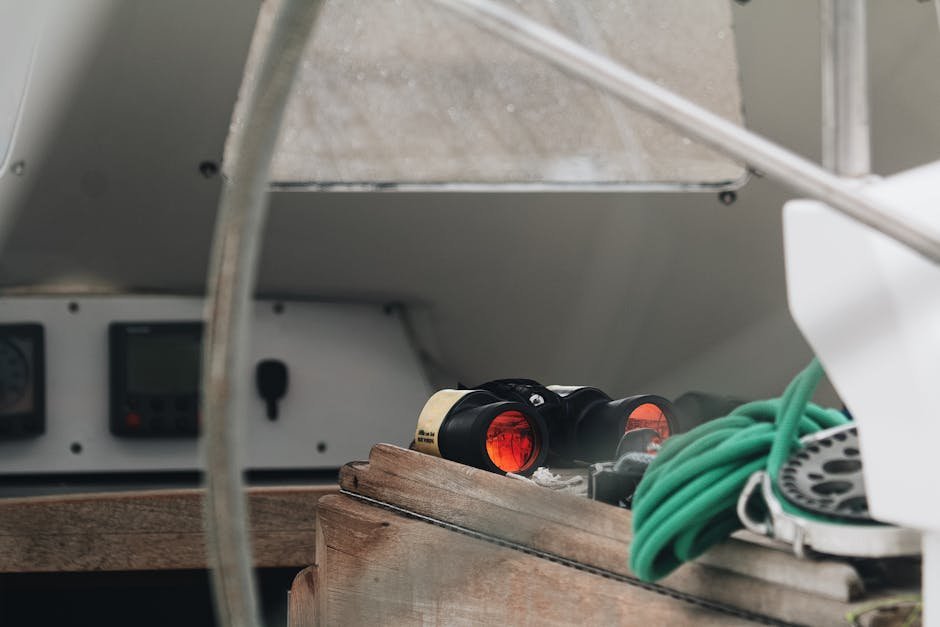
Are you wondering if roof prism binoculars can help you navigate the open sea? Choosing the right binoculars for marine navigation is crucial for spotting landmarks, hazards, and other vessels clearly.
But not all binoculars are built the same. You’ll discover how roof prism binoculars perform in a marine environment and whether they can be your reliable companion on the water. Keep reading to find out what makes these binoculars special and if they fit your navigation needs perfectly.

Credit: www.bhphotovideo.com
Roof Prism Binoculars Explained
Roof prism binoculars use a straight design that makes them compact and easy to hold. The light passes through two roof-shaped prisms, which flip the image right side up. This design keeps the binoculars slim and helps with quick focusing.
Compared to other types, roof prism binoculars have several advantages:
- Compact and lightweight, making them easy to carry on boats.
- Durable and waterproofmodels are available, suitable for marine use.
- Good image qualitywith sharp views and bright images.
- Easy to usewith quick adjustment features.
Marine Navigation Basics
Marine navigation needs clear visionover long distances. Binoculars help sailors see far and spot dangers early. They must be waterproofand durableto handle rough sea conditions.
Good binoculars for marine use have:
- Wide field of viewto scan large areas quickly.
- Bright and clear imageseven in low light or fog.
- Strong gripand anti-slip coatingfor wet hands.
- Lightweight designfor easy handling over long periods.
- Close focus abilityto see objects near the boat.
These features help sailors stay safe and navigate effectively. Binoculars are a vital tool in many maritime activities.
Suitability For Marine Use
Waterproof featuresare very important for marine navigation. Roof prism binoculars often come with waterproof sealsand fog proofing. This stops water and fog from entering the lenses and ruining the view. They can handle rain, splashes, and wet conditions on boats.
Durability and build qualityare key for marine use. Roof prism binoculars usually have strong, shockproof bodies. This helps them survive bumps or drops on a moving boat. The materials resist saltwater corrosion, which is common at sea.
| Feature | Importance for Marine Navigation | Roof Prism Binoculars |
|---|---|---|
| Waterproofing | Protects lenses from water and fog | Often fully waterproof and fog proof |
| Durability | Withstands rough marine environments | Strong, shock-resistant, saltwater proof |
| Weight | Easy to carry and handle | Compact and lightweight |

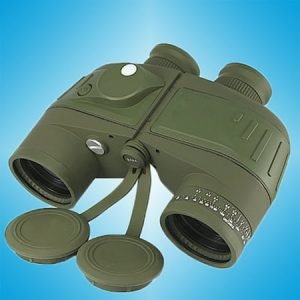
Credit: ytgxyqoptics.en.made-in-china.com
Optical Performance
Roof prism binocularsoffer good clarity and sharp images. Their design allows light to pass straight through lenses, making views clear and bright. Magnification levels vary but usually range from 7x to 10x. This helps sailors see distant objects clearly.
In low light conditions, roof prism binoculars perform well but not as well as some other types. Their sealed body prevents water and fog inside, which is good for marine use. Some models have special coatings on lenses to improve light transmission.
| Feature | Roof Prism Binoculars | Marine Use Benefit |
|---|---|---|
| Clarity | High | Sharp, clear images for navigation |
| Magnification | 7x to 10x | Good for spotting distant objects |
| Low Light Performance | Moderate | Coated lenses help in dim light |
| Water Resistance | Yes, sealed body | Prevents fog and water inside |
Factors To Consider
Field of viewis very important for marine navigation. Wide views help spot objects like boats or buoys quickly. Roof prism binoculars often have a narrower view than other types, which can limit what you see at once. A wider field helps track moving targets on water easily.
Size and portabilitymatter on boats with limited space. Roof prism binoculars tend to be compact and lightweight. This makes them easier to carry and use for long times without tired hands. Small size also means they fit well in bags or pockets. Portability helps when you need quick access to binoculars during navigation.
Comparing Roof Prism With Porro Prism
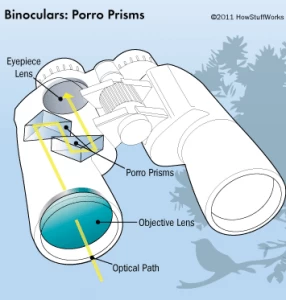
Roof prism binocularsare compact and have a straight design. They are easier to handle and usually lighter. Their lenses are better sealed, making them more water-resistant. This is important for marine use. However, they might have slightly less depth perceptionthan porro prisms.
Porro prism binocularsoffer a wider field of view and better depth perception. They are bulkier and heavier, which can be a drawback on a boat. These binoculars often provide brighter images but are less compact and may not be as water-resistant.
| Feature | Roof Prism | Porro Prism |
|---|---|---|
| Size and Weight | Compact and lightweight | Bulkier and heavier |
| Water Resistance | Usually better sealed | Less sealed, less water resistant |
| Image Quality | Sharp but slightly less depth | Brighter with better depth |
| Cost | Generally more expensive | Usually more affordable |
- Roof prismstend to cost more due to complex design.
- Porro prismsoffer good value for price.
- Cost depends on brand, lens quality, and features.
- For marine use, durability and water resistance add value.
User Experiences And Reviews
Many mariners find roof prism binocularsuseful for spotting distant objects at sea. These binoculars offer clear imagesand are often compactand lightweight. Some users mention they work well in low lightand foggyconditions. Others appreciate their durabilityand water resistanceduring rough weather.
Some common issues arise, like fogging inside lensesor difficulty focusingquickly. To fix fogging, many use anti-fog spraysor choose models with sealed lenses. For focus problems, adjusting the diopter ringbefore sailing helps. A few users suggest cleaning lenses carefully to avoid scratches.
| Issue | Solution |
|---|---|
| Fogging inside lenses | Use anti-fog sprays or buy sealed models |
| Difficulty focusing quickly | Adjust diopter ring before use |
| Scratched lenses | Clean gently with microfiber cloth |

Credit: www.hodgesmarine.com
Choosing The Right Binoculars
Roof prism binoculars offer a compact and durable design suitable for marine use. Their clear images help spot distant objects on water. These binoculars resist water and fog, making them practical for navigation at sea.
Brand Recommendations
Trusted brandsoffer better quality and durability. Some popular names include:
- Nikon – Known for clear images and good build.
- Canon – Offers sharp focus and waterproof models.
- Zeiss – High-quality optics but can be expensive.
- Vortex – Great value with strong warranty support.
These brands provide reliable options for marine use.
Budgeting And Investment
Binoculars for marine navigation should resist water and fog. Expect to spend more for these features.
Think about how often you will use them. Spending a bit more can save money over time.
| Price Range | Features | Best For |
|---|---|---|
| Under $100 | Basic optics, limited waterproofing | Casual use, short trips |
| $100 – $300 | Good optics, fog-resistant, some waterproof | Regular marine navigation |
| Above $300 | High-quality optics, fully waterproof, durable | Frequent use, professional navigation |
Frequently Asked Questions
Can Roof Prism Binoculars Withstand Marine Conditions?
Yes, roof prism binoculars with waterproof and fog-proof features can endure marine environments well. Look for models with rubber armor for extra durability.
Are Roof Prism Binoculars Better Than Porro For Marine Use?
Roof prism binoculars are more compact and durable, ideal for marine use. Porro prisms often offer better depth perception but are bulkier and less rugged.
What Magnification Is Ideal For Marine Navigation Binoculars?
A 7x to 10x magnification is ideal for marine navigation. It balances image stability and detail, essential for spotting distant objects on water.
Do Roof Prism Binoculars Offer Good Image Clarity At Sea?
Yes, high-quality roof prism binoculars provide excellent image clarity and brightness. Their advanced coatings reduce glare and enhance contrast in marine settings.
Conclusion
Roof prism binoculars work well for many outdoor activities. They offer clear and bright images, which help in spotting distant objects. For marine navigation, they can be useful but have some limits. Their size and weight make them easy to carry on boats.
Still, they lack some features of specialized marine binoculars, like waterproof seals and compass integration. Choosing the right binoculars depends on your needs and budget. Roof prism binoculars can serve as a good option for casual marine use. But for serious navigation, consider equipment designed specifically for the sea.