Have you ever noticed those annoying color edges around objects when you look through binoculars? This problem, called color fringing, can spoil your viewing experience.
You might wonder if Ed binoculars, known for their special glass, can completely get rid of this issue. You’ll discover how Ed binoculars work, whether they can truly eliminate color fringing, and what you should expect when choosing your next pair.
Keep reading to make sure your next binoculars give you the clearest, sharpest view possible.

Credit: www.walmart.com
What Causes Color Fringing
Color fringing appears as colored edges around objects in photos. It affects the sharpness and clarity of images. This problem often shows up in high-contrast areas.
Understanding the cause helps to reduce or fix color fringing. It mainly comes from how lenses handle light colors.
Chromatic Aberration Basics
Chromatic aberration happens because lenses bend different colors of light unevenly. Light splits into colors like a prism. Each color focuses at a different point, causing a blur or color edge.
- Light has many colors, each with a unique wavelength.
- Lenses bend these colors differently due to refraction.
- Short wavelengths (blue/violet) bend more than longer (red).
- This difference causes colors to focus at different distances.
- The result is color fringing on photo edges.
Impact On Image Quality
Color fringing lowers image quality. It creates distracting halos of color around objects. This effect reduces photo sharpness and detail.
| Effect | Description | Result |
| Blurred edges | Colors do not align properly | Loss of sharpness |
| Color halos | Bright outlines in red, blue, or green | Distracts from main image |
| Reduced contrast | Colors bleed into each other | Less clear details |
Credit: oberwerk.com
Role Of Ed Glass In Binoculars
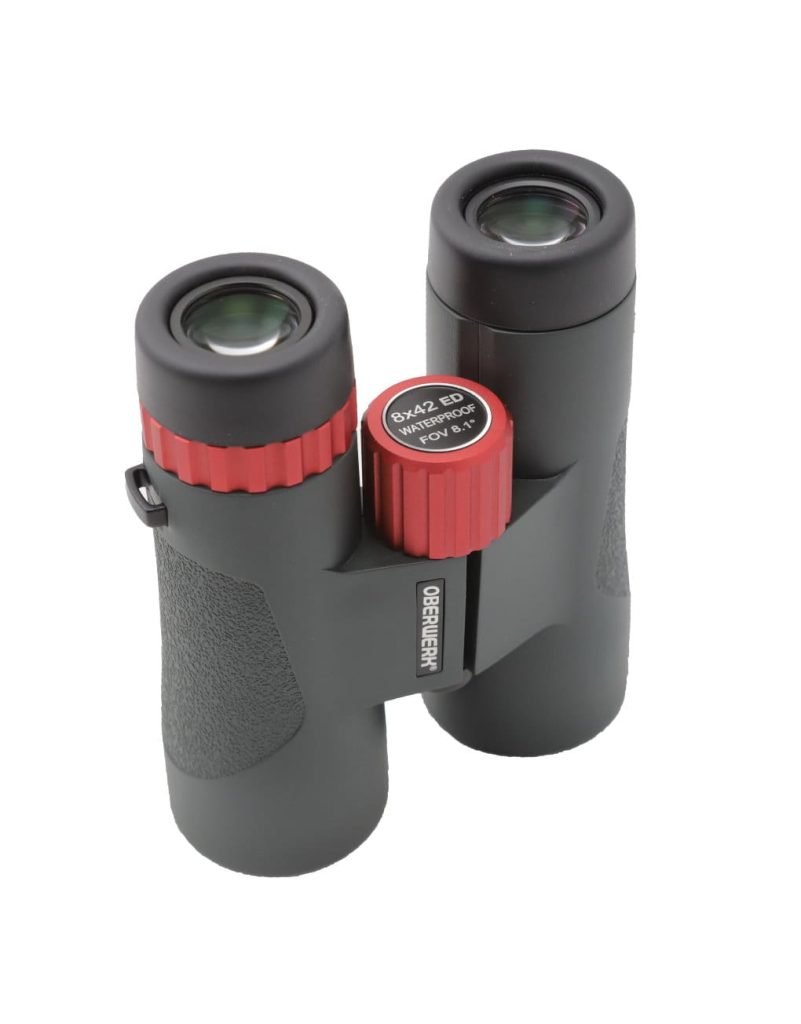
ED glass stands for Extra-low Dispersion glass. It is a special type of glass used in binocular lenses. Its main job is to reduce color fringing in images. Color fringing occurs when light splits into colors and creates blurry edges.
Many binoculars include ED glass to improve image clarity. This type of glass helps bring sharper and clearer views by reducing unwanted color effects.
Properties Of Ed Glass
ED glass has unique properties that make it useful in optics. It reduces the spread of light and controls how light bends inside the lens. This helps reduce chromatic aberration, which causes color fringing.
- Low dispersion of light
- High transparency
- Improved light transmission
- Better contrast and color accuracy
- Durable and resistant to scratches
How Ed Glass Reduces Fringing
ED glass reduces fringing by focusing different light colors to the same point. Normal glass bends colors unevenly, causing colored edges. ED glass limits this bending difference.
| Type of Glass | Chromatic Aberration Level | Image Quality |
| Standard Glass | High | Blurry edges and color fringing |
| ED Glass | Low | Sharper images with less color fringing |
Limitations Of Ed Binoculars
ED binoculars use special glass to reduce color fringing. This helps improve image clarity. Still, they cannot remove all color fringing.
Other optical factors also affect image quality. Understanding these limits helps set the right expectations.
Residual Color Fringing
ED glass reduces most color fringing, but some remains. This leftover fringing is called residual color fringing.
Residual color fringing appears as faint color edges around bright objects. It happens because no lens can fully focus all light colors at once.
- ED glass minimizes purple and green edges
- Residual fringing is usually small and hard to see
- Bright light and high contrast scenes show it more clearly
Other Optical Factors
Besides color fringing, other issues affect binocular image quality. These include sharpness, brightness, and distortion.
Lens coatings, prism quality, and design also impact how clear images look. ED glass helps but does not fix all problems.
- Chromatic aberration is reduced but not eliminated
- Edge distortion may appear in some models
- Low light performance depends on lens size and coatings
- Field of view can be narrower in some ED binoculars

Credit: www.amazon.com
Comparing Ed Binoculars With Other Types
ED binoculars use special glass to reduce color fringing. Other binocular types may not handle this issue as well. Understanding the differences helps you see if ED binoculars can fully remove color fringing.
Color fringing happens when lenses fail to focus all colors in the same place. Some binoculars control it better than others. Let’s compare ED binoculars with other popular types.
Standard Glass Binoculars
Standard binoculars use regular glass lenses. They are more common and less expensive. These lenses do not reduce color fringing as much as ED glass.
- Show noticeable color fringing around bright objects.
- Have more chromatic aberration compared to ED binoculars.
- May cause eye strain during long viewing sessions.
- Are suitable for casual use where sharpness is less critical.
High-end Ed And Apo Binoculars
High-end ED and APO binoculars use advanced glass types. They reduce color fringing significantly. APO stands for apochromatic, meaning they bring three colors into focus.
| Feature | ED Binoculars | APO Binoculars | Standard Glass |
| Color Fringing | Minimal | Almost None | Noticeable |
| Lens Quality | High | Very High | Standard |
| Price | Moderate to High | High | Low to Moderate |
| Eye Comfort | Good | Excellent | Average |
Tips To Minimize Color Fringing
Color fringing is a common problem with binoculars. It shows as colored edges around objects.
Even ED binoculars cannot remove color fringing completely. You can reduce it with some tips.
Proper Usage Techniques
Hold your binoculars steady to avoid blurry images and color fringes. Use both hands for support.
Adjust the focus carefully. Focus on the object clearly to reduce color fringing around edges.
- Use a tripod for long viewing sessions
- Keep the lenses clean and free of dust
- Avoid viewing objects against very bright backgrounds
Choosing The Right Binoculars
Pick binoculars with ED (Extra-low Dispersion) glass to reduce color fringing. ED glass lowers light scatter.
Look for binoculars with multi-coated lenses. These coatings help improve image clarity and color accuracy.
- Choose binoculars with high-quality prisms
- Check reviews for color fringing performance
- Consider binoculars with phase correction coatings
Expert Opinions And User Experiences
Color fringing is a common issue in binoculars. It shows as colored edges around objects. Many ask if ED (extra-low dispersion) glass can fix this problem completely.
We look at expert reviews and real user feedback to see if ED binoculars remove color fringing fully.
Professional Reviews
Experts say ED glass reduces color fringing significantly. It helps focus colors better, giving sharper images. But no binoculars can stop color fringing totally.
- ED glass lowers chromatic aberration by bending light precisely.
- Binoculars with ED lenses show clearer and more natural colors.
- High-end models use ED glass with other tech to improve results.
- Some fringing may still appear in extreme lighting or high contrast.
Real-world Feedback
Users report that ED binoculars cut down color fringing well. Most say the effect is minimal and not distracting. Some notice slight fringing in bright or complex scenes.
| User Experience | Color Fringing Result |
| Birdwatching in bright sun | Minor fringing on edges |
| Viewing distant city lights at night | Almost no fringing |
| Watching sports with fast movement | Reduced but visible fringing |
| General nature observation | Clear, little to no fringing |
Frequently Asked Questions
What Causes Color Fringing In Binoculars?
Color fringing, or chromatic aberration, occurs when lenses fail to focus all colors to the same point. This results in colored edges around objects. It is common in optical devices, including binoculars. High-quality lenses and coatings can significantly reduce this effect, enhancing viewing clarity.
How Do Ed Binoculars Reduce Color Fringing?
ED binoculars use Extra-low Dispersion glass to minimize chromatic aberration. This advanced glass material reduces light dispersion, enhancing color accuracy and clarity. As a result, ED binoculars provide sharper, more vibrant images with reduced color fringing, making them ideal for bird watching and other detailed observations.
Can Any Binoculars Completely Eliminate Color Fringing?
Completely eliminating color fringing is challenging, but ED binoculars significantly reduce it. While no optical device can fully eliminate this effect, high-quality ED glass and coatings minimize its impact. This results in clearer and more accurate images, providing an enhanced viewing experience.
Are Ed Binoculars Worth The Investment?
ED binoculars are worth the investment for serious users. They provide superior image quality by reducing chromatic aberration. This results in clearer, more vibrant images, especially in challenging lighting conditions. For nature enthusiasts and bird watchers, the investment in ED binoculars enhances the overall viewing experience.
Conclusion
ED binoculars reduce color fringing a lot. They use special glass to make images clearer. But, they cannot remove all color fringing completely. Some small fringing may still appear, especially in bright light. Overall, ED binoculars improve your viewing experience well.
They help you see sharper and with less color blur. Choose ED binoculars if you want better image quality. Remember, no binocular can give perfect color correction every time. Still, ED lenses are a smart choice for clearer views.