Have you ever wondered how to spark your child’s curiosity about the stars? Imagine giving your kids a tool that turns the night sky into a playground of discovery.
Binoculars might just be the simple key to unlocking their passion for astronomy. You’ll learn how these easy-to-use gadgets can make learning about space exciting and fun for your children. Ready to see how binoculars can bring the universe closer to your family?
Keep reading—you won’t want to miss these surprising benefits.
Credit: www.popsci.com
Benefits Of Binoculars For Young Astronomers
Binoculars are great tools for kids who want to learn about the night sky. They help young astronomers see stars, planets, and the moon more clearly.
Using binoculars makes astronomy more fun and easy to understand. Kids can explore space without needing expensive or complex equipment.
Enhancing Visual Experience
Binoculars bring distant objects closer, making details easier to see. Kids can notice the craters on the moon and the bright spots on planets.
They offer a wider view than telescopes, so kids can see groups of stars and constellations. This helps them understand how the sky looks as a whole.
Encouraging Curiosity And Exploration
Binoculars make kids excited to explore the night sky. They feel like real scientists discovering new things.
Using binoculars motivates children to ask questions about stars, planets, and space. This curiosity helps them learn more deeply.
Developing Observation Skills
Binoculars teach kids to focus and watch carefully. They learn to notice small changes in the sky over time.
These skills improve patience and attention to detail, which are important for science and everyday life.
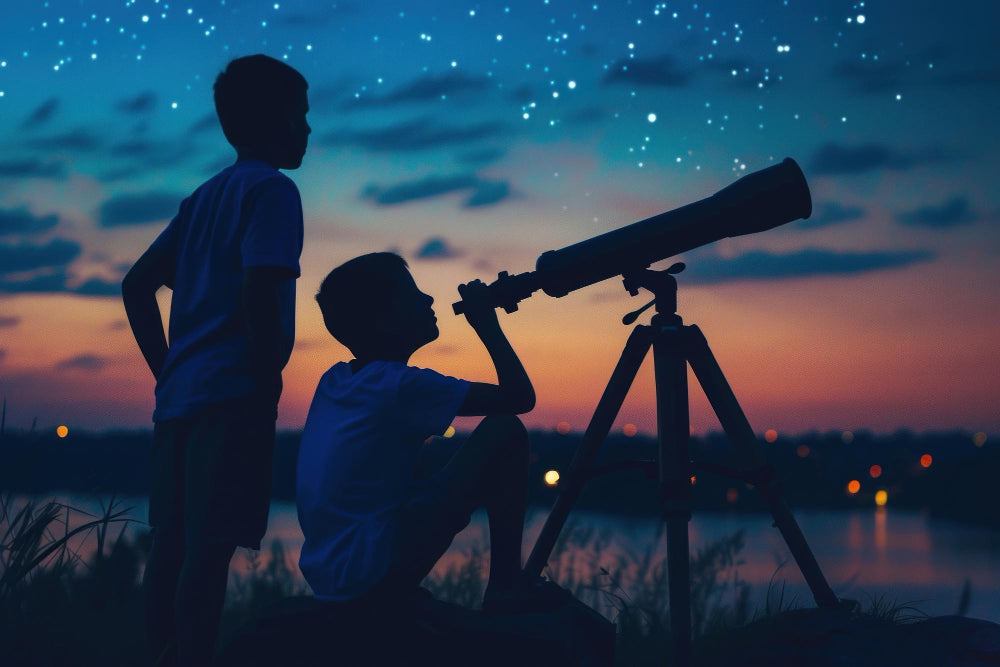
Credit: thepiematrix.com
Choosing The Right Binoculars For Kids
Binoculars can make learning astronomy fun for kids. They help children see stars, planets, and the moon up close.
Picking the right binoculars is important. The right pair matches a child’s needs and abilities.
Size And Weight Considerations
Lightweight binoculars are easier for kids to hold. Heavy binoculars can tire their arms quickly.
Smaller sizes fit better in little hands. Choose binoculars that feel comfortable to carry and use.
- Look for compact models
- Choose binoculars under 1.5 pounds
- Check if the binoculars have a good grip
Magnification And Lens Diameter
Magnification shows how much closer objects appear. Too much can make images shaky and hard to see.
Lens diameter affects how much light the binoculars collect. Larger lenses show brighter, clearer images.
- Choose 7x to 10x magnification for kids
- Lens diameter around 35mm is good for beginners
- Bigger lenses need steadier hands
Durability And Safety Features
Kids can be rough with their binoculars. Durable materials help binoculars last longer.
Safety features protect eyes and prevent accidents. Soft rubber covers can cushion bumps and drops.
- Look for rubber armor for grip and protection
- Choose binoculars with shatterproof lenses
- Check for adjustable eye cups to protect eyes
Simple Astronomy Activities With Binoculars
Binoculars can help kids explore the night sky in an easy way. They make distant objects like the moon and stars clearer.
Using binoculars, children can learn about space by spotting details and tracking moving objects. These simple activities make astronomy fun.
Spotting The Moon’s Craters
Binoculars help kids see the moon’s surface up close. They can spot big craters and dark spots called maria.
Look at the moon during its different phases. The shadows show the shapes of craters better, making it easier to identify them.
- Find the large crater Tycho near the moon’s south pole
- Spot the dark maria, like Mare Imbrium and Mare Serenitatis
- Observe how shadows change during the moon’s phases
Identifying Planets And Stars
Binoculars can help kids see bright planets like Jupiter and Venus. They look like stars but do not twinkle.
Using binoculars, children can also find star clusters and double stars that are hard to see with the naked eye.
- Look for planets near the horizon just after sunset or before sunrise
- Spot star clusters like the Pleiades in the night sky
- Try to find double stars, such as Albireo in the Cygnus constellation
Tracking Satellites And Meteors
Binoculars help kids follow satellites moving across the sky. Satellites look like small, steady lights.
Meteors appear as quick streaks of light. Watching meteor showers with binoculars can reveal small details.
- Watch for satellites just after dark when the sky is clear
- Look for the International Space Station, very bright and fast
- Observe meteor showers during peak nights for better views
Tips To Make Astronomy Fun And Engaging
Using binoculars to explore the night sky can help kids learn about stars, planets, and constellations. It makes astronomy exciting and easy to understand.
Here are some tips to keep children interested and active in their astronomy journey.
Creating Star Maps And Journals
Encourage kids to draw star maps of the night sky and keep journals of their observations. This helps them remember what they see and learn patterns.
- Use a notebook to record dates and times of observations
- Draw sketches of constellations and planets seen
- Note changes in star positions over weeks or months
- Include fun facts about each star or planet
Joining Astronomy Clubs Or Groups
Joining local astronomy clubs helps kids meet others who love space. They can share tips, attend star parties, and use telescopes or binoculars together.
| Benefit | How it Helps Kids |
| Social Interaction | Meet friends with similar interests |
| Guided Learning | Learn from experienced astronomers |
| Access to Equipment | Use better binoculars and telescopes |
| Fun Events | Attend star watching and educational talks |
Using Apps To Complement Observation
Astronomy apps can help kids identify stars and planets easily. They add a digital layer to the learning experience and make observation more interactive.
- Real-time star maps with touch navigation
- Information on stars, planets, and constellations
- Night mode for comfortable sky viewing
- Interactive quizzes and fun facts
Common Challenges And How To Overcome Them
Using binoculars can help kids explore the night sky. They make stars and planets easier to see. Kids often face some challenges when learning astronomy this way.
Knowing these challenges helps parents and teachers support children better. Simple tips can make stargazing fun and effective.
Handling Low Light Conditions
Astronomy happens mostly at night or in dim light. Kids’ eyes may take time to adjust. Binoculars also need enough light to show clear images.
To improve low light viewing, choose binoculars with a wide lens. Teach kids to let their eyes adapt to darkness for 15-20 minutes. Avoid using bright flashlights nearby.
- Use binoculars with larger objective lenses (at least 35mm)
- Dim or red flashlight helps keep night vision
- Find dark spots away from city lights
- Wait quietly for eyes to adjust before looking through binoculars
Dealing With Weather Limitations
Clouds, rain, and fog can block views of stars and planets. Cold weather can also make kids lose interest fast. Weather changes can stop outdoor astronomy sessions.
Check the weather forecast before planning a stargazing night. Have flexible dates to move sessions if needed. Teach kids that astronomy needs patience and good weather helps a lot.
- Look for clear, dry nights for better views
- Dress kids in warm clothes to stay comfortable
- Have indoor astronomy activities as backup plans
- Explain that clouds sometimes hide stars but they will return
Maintaining Interest Over Time
Kids may lose interest if stargazing feels hard or boring. They want quick results and fun activities. Keeping astronomy exciting helps them learn more.
Use simple star charts and apps to find planets and constellations. Celebrate small discoveries and ask questions to spark curiosity. Mix binocular use with storytelling about space.
- Start with easy-to-find stars and planets
- Use stories and myths about constellations
- Encourage kids to share what they see
- Plan short, fun sessions to avoid boredom

Credit: www.calaes.com
Frequently Asked Questions
Can Binoculars Improve Kids’ Interest In Astronomy?
Yes, binoculars make astronomy more engaging for kids. They offer a clear view of the moon, stars, and planets, sparking curiosity and hands-on learning.
What Age Is Best For Kids To Use Binoculars?
Children aged 6 and above can safely use binoculars for astronomy. At this age, kids develop coordination and can follow simple instructions.
How Do Binoculars Compare To Telescopes For Kids?
Binoculars are easier to use and more portable than telescopes. They provide a wider view, which helps kids quickly spot celestial objects.
Are Binoculars Safe For Kids To Use At Night?
Yes, binoculars are safe for kids when used responsibly. Adult supervision is recommended to ensure proper handling and avoid eye strain.
Conclusion
Binoculars make astronomy fun and easy for kids to explore. They help children see stars, planets, and the moon clearly. Kids can learn about space right in their backyard. Using binoculars encourages curiosity and hands-on learning. It builds interest in science without needing expensive tools.
With simple equipment, kids can enjoy the night sky every clear evening. This small step can lead to a lifelong love of space and discovery. Exploring the universe becomes exciting and real with binoculars.