Imagine you’re part of a rescue team, navigating through a dense forest or a sprawling urban landscape in search of a missing person. In these critical moments, every second counts, and having the right tools at your disposal can mean the difference between success and failure.
You might wonder if binoculars, a staple in such missions, can do more than just magnify your vision. Can they actually detect heat and become your secret weapon in locating people quickly? This intriguing possibility could transform the way rescue operations are conducted, and you’re about to discover how.
Keep reading to unlock the potential of binoculars in detecting heat and enhancing your rescue mission strategies.

Credit: www.usnighthawk.com
Heat Detection Technology
Binoculars with heat detection help rescue teams find people in tough places. They use special technology to see heat from a distance.
This technology shows heat patterns as images. It works day or night, even in fog or smoke.
Infrared And Thermal Imaging Basics
Infrared light is invisible heat energy all objects give off. Thermal imaging detects this energy and turns it into pictures.
Thermal cameras sense heat differences. Hot things look bright, cold things look dark on the screen.
- Infrared detects heat waves
- Thermal imaging creates heat pictures
- Used to spot people, animals, or fires
How Heat Signatures Are Captured
Thermal sensors collect infrared radiation from objects. They convert this energy into electrical signals.
These signals build a heat map. Rescue teams see warm shapes in cold surroundings.
- Sensors detect infrared waves
- Signals turn into visual heat images
- Heat differences highlight living things
Types Of Binoculars For Rescue
Binoculars help rescue teams see far distances clearly. Different binoculars work best in different conditions.
Some binoculars can detect heat, which helps find people in dark or hidden places.
Standard Optical Binoculars
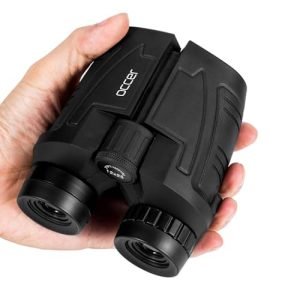
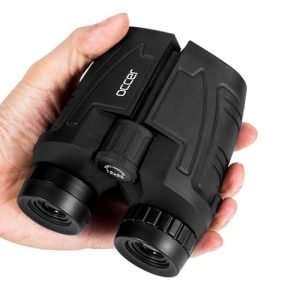
Standard optical binoculars use lenses to magnify distant objects. They show clear images in daylight.
These binoculars do not detect heat. They work well in good light but are less useful at night or in fog.
Thermal Imaging Binoculars
Thermal imaging binoculars detect heat from people or animals. They create pictures based on temperature differences.
These binoculars work well in total darkness, smoke, or fog. They help rescuers find heat sources quickly.
- Detect warm bodies even in dark places
- Show heat patterns on a screen
- Useful in smoke, fog, and night
- Often used in search and rescue missions
Night Vision Binoculars
Night vision binoculars amplify low light to help see in the dark. They do not detect heat but improve visibility.
They are useful when there is some natural light, like moonlight or starlight. They help rescue teams move safely at night.
Thermal Binoculars In Action
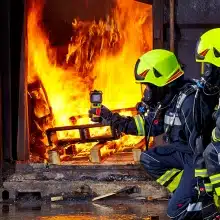
Thermal binoculars help rescuers see heat from people and animals. They show heat patterns in dark or smoky places.
These binoculars are useful in rescue missions. They help find lost or trapped people quickly and safely.
Key Features And Capabilities
Thermal binoculars detect heat instead of light. They work well in total darkness and bad weather. This helps rescuers see through smoke, fog, and trees.
They show heat in different colors or shades. This makes it easy to spot warm bodies or animals against cold backgrounds.
- Heat detection up to several hundred meters
- Clear images in darkness or poor visibility
- Lightweight and easy to carry
- Long battery life for extended missions
- Durable and weather-resistant design
Advantages In Rescue Scenarios
Thermal binoculars improve the speed and safety of rescue missions. They help find victims faster than normal binoculars or flashlights.
These tools allow rescuers to search large areas at night or in harsh weather. They also reduce risks by revealing hidden dangers like animals or unstable terrain.
- Locate people lost in forests or mountains
- Spot survivors in smoke-filled buildings
- Search in fog, rain, or darkness
- Reduce risks for rescue teams
- Work quietly without alerting others
Limitations And Challenges
Binoculars are common tools in rescue missions. They help to see far objects clearly. But detecting heat is different from normal viewing.
Heat detection needs special technology. Regular binoculars cannot see heat. This article explains the limits and problems of heat detection binoculars.
Environmental Factors
Weather changes can affect heat detection. Rain, fog, and snow block heat signals. These conditions make it hard to see heat sources clearly.
Temperature differences also matter. If the background is warm, small heat sources blend in. This reduces the ability to spot people or animals.
- Fog and rain reduce heat visibility
- Snow can reflect heat and cause confusion
- Warm backgrounds hide smaller heat signatures
- Strong wind may affect sensor stability
Technical Constraints
Heat-detecting binoculars use infrared sensors. These sensors have limits on distance and resolution. They cannot detect heat very far away.
Battery life is another challenge. These devices need power to work. Long rescue missions may drain batteries quickly, causing downtime.
- Limited detection range reduces usefulness
- Low resolution can miss small heat sources
- Heavy and bulky designs reduce comfort
- Battery life limits long-term use
- High cost limits widespread use
Comparing Alternatives
Rescue missions often need tools to find people quickly. Binoculars are common but cannot detect heat. Alternatives like drones and thermal scanners can help. This guide compares these options.
Drones With Thermal Cameras
Drones with thermal cameras fly over large areas to spot heat signatures. They help locate people in forests or disaster zones fast. Drones cover more ground than handheld devices.
- Can scan wide and hard-to-reach places
- Provide real-time video feed to rescuers
- Work well day or night
- Require trained operators and good weather
Handheld Thermal Scanners
Handheld thermal scanners detect heat from a short distance. Rescuers use them to check buildings, rubble, or nearby areas. They are easy to carry but have limited range.
| Feature | Drones with Thermal Cameras | Handheld Thermal Scanners |
| Range | Long, wide area | Short, nearby spots |
| Mobility | High, can fly | High, easy to carry |
| Setup Time | Longer, needs prep | Short, quick use |
| Operator Skill | Requires training | Simple to use |
| Cost | Higher | Lower |

Credit: www.usnighthawk.com
Future Trends In Rescue Optics
Rescue teams use special optics to find people in danger. These tools help them see in dark or hard places. New technology will make rescue optics better and faster.
Future rescue optics will combine heat detection with smart features. This will improve safety and speed during rescue missions.
Advancements In Thermal Technology
Thermal technology helps spot heat from people or animals. New sensors are more sensitive and clearer. They can detect smaller heat differences from farther away.
These improvements allow rescuers to find victims faster, even in bad weather or thick smoke. Thermal binoculars become lighter and easier to use too.
- Higher resolution sensors for sharper images
- Longer battery life for extended missions
- Compact and lightweight designs
- Better heat contrast to spot hidden victims
Integration With Ai And Gps
AI helps rescue teams by analyzing heat images quickly. It can highlight people or animals automatically. GPS integration shows exact locations on maps.
This combination helps teams plan and act faster. They can track victims and share real-time data with other rescuers. It reduces search time and increases success.
- AI detects heat signatures and alerts rescuers
- GPS maps show victim and rescuer locations
- Data sharing supports team coordination
- Automatic tracking of moving targets

Credit: www.usnighthawk.com
Frequently Asked Questions
Can Binoculars Detect Heat Signatures During Rescue Missions?
Standard binoculars cannot detect heat. Thermal imaging binoculars are designed to sense infrared radiation, revealing heat signatures. These specialized devices help rescuers locate people in darkness or smoke by detecting body heat effectively.
What Technology Allows Binoculars To Detect Heat?
Thermal imaging technology enables heat detection. It captures infrared radiation emitted by warm objects. This technology translates heat into visible images, allowing rescuers to spot living beings in challenging environments.
Are Thermal Binoculars Essential For Rescue Operations?
Yes, thermal binoculars enhance search efficiency. They help locate victims in low visibility conditions like fog, smoke, or nighttime. Using these devices improves rescue speed and safety, increasing survival chances.
How Do Thermal Binoculars Differ From Regular Ones?
Thermal binoculars detect infrared radiation, not visible light. Regular binoculars magnify visible light only. Thermal models display heat patterns as images, enabling vision through darkness or obstructions.
Conclusion
Binoculars that detect heat help rescuers find people faster. They show heat differences that normal binoculars cannot. This technology improves safety during search missions. Still, rescuers must know how to use them well. Not all binoculars have heat detection features.
Choosing the right tool can save lives in critical moments. Understanding how heat detection works makes rescue efforts better. It adds a valuable layer to traditional search methods. Heat-detecting binoculars are a helpful aid, not a full solution. Combining tools and skills leads to the best rescue results.