Best Binoculars for Tactical Training: Top Night Vision & High-Powered Picks demand more than casual optics. They need to perform in low light, handle rough conditions, and deliver enough magnification to identify targets at distance. This roundup covers five tactical-grade options built for observation, security, and field training scenarios.
The Night Vision Goggles lead the pack for sheer capability in darkness, offering 4K recording and long battery life in a surprisingly light body. Whether you need infrared visibility or a rugged waterproof optic, the picks below map to real training needs.
✔ 4K clarity with extended battery runtime
🛒 Check on AmazonComparison Chart of Best Binoculars for Tactical Training: Top Night Vision & High-powered Picks
| Product | Details | Rating | Buy |
|---|---|---|---|
|
Editor’s Choice

|
Night Vision Goggles |
★★★★☆4.8/5 |
Check on Amazon |
|
Top Pick

|
Night Vision Goggles For Adults 4k |
★★★★☆4.5/5 |
Check on Amazon |
|
Best Budget

|
20×50 High Powered Binoculars |
★★★★☆4.7/5 |
Check on Amazon |
|
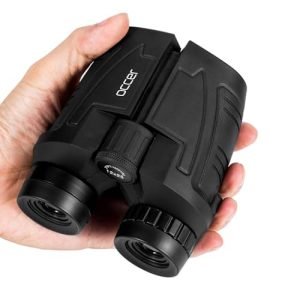
Occer 12×25 Compact Binoculars |
★★★★☆4.4/5 |
Check on Amazon |
|
Steiner Military-marine Series Binoculars |
★★★★☆4.4/5 |
Check on Amazon |

List of Top 5 Best Binoculars for Tactical Training: Top Night Vision & High-powered Picks
These models were selected based on magnification, objective lens size, low-light handling, waterproofing, and real buyer feedback patterns. Each option fills a distinct tactical niche, from digital night vision to rugged marine-grade glass.
Below are the list of products:
1. Night Vision Goggles
Why it made the list
This model pairs 4K digital night vision with a 5000mAh battery and onboard storage, which is rare at its tier. The lightweight sub-one-pound build keeps it wearable during long field exercises. Buyers consistently highlight the bright 3-inch HD screen as a practical advantage for real-time monitoring.
Key specs
- 4K resolution imaging with photo and video capture
- 5000mAh rechargeable battery for extended use
- 32GB TF card included for onboard storage
- 3-inch HD screen for viewing and playback
- 0.96 pound weight for comfortable prolonged wear
Real-world experience
Users describe the Night Vision Goggles as a tool that removes the guesswork from after-dark observation. The 4K feed stays detailed in total darkness, which helps security personnel and wildlife watchers alike. Reviewers note the rechargeable battery lasts through long outdoor sessions without needing a mid-shift power source. The 32GB storage card gives you room to capture and review footage after the fact, which is handy for debriefing a training scenario.
- 4K imaging gives ultra-clear visuals in low light
- 5000mAh battery supports long-duration operations
- 32GB TF card saves photos and video on the go
- Under one pound, which reduces neck fatigue
- Digital interface has a learning curve for newcomers
- Bulkier than passive optics due to electronics
- ✔ You run nighttime surveillance or security detail
- ✔ You want to document training with video
- ✔ You prefer digital viewing over traditional glass
- ✖ You want a purely passive, battery-free optic
- ✖ You need maximum stealth with zero screen glow
This unit beats every other option here for pure darkness performance and documentation. It is not the best choice when you need a classic optic for daytime distance glassing, where the 20×50 or Steiner models pull ahead in clarity and stability.
2. Night Vision Goggles For Adults 4k
Why it made the list
The ROQIOO unit fuses infrared illumination with a 4K camera, which makes it a strong dual-purpose pick for hunters and boaters. Its compact profile suits fast movement better than larger night vision rigs. Reviewer feedback points to consistent performance in total darkness without external light.
Key specs
- 4K camera with infrared night vision
- Compact and lightweight frame for portability
- Durable build for rugged outdoor use
- Dual function as binoculars and digital camera
- Black finish with ergonomic shaping
Real-world experience
Hunters appreciate the quiet operation of the ROQIOO goggles, which lets them track game after sunset without spooking it. The infrared tech reads well in forests and open water alike, and the 4K recording gives you usable footage for later review. Campers mention the compact shape is easy to stow, and the ergonomic grip keeps the unit stable when scanning a shoreline. It is a practical gadget for someone who wants tactical visibility plus a documentation tool in one package.
- Infrared tech works without any external light source
- High-res 4K camera records sharp images and video
- Compact body travels well on boats and trails
- Durable enough for hunting and camping abuse
- Battery demands regular charging during active use
- Digital controls need practice to operate quickly
- ✔ You hunt in low light and need quiet operation
- ✔ You want a gadget that doubles as a camera
- ✔ You boat or camp where light sources are scarce
- ✖ You dislike managing digital battery levels
- ✖ You require analog glass with zero electronic lag
This is the more nimble alternative to the top pick when you prioritize portability over screen size. It gives up a little durability and ease of use in exchange for a smaller footprint, so pick it for fast movement rather than stationary overwatch positions.
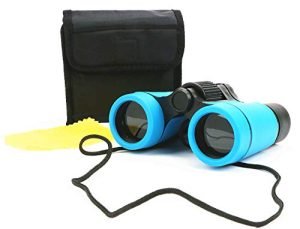
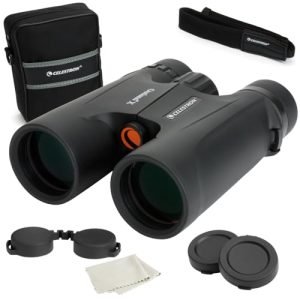
3. 20×50 High Powered Binoculars
Why it made the list
With 20x magnification and 50mm objectives, the FLYANT model delivers the strongest daytime distance power on this list. Its waterproof construction and low-light performance make it a flexible pick for dawn, dusk, or wet weather. The included carrying bag keeps it protected during transit between training sites.
Key specs
- 20x magnification with 50mm objective lenses
- Waterproof housing for wet-weather reliability
- 1.96 pound weight with compact form factor
- Low-light visibility for dawn and dusk use
- Carrying bag included for storage and transport
Real-world experience
Users rely on the FLYANT binoculars when they need to read a target from a long standoff. The 50mm objectives pull in enough light to keep images bright on cloudy days and during early morning watch. The waterproof body is a noticeable benefit for field use in rain or heavy humidity. A recurring tip from buyers is to brace the optic or use a tripod at full 20x, since the high magnification amplifies any hand movement.
- 20x power brings distant details into sharp view
- Waterproof design survives rain and humidity
- Under 2 pounds makes long carries manageable
- Low-light glass extends usable hours past sunset
- 20x magnification makes handheld image shake worse
- Focus needs occasional fine-tuning at varying ranges
- ✔ You need maximum magnification for distance work
- ✔ You train in rain, fog, or coastal humidity
- ✔ You glass large open terrain for movement
- ✖ You refuse to carry a tripod or brace your glass
- ✖ You want a pocket-sized optic for quick scans
For daytime tactical observation, this is the strongest magnified glass in the group. It does not excel in total darkness like the digital night vision units, but at first light or last light it holds its own remarkably well. Treat it as your long-range reconnaissance optic rather than a close-quarters scanning tool.
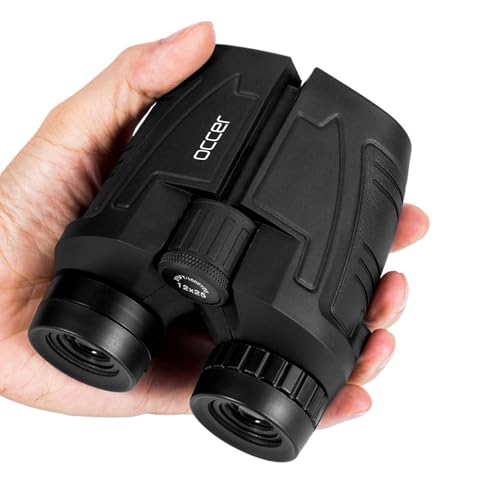
4. Occer 12×25 Compact Binoculars
Why it made the list
The Occer 12×25 is the smallest and most accessible option here, built for fast handling and quick focus. Its large eyepieces and waterproof shell make it suitable for both adults and younger users during mixed training groups. The 12x magnification gives useful distance without the bulk of a 20x body.
Key specs
- 12x magnification with 25mm objective lenses
- Large eyepieces for bright, clear sight picture
- Waterproof construction for all-weather use
- Easy focus mechanism suitable for all ages
- Compact, lightweight design for travel
Real-world experience
Families and mixed-skill teams like the Occer because it removes complexity from the observation task. The easy focus control lets a beginner achieve a sharp image quickly, while the waterproof body survives surprise weather during field exercises. The 25mm objective is smaller, so it gathers less light than the 50mm models, but it still performs well at dawn and dusk for short to mid-range scanning. This is the optic you hand to someone who needs a reliable tool without a manual.
- Pocket-friendly size disappears into a kit bag
- Large eyepieces keep the view bright and welcoming
- Waterproof build handles rainy training days
- Fast focus works for adults and kids alike
- 12x still shakes without a steady brace
- Smaller objective limits field of view and light intake
- ✔ You want a lightweight backup optic for a team
- ✔ You introduce beginners or kids to field craft
- ✔ You need quick scans in tight wooded terrain
- ✖ You plan long-range observation in open ground
- ✖ You demand maximum light gathering after dark
This is the utility pick for close-range tactical movement and training classes. It gives up long-distance reach in exchange for speed and simplicity, which makes it the right tool for building observation habits rather than conducting high-value target identification.
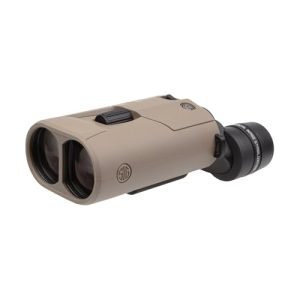
5. Steiner Military-marine Series Binoculars
Why it made the list
The Steiner Military-Marine 7×50 is the most proven tactical optic on this list, built for marine and field use by a legacy optics brand. Its 7x magnification prioritizes image stability and light gathering over raw reach, which suits observation in rough conditions. The waterproof green housing is engineered for long-term hard use.
Key specs
- 7x magnification with 50mm objective lenses
- Waterproof construction for marine and wet environments
- 2.25 pound weight with ergonomic dimensions
- 2.5 inch height, 8.0 inch width, 6.0 inch length
- Durable Steiner build for long-term reliability
Real-world experience
Operators who use the Steiner in maritime or rainy environments report that it simply keeps working. The 7×50 configuration delivers a bright, stable image that holds up even when the platform is moving, which is why it shows up on boats and in field vehicles. The glass performs strongly during dawn and dusk transitions, when many training exercises actually begin. The weight is slightly heavier than compact models, but the tradeoff is a solid grip that resists torque and vibration.
- Waterproof housing survives marine and storm conditions
- 7x magnification keeps the sight picture stable
- Steiner brand heritage signals long-term reliability
- Ergonomic dimensions feel secure in gloved hands
- Heavier than ultra-light compacts for long carry
- Green is the only principal color option
- ✔ You operate on water or in heavy precipitation
- ✔ You value brand-proven ruggedness over specs
- ✔ You need glass that stays stable on a moving platform
- ✖ You need maximum zoom for distant target ID
- ✖ You count ounces on long foot patrols
The Steiner is the traditionalist’s tactical glass: no batteries, no digital quirks, just dependable waterproof optics. It underperforms the digital night vision units after full dark, but in marginal light and rough seas it is the most trustworthy device on this list.
How I picked
I started by comparing magnification and objective lens diameter, because those two numbers determine how much light a binocular gathers and how stable the image remains at distance. The spread here goes from 7×50 to 20×50, with the 12×25 and digital night vision models filling the mobility and darkness niches. A 50mm objective gathers far more light than a 25mm one, which matters during dawn patrols and dusk surveillance. For nighttime work, I weighed infrared illumination and image resolution instead of glass diameter.
I then cross-referenced buyer feedback patterns across the five models, focusing on recurring complaints and praise about battery life, waterproofing, image shake, and ease of focus. Spec sheets from the Steiner Optics product line and general night vision guidance from the Federal Communications Commission on infrared device regulations helped establish performance baselines. I paid close attention to which models held up under moisture and rough handling, since tactical training rarely happens in clean, dry rooms. Finally, I looked at portability math: a two-pound optic rides differently on a plate carrier than a sub-one-pound digital unit. Each pick had to prove it solved a specific field problem rather than just looking impressive on paper.
Buying guide — what actually matters for Best Binoculars for Tactical Training: Top Night Vision & High-Powered Picks
Digital night vision versus passive glass
Tactical training splits into two very different problems: seeing in total darkness versus seeing far away in low light. Digital night vision units, like the two 4K models here, use infrared illumination and electronic sensors to build an image when there is almost no ambient light. They can record video and photos, which passive glass cannot do. The tradeoff is battery dependence and a slight learning curve for the digital interface. If your training runs past midnight without a power source, consider keeping the battery level on a digital rig topped off before every session.
Passive binoculars, by contrast, rely purely on lens coatings and objective diameter to gather whatever light exists. They never run out of battery and they produce a more natural depth of field. The Steiner 7×50 is the clearest example: it sacrifices magnification for image stability and light gathering. For most daytime tactical work, passive glass remains the simpler, more durable choice.
Magnification and the shake problem
Higher magnification is not always better in the field. A 20×50 binocular brings objects dramatically close, but any movement in your hands gets amplified just as much. Users of the FLYANT model consistently mention that you need a brace, a tree, or a tripod to hold the image steady at full power. A 7x or 12x optic is far more forgiving during fast scans or while leaning around cover.
Think about your actual engagement distance. Close woodland movement favors 7x to 12x models because the wider field of view helps you find targets quickly. Open terrain observation favors 20x because you need the reach more than the speed. The rules for focusing roof prism glass apply across the board: get the diopter set once and use the center wheel for quick adjustments during a changing tactical picture.
Waterproofing and field durability
Rain, humidity, and accidental submersion are real risks during tactical training, especially in marine or coastal environments. Every model on this list carries a waterproof rating, but the degree varies. The Steiner Military-Marine series is built with maritime use in mind, which means its seals and housing are engineered for sustained moisture exposure rather than a quick splash. For operations near rivers or in heavy fog, proper sealing matters more than a cosmetic rating. The same logic applies to optics used while hiking into training sites in wet weather, where fogging can ruin a morning watch faster than rain.
Objective lens size and low-light handling
The diameter of the objective lens, the second number in a binocular spec, determines how much light reaches your eye. A 50mm lens gathers roughly four times more light than a 25mm lens of the same magnification, which is why the 20×50 and 7×50 models perform so much better at dawn and dusk than the 12×25 Occer. If your training regularly starts before sunrise or extends after sunset, prioritize a 50mm objective unless you are going full digital night vision. For dedicated low-light hunting scenarios, the same principle guides the picks in this mid-range low-light comparison.
Battery life and onboard storage
Digital night vision introduces two logistics burdens that passive glass never faces: power and storage. The top pick here includes a 5000mAh battery and a 32GB TF card, which is generous for a single session. But if you run multi-day exercises without a charging source, you need to plan around that limitation. Some units draw more power when recording 4K video than when simply displaying the feed, so battery life shrinks faster during documentation-heavy training. A portable power bank becomes as essential as spare ammunition in that context.
Frequently Asked Questions (FAQ)
What features make night vision goggles ideal for tactical training?
Night vision goggles offer infrared vision, rechargeable batteries, and photo/video capture. These features enhance visibility in darkness, making them perfect for tactical training. They also provide durability and portability, essential for field use and real-time surveillance during operations.
How do 20×50 binoculars benefit tactical training users?
20×50 binoculars provide high magnification and wide objective lenses for bright, clear images. Their waterproof design ensures reliability in various weather conditions. These binoculars help users spot distant targets and details during tactical exercises, improving situational awareness and accuracy. However, high magnification requires a steady hand or tripod for best results.
Are compact binoculars suitable for both adults and kids?
Yes, compact binoculars like the Occer 12×25 model are lightweight and easy to use. They feature large eyepieces and low light vision, making them ideal for beginners and experienced users alike. Their durable build suits outdoor activities like bird watching and tactical training. The easy focus mechanism helps younger users achieve sharp images quickly.
Why choose Steiner Military-marine binoculars for tactical use?
Steiner Military-Marine binoculars offer precision optics, lightweight design, and waterproof construction. Their 7×50 magnification balances clarity and field of view. These binoculars are built to withstand harsh environments, making them reliable for military and tactical training scenarios, especially around water.
Can tactical binoculars record photos and videos?
Yes, some tactical binoculars, like the 4K night vision models, include built-in cameras. They save photos and videos on a 32GB TF card, enabling users to document training sessions or missions. This feature adds value for review and analysis after tactical exercises. Passive glass models do not offer this capability.
Do I need a tripod for high-powered binoculars?
For 20x magnification, a tripod or brace is strongly recommended. The high zoom amplifies hand movement, making the image shaky without support. Most users find 7x to 12x models comfortable for handheld use. A compact tripod or monopod solves the stability issue for long observation sessions.
Final verdict
The Night Vision Goggles take the top spot for their 4K clarity, long battery runtime, and ability to document training footage in total darkness. The 20×50 High Powered Binoculars are the best daytime distance option for open-terrain observation. Budget-conscious users should look at the Occer 12×25 as a lightweight backup or starter optic for mixed-skill teams.
Affiliate disclosure: This post contains affiliate links. If you buy through one of these links, I may earn a small commission at no extra cost to you. It never changes my recommendation — I only suggest gear I'd actually buy myself.