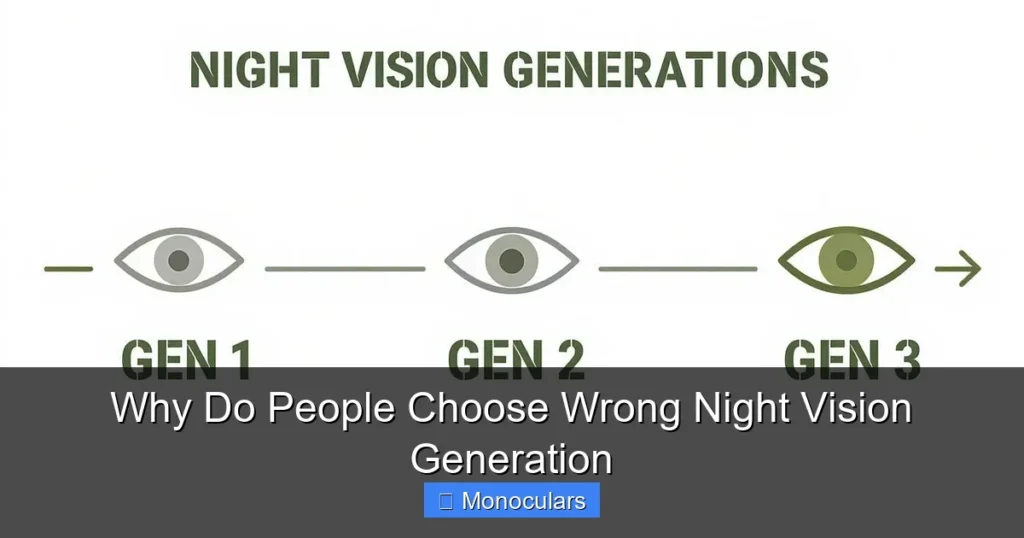
Many people choose the wrong night vision generation due to misinformation, budget constraints, or unclear use cases. Understanding the differences between Gen 1, Gen 2, and Gen 3 technologies is crucial for making the right decision.
Key Takeaways
- Misunderstanding Generations: Many buyers confuse night vision generations, thinking higher numbers always mean better performance—without considering their actual needs.
- Budget Over Performance: People often opt for cheaper Gen 1 devices, only to find they lack the range and clarity needed for serious nighttime use.
- Ignoring Use Case: Choosing a monocular without matching it to your activity—like hunting, security, or wildlife observation—leads to poor results.
- Overestimating Infrared (IR) Illuminators: Some assume built-in IR lights solve all low-light problems, but weak or mismatched IR can limit effectiveness.
- Lack of Research: Relying on marketing buzzwords instead of technical specs results in buying devices that don’t perform as expected.
- Confusing Digital vs. Image Intensifier Tubes: Digital night vision isn’t a “generation”—it’s a different technology, and mixing them up leads to wrong expectations.
- Not Testing Before Buying: Purchasing online without hands-on experience often leads to disappointment when real-world performance falls short.
📑 Table of Contents
Introduction: The Night Vision Dilemma
Imagine this: You’ve saved up for a night vision monocular, excited to explore the night like never before. You buy what you think is a high-quality device—only to find it barely works beyond your backyard. Frustrating, right? You’re not alone. Countless people choose the wrong night vision generation, and the result is wasted money, missed opportunities, and disappointment.
Night vision technology has come a long way, but with so many options on the market, it’s easy to get lost. From Gen 1 to Gen 3, digital models, and IR-enhanced devices, the choices can feel overwhelming. The problem? Most buyers don’t fully understand what each generation offers—or how it applies to their real-life needs. Whether you’re a hunter, security professional, or nature enthusiast, picking the right generation can mean the difference between success and failure in the dark.
What Are Night Vision Generations?
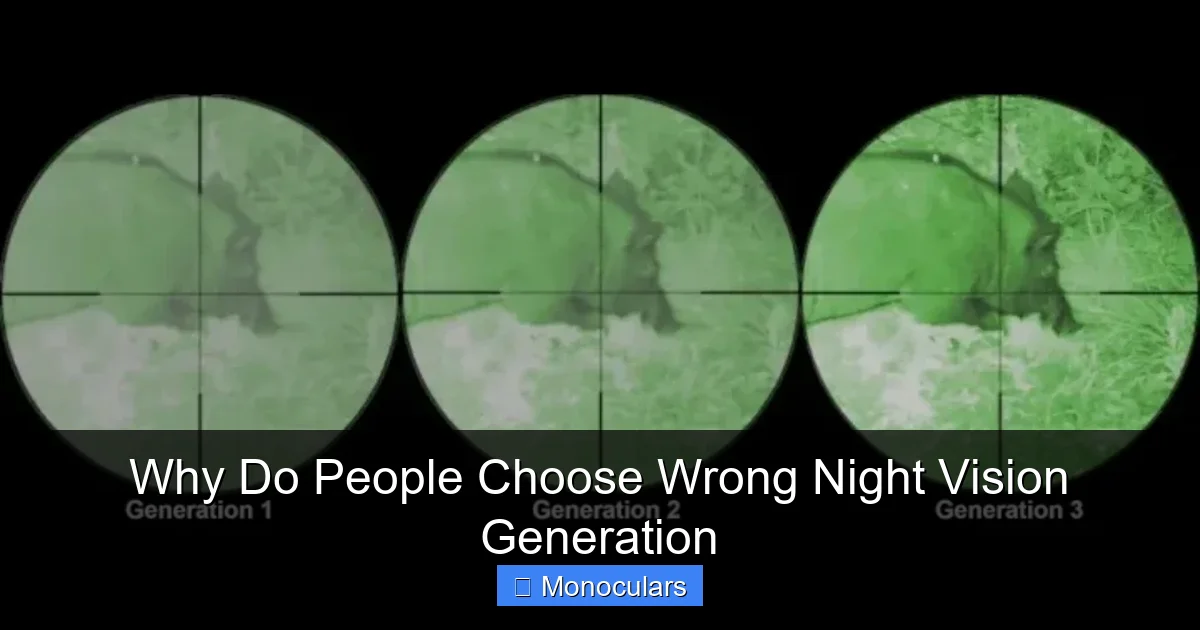
Before diving into why people make the wrong choice, let’s clarify what “generations” actually mean. Night vision generations refer to the evolution of image intensifier tube technology—the core component that amplifies available light (like moonlight or starlight) to create a visible image. Each generation represents a leap in performance, clarity, and sensitivity.
Visual guide about Why Do People Choose Wrong Night Vision Generation
Image source: fctglobe.com
Gen 1: The Entry-Level Option
Gen 1 devices are the most affordable and widely available. They work well in moderate darkness with some ambient light, like a full moon. However, they have limited range (usually under 75 yards), lower resolution, and shorter lifespans. Think of them as the “starter” model—great for casual use but not reliable for critical tasks.
Gen 2: A Solid Middle Ground
Gen 2 offers significant improvements: better resolution, longer range (up to 200 yards), and enhanced sensitivity. These are ideal for hunters, campers, and security personnel who need reliable performance in darker conditions. The added cost is justified by the jump in quality.
Gen 3: The Professional Standard
Gen 3 is the gold standard, used by military and law enforcement. With even better light amplification, longer tube life, and superior clarity, these devices excel in near-total darkness. They’re expensive—often costing thousands—but unmatched in performance.
Why People Choose the Wrong Generation
Now that we know the basics, let’s explore the real reasons people end up with the wrong night vision generation. Spoiler: it’s rarely about the tech itself—it’s about how people approach the decision.
1. Misunderstanding What “Generation” Really Means
Many buyers assume “higher generation = better,” but that’s not always true. A Gen 3 monocular might be overkill for someone just stargazing in their backyard. Conversely, a Gen 1 might fail a hunter tracking game at 150 yards. The key is matching the generation to your use case—not chasing the highest number.
2. Prioritizing Price Over Performance
Let’s be honest: Gen 3 devices are expensive. So, many people go for cheaper Gen 1 models to save money. But here’s the catch—Gen 1 often can’t deliver the performance needed for serious nighttime activities. You might save $500 upfront, only to spend another $800 later on a better model. It’s a classic case of “buy cheap, buy twice.”
3. Not Defining the Use Case
Are you using your monocular for backyard wildlife watching? Or are you patrolling a remote property at night? These scenarios demand different levels of performance. A casual observer might be fine with Gen 1, but a security guard needs Gen 2 or higher. Without a clear purpose, it’s easy to overspend or underspend.
4. Overestimating Infrared (IR) Illuminators
Many Gen 1 devices come with built-in IR illuminators, which project invisible light to boost visibility. Marketing often makes these sound like magic solutions. But weak IR lights have short range and can drain batteries fast. In total darkness, a Gen 1 with IR might still struggle—while a Gen 2 or 3 would perform better without extra light.
5. Confusing Digital Night Vision with Generations
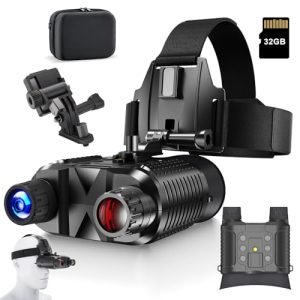
Here’s a common trap: digital night vision isn’t part of the Gen 1–3 system. Digital devices use sensors and screens (like trail cameras), not image intensifier tubes. They can record video and work in total darkness with IR, but image quality and refresh rates often lag behind traditional night vision. Some buyers think “digital = advanced,” but it’s a different tech path—not necessarily better.
6. Falling for Marketing Hype
Phrases like “military-grade” or “Gen 4” (which doesn’t officially exist for consumer use) are red flags. Some brands slap “Gen 3” labels on devices with Gen 2 tubes to charge more. Without reading specs carefully, buyers get misled. Always check the tube type, not just the marketing claims.
Real-World Examples of Wrong Choices
Let’s look at a few real-life scenarios where people picked the wrong generation—and what they should’ve done instead.
Case 1: The Backyard Explorer
Sarah bought a Gen 1 monocular to watch owls in her suburban backyard. She expected clear images at 100 yards, but the device struggled beyond 50 yards, even with IR. Frustrated, she upgraded to a Gen 2—and suddenly, the owls were crystal clear. Lesson? Even casual use can demand better than Gen 1.
Case 2: The Budget Hunter
Jake, a deer hunter, bought a cheap Gen 1 monocular to save money. On his first night hunt, he couldn’t identify a buck at 120 yards—the image was too grainy. He missed the shot and later realized a Gen 2 would’ve given him the clarity he needed. He ended up spending more to replace it.
Case 3: The Security Guard
Maria works night shifts at a warehouse. She used a digital night vision monocular, thinking it was “modern and advanced.” But the laggy refresh rate made it hard to track moving intruders. A Gen 2 tube-based device would’ve provided smoother, real-time imaging—critical for security.
How to Choose the Right Night Vision Generation
The good news? Avoiding these mistakes is easier than you think. Here’s a simple guide to picking the right generation for your needs.
Step 1: Define Your Purpose
Ask yourself: What will I use this for? Hunting? Camping? Home security? Wildlife photography? Your answer will narrow down the required range, clarity, and durability.
Step 2: Consider Lighting Conditions
Will you be in total darkness, or is there some ambient light (moon, stars, streetlights)? Gen 1 works in moderate light; Gen 2 and 3 excel in near-total darkness.
Step 3: Set a Realistic Budget
Don’t just go for the cheapest. Factor in long-term value. A $300 Gen 2 might last years and perform better than a $150 Gen 1 you replace in six months.
Step 4: Read the Specs—Not Just the Ads
Look for details like tube type, signal-to-noise ratio, resolution, and battery life. Avoid vague terms like “high-performance” or “military-style.”
Step 5: Test Before You Buy (If Possible)
If you can, try a friend’s device or visit a store. Hands-on experience reveals flaws no review can capture.
Conclusion: Make the Smart Choice
Choosing the wrong night vision generation isn’t just about money—it’s about performance, safety, and satisfaction. Whether you’re scanning the woods at midnight or checking your property after dark, the right monocular can make all the difference. By understanding the generations, defining your needs, and doing your research, you can avoid common pitfalls and invest in a device that truly delivers.
Remember: the best night vision isn’t always the most expensive or the highest generation. It’s the one that fits your life. So take your time, ask questions, and choose wisely. The night is full of wonders—don’t let the wrong gear keep you in the dark.
Frequently Asked Questions
What’s the difference between Gen 1, Gen 2, and Gen 3 night vision?
Gen 1 is entry-level with limited range and clarity, best for casual use. Gen 2 offers better resolution and range, ideal for hunting and security. Gen 3 is professional-grade, with superior performance in total darkness, used by military and law enforcement.
Can I use a Gen 1 monocular for hunting?
It depends on the range and lighting. Gen 1 may work for short-range hunting in moderate light, but for longer distances or darker conditions, Gen 2 or higher is strongly recommended for reliable target identification.
Is digital night vision better than traditional image intensifier tubes?
Not necessarily. Digital night vision can record video and work in total darkness with IR, but often has lower image quality and lag. Traditional tube-based systems (Gen 1–3) offer better real-time clarity and are preferred for active use.
Do I need an IR illuminator?
An IR illuminator helps in total darkness, but its effectiveness depends on power and range. High-end generations (Gen 2/3) often perform well without it, while Gen 1 may rely heavily on IR—check the specs before buying.
Why do some devices claim to be “Gen 4”?
“Gen 4” is a marketing term, not an official classification. True generations stop at Gen 3 for consumer use. Be wary of exaggerated claims—always verify the actual tube type and performance specs.
How long do night vision tubes last?
Gen 1 tubes last around 1,000–2,000 hours, Gen 2 around 5,000–7,000 hours, and Gen 3 can exceed 10,000 hours. Proper care and avoiding bright light exposure can extend tube life significantly.