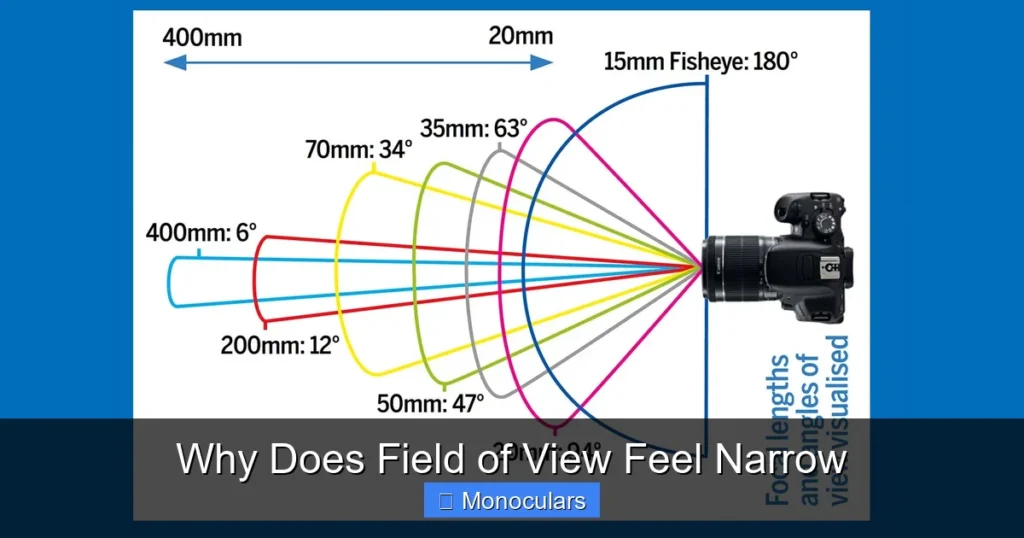
If your monocular’s field of view feels narrow, it’s likely due to magnification power, lens size, or optical design. Understanding these factors helps you choose the right device and adjust expectations for a better viewing experience.
Key Takeaways
- High magnification shrinks field of view: The more you zoom in, the narrower your view becomes—this is a basic law of optics.
- Lens diameter affects light and width: Smaller objective lenses limit how much of the scene you can see at once.
- Optical design plays a big role: Roof prism vs. Porro prism systems can influence how wide the image appears.
- Eye relief matters for comfort: Short eye relief forces your eye closer, making the view feel tunnel-like.
- Cheap optics exaggerate the problem: Poor coatings and misaligned lenses reduce perceived field of view.
- You can improve the experience: Choose lower magnification, wider lenses, and quality brands for a broader, brighter view.
- Real-world use changes perception: Lighting, distance, and movement affect how “narrow” the view feels during actual use.
[FEATURED_IMAGE_PLACEHOLDER]
Why Does Field of View Feel Narrow?
Have you ever looked through a monocular and felt like you were peering through a keyhole? You’re not alone. Many users—especially first-time buyers—complain that their monocular’s field of view feels unnervingly narrow. It’s frustrating when you’re trying to scan a landscape, track wildlife, or watch a sports event, only to feel boxed in by invisible borders.
This sensation isn’t just in your head. It’s a real optical phenomenon influenced by several design and technical factors. The good news? Once you understand why it happens, you can make smarter choices when buying or using a monocular. Whether you’re birdwatching, hiking, or stargazing, knowing what affects your field of view helps you get the most out of your gear.
In this guide, we’ll break down the science behind narrow field of view, explore how different monocular features contribute to the issue, and share practical tips to improve your viewing experience. Let’s dive in.
Understanding Field of View: What It Really Means
Before we get into the “why,” let’s clarify what field of view (FOV) actually is. Simply put, it’s the width of the area you can see through your monocular at a given distance. It’s usually measured in degrees (angular FOV) or in feet at 1,000 yards (linear FOV). For example, a monocular with a 6° field of view lets you see a 315-foot-wide area at 1,000 yards.
A wide field of view feels open and natural—like looking through a window. A narrow one feels restrictive, like staring through a straw. This difference is crucial for activities that require situational awareness, such as scanning a forest for animals or following a moving target.
How FOV Is Measured
Manufacturers typically list FOV in two ways: angular (degrees) or linear (feet per 1,000 yards). A wider number means a broader view. For instance, a monocular with a 7° FOV offers a much wider scene than one with 4°. Always check this spec when comparing models—it’s one of the most important for usability.
Why Perception Matters
Even if two monoculars have similar specs, one might feel narrower due to factors like eye relief, lens coatings, or build quality. Your brain interprets these subtle cues, making the view seem tighter or more immersive. That’s why trying a monocular in person—or reading detailed reviews—can make a big difference.
The Role of Magnification in Narrow Field of View
One of the biggest culprits behind a narrow field of view is high magnification. It’s a trade-off: the more you zoom in, the smaller the area you can see. This is a fundamental principle in optics.
For example, a 10x monocular will have a narrower field of view than a 6x model, even if they have the same lens size. Why? Because magnification essentially “crops” the image, focusing on a smaller portion of the scene. Think of it like using a zoom lens on a camera—zoom in too far, and you lose context.
Finding the Right Balance
Most experts recommend 6x to 8x magnification for general use. These levels offer a good mix of detail and field of view. If you go above 10x, expect a significantly narrower view—and possibly shaky images unless you use a tripod.
Real-World Example
Imagine you’re at a football game. With a 6x monocular, you can see the entire field and follow the action. Switch to a 12x model, and you might only see the quarterback and one receiver—great for detail, but terrible for tracking plays. Choose magnification based on your primary use case.
How Lens Size and Design Affect Your View
The objective lens—the front lens of the monocular—plays a huge role in field of view. Larger lenses gather more light and often support a wider viewing angle. But size isn’t the only factor; the optical design matters just as much.
Objective Lens Diameter
Monoculars come in sizes like 25mm, 42mm, or 50mm. A 42mm lens typically offers a wider field of view than a 25mm one at the same magnification. However, larger lenses mean a heavier, bulkier device—so there’s a trade-off between portability and performance.
Prism Type: Roof vs. Porro
Most monoculars use either roof prisms or Porro prisms to correct the image orientation. Porro prism designs often provide a wider field of view and better depth perception, but they’re bulkier. Roof prisms are more compact but can compress the image slightly, making the view feel tighter—especially in lower-priced models.
Lens Coatings and Quality
High-quality multi-coated lenses reduce glare and improve light transmission, making the image brighter and the field of view feel more open. Cheap monoculars with uncoated or poorly coated lenses can make everything look dim and cramped, even if the specs suggest a wide FOV.
Eye Relief and Comfort: The Hidden Factor
Eye relief is the distance between your eye and the eyepiece where you can still see the full field of view. Short eye relief—common in compact monoculars—forces you to press your eye right up against the lens. This not only feels uncomfortable but also makes the view feel narrower and more tunnel-like.
Why Eye Relief Matters
If you wear glasses, eye relief is even more critical. A monocular with less than 12mm of eye relief will be difficult to use with glasses on, and you’ll lose part of the image. Look for models with 15mm or more for a comfortable, full view.
Testing Eye Relief at Home
Try this simple test: hold the monocular a few inches from your eye and look through it. Slowly move it away. If the image stays full and clear up to 15mm, you’ve got good eye relief. If it shrinks quickly, the field of view will feel narrow during real use.
Optical Quality and Real-World Performance
Even with great specs on paper, a monocular can feel narrow if the optics are poorly made. Misaligned lenses, low-quality glass, or sloppy manufacturing can distort the image and reduce the effective field of view.
The Impact of Chromatic Aberration
Cheap monoculars often suffer from chromatic aberration—color fringing around objects, especially in bright light. This distortion can make edges appear blurry or compressed, giving the illusion of a tighter view. High-end models use ED (extra-low dispersion) glass to minimize this issue.
Exit Pupil and Brightness
The exit pupil is the beam of light that exits the eyepiece. It’s calculated by dividing the objective lens size by the magnification (e.g., 42mm ÷ 7x = 6mm). A larger exit pupil means a brighter image, which can make the field of view feel more open and natural—especially in low light.
Real-World Lighting Conditions
A monocular might feel narrow on a cloudy day or at dusk, even if it performs well in sunlight. That’s because your pupils dilate in low light, and if the exit pupil is smaller than your pupil, the image darkens and the edges disappear—making the view feel even narrower.
Tips to Improve Your Monocular’s Field of View
Don’t let a narrow field of view ruin your experience. Here are practical ways to get a wider, more comfortable view—whether you’re shopping for a new monocular or making the most of the one you have.
Choose the Right Magnification
Stick to 6x or 8x for everyday use. Reserve higher magnifications for stationary targets or when used with a tripod. Remember: more zoom = less view.
Opt for a Larger Objective Lens
If portability isn’t a top concern, go for a 42mm or 50mm lens. You’ll gain brightness, clarity, and a wider field of view.
Check the Eye Relief
Especially if you wear glasses, prioritize models with long eye relief (15mm or more). Your eyes will thank you, and the view will feel more open.
Invest in Quality Optics
Spend a little more on a reputable brand with multi-coated lenses and ED glass. The difference in image quality and perceived field of view is night and day.
Use in Good Lighting
Monoculars perform best in bright conditions. If you’re using it at dawn or dusk, consider a model with a larger exit pupil (5mm or more) to keep the image bright and the view wide.
Hold It Steady
Hand shake can make a narrow field of view feel even worse. Use both hands, brace against a wall, or use a mini tripod for stability. A steady image feels more immersive and less confined.
Conclusion: Making the Most of Your Monocular
So, why does field of view feel narrow? It’s usually a combination of high magnification, small lenses, poor eye relief, and low-quality optics. But now that you know the causes, you’re equipped to avoid the pitfalls and choose a monocular that delivers a wide, comfortable view.
Remember, the best monocular isn’t always the most powerful—it’s the one that fits your needs. Whether you’re scanning mountain trails, watching birds, or enjoying a concert, a balanced design with good field of view will enhance your experience.
Don’t settle for a keyhole view. With the right knowledge and a few smart choices, you can enjoy a clear, expansive perspective—no matter where your adventures take you.
FAQs
Why does my monocular feel like I’m looking through a tube?
This “tunnel vision” effect is usually caused by short eye relief or high magnification. Your eye is too close to the lens, or the zoom is too strong, limiting the visible area. Try a model with longer eye relief and lower magnification.
Can I widen the field of view on my current monocular?
Not directly, but you can improve the experience. Use it in bright light, hold it steady, and avoid maxing out the zoom. For a permanent fix, consider upgrading to a model with better optics and a wider FOV spec.
Is a wider field of view always better?
Not necessarily. A wide FOV is great for scanning and tracking, but high magnification is better for detail. Choose based on your activity—birdwatching needs width, while stargazing may need zoom.
Do all monoculars have narrow fields of view?
No. Many mid-range and high-end monoculars offer wide fields of view, especially those with 6x–8x magnification and 42mm+ lenses. Check the specs and read reviews before buying.
Does price affect field of view?
Indirectly. More expensive models often have better lens coatings, prisms, and alignment, which improve perceived FOV. Cheap optics can make even a wide-spec monocular feel narrow.
Can I use a monocular with glasses?
Yes, but only if it has long eye relief (15mm or more). Otherwise, you’ll lose part of the image. Look for models labeled “glasses-friendly” or “long eye relief.”
This is a comprehensive guide about why does field of view feel narrow.
Key Takeaways
- Understanding why does field of view feel narrow: Provides essential knowledge
Frequently Asked Questions
What is why does field of view feel narrow?
why does field of view feel narrow is an important topic with many practical applications.