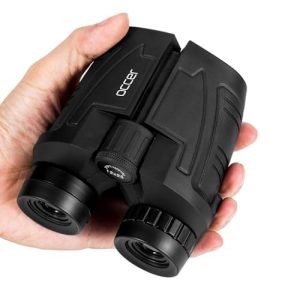
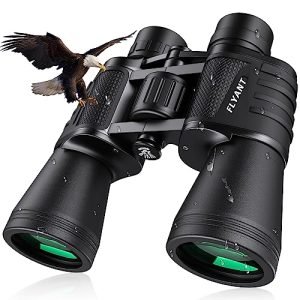
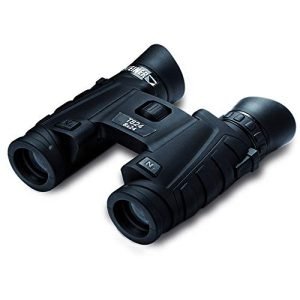
Higher zoom levels in monoculars can reveal incredible detail, but they also introduce several challenges like image shake, dimmer views, and focus difficulties. Understanding these issues helps you choose the right gear and use it effectively for clearer, more stable viewing.
Key Takeaways
- Image shake becomes more noticeable: Small hand movements are magnified at high zoom, making the image jump or blur.
- Brightness decreases significantly: Higher magnification spreads light thinner, resulting in darker images, especially in low light.
- Field of view narrows: The area you can see shrinks, making it harder to track moving objects or scan wide areas.
- Focus precision is critical: Tiny focus adjustments have a big impact, requiring steady hands and patience.
- Atmospheric distortion increases: Heat waves, haze, and air turbulence blur details over long distances.
- Exit pupil shrinks: A smaller exit pupil reduces comfort and image brightness, especially for older users.
- Tripods or stabilizers are often necessary: To counter shake and maintain clarity, support tools become essential at high zoom.
📑 Table of Contents
What Issues Happen at Higher Zoom Levels
If you’ve ever looked through a high-powered monocular and marveled at how close a distant object appears, you know the magic of magnification. But as the zoom level increases, so do the challenges. While higher zoom lets you see fine details—like the texture of a bird’s feathers or the license plate on a faraway car—it also introduces a range of issues that can affect image quality, stability, and usability.
Understanding these problems isn’t just for tech enthusiasts. Whether you’re birdwatching, hunting, stargazing, or watching a sports event from the nosebleed seats, knowing what happens at higher zoom levels helps you make smarter choices. You’ll learn when to crank up the magnification and when to dial it back for a better experience. Let’s dive into the most common issues you’ll face when using monoculars at high zoom settings.
Image Shake and Instability
One of the most immediate problems at higher zoom levels is image shake. Even the steadiest hands can’t eliminate tiny tremors—your heartbeat, breathing, or slight muscle movements become amplified through the lens. At 10x magnification, a small hand wobble might be barely noticeable. But at 20x or 25x, that same movement can make the image jump wildly, turning a clear view into a blurry mess.
This effect is similar to using a telephoto lens on a camera without image stabilization. The higher the magnification, the more sensitive the optics become to motion. For example, if you’re using a 12x monocular to watch a deer in a field, you might see it clearly. But switch to 20x, and the deer might seem to dance across your screen with every breath.
How to Reduce Shake
The best solution is support. A tripod or a stable surface like a fence post or rock ledge can dramatically improve stability. Many high-end monoculars come with tripod adapters, making it easy to mount them. If you’re on the move, try bracing your elbow against your body or using a monopod for partial support. Even leaning against a tree can help reduce movement.
Another tip is to use slower, controlled breathing. Take a breath, exhale halfway, and hold it gently while you focus. This minimizes body movement and gives you a few seconds of rock-steady viewing.
Reduced Brightness and Dimmer Images
As magnification increases, the amount of light reaching your eye decreases. This happens because higher zoom spreads the same amount of light over a larger image area. Think of it like shining a flashlight through a magnifying glass: the spot gets bigger but dimmer. The same principle applies to monoculars.
For example, a 10x monocular with a 42mm objective lens has an exit pupil of 4.2mm (calculated by dividing lens size by magnification). But a 20x monocular with the same lens has an exit pupil of just 2.1mm. The smaller exit pupil means less light enters your eye, especially in low-light conditions like dawn, dusk, or under tree cover.
Why Brightness Matters
Brightness affects not just how well you see, but also how comfortable the viewing experience is. A dim image forces your pupils to dilate, which can cause eye strain over time. It also reduces contrast, making it harder to distinguish details. In wildlife observation, a dim view might mean missing subtle color patterns or behaviors.
To combat this, look for monoculars with larger objective lenses (50mm or more) when using high zoom. They gather more light, helping maintain brightness. Also, consider models with fully multi-coated lenses, which improve light transmission by reducing reflections inside the optics.
Narrower Field of View
Another trade-off at higher zoom is a narrower field of view (FOV). This is the width of the scene you can see at a given distance. At 10x, you might see a whole tree. At 25x, you might only see a single branch.
A narrow FOV makes it harder to locate and track moving objects. Imagine trying to follow a bird in flight with a high-zoom monocular—it zips out of view almost instantly. This is especially frustrating when scanning large areas like open fields or mountain ranges.
Practical Implications
For activities like birdwatching or hunting, a wide FOV helps you spot animals quickly. Once you’ve located your subject, you can zoom in for detail. But if you start at maximum zoom, you might miss the action entirely.
Some monoculars offer variable zoom (e.g., 10-30x), giving you flexibility. Start wide to find your target, then zoom in. Fixed-zoom models force you to choose one magnification, so consider your primary use case. For general outdoor use, a 10x or 12x monocular often strikes the best balance between detail and usability.
Increased Focus Sensitivity
At higher zoom levels, focus becomes extremely sensitive. A tiny turn of the focus wheel can shift the image from sharp to blurry. This is because magnification exaggerates even minor focus errors.
For instance, if you’re viewing a distant mountain at 20x, a slight misfocus might make the peaks look soft. But at 10x, the same error might go unnoticed. This precision demands patience and a steady hand.
Tips for Better Focusing
Use slow, deliberate movements when adjusting focus. Avoid quick twists—small increments make a big difference. If your monocular has a focus lock or fine-tuning dial, use it to fine-tune sharpness.
Also, focus on a high-contrast part of the scene, like the edge of a building or a dark branch against the sky. These areas are easier to sharpen than uniform textures like grass or water.
Some advanced monoculars feature focus memory or parfocal designs, which maintain focus across zoom levels. These are ideal for users who frequently switch magnifications.
Atmospheric Distortion and Image Clarity
Even with perfect optics and steady hands, the atmosphere itself can degrade image quality at high zoom. Heat rising from the ground, humidity, and air turbulence create what’s known as “heat haze” or “mirage effect.” This causes distant objects to shimmer, blur, or appear wavy.
This issue is common on hot days, especially over asphalt, deserts, or open water. For example, a distant car might look like it’s floating above the road. At 25x, these distortions are magnified, making it hard to see fine details.
How to Minimize Atmospheric Effects
Observe during cooler times of day—early morning or late evening—when the air is more stable. Avoid looking over hot surfaces like parking lots or rooftops. If possible, position yourself at a higher elevation to reduce the amount of turbulent air between you and your subject.
Also, consider the distance. Atmospheric distortion worsens with range. A target 1,000 yards away will show more haze than one 300 yards away, even with the same monocular. Sometimes, lowering the zoom slightly can improve clarity by reducing the impact of distortion.
Smaller Exit Pupil and Eye Comfort
The exit pupil is the beam of light that exits the eyepiece and enters your eye. It’s calculated by dividing the objective lens diameter by the magnification. As zoom increases, the exit pupil shrinks.
A smaller exit pupil means less light reaches your eye, which can cause eye strain, especially in dim conditions. It also makes it harder to keep the monocular aligned with your eye, leading to “vignetting” or black edges around the view.
Why Exit Pupil Size Matters
For younger users with flexible pupils, a 2mm exit pupil might still work in daylight. But for older adults, whose pupils don’t dilate as much, a 2mm exit pupil can feel too dark. A general rule is to aim for an exit pupil of at least 3mm for comfortable viewing in low light.
For example, a 10×42 monocular has a 4.2mm exit pupil—ideal for dawn or dusk. But a 20×42 model drops to 2.1mm, which may be too dim. If you plan to use high zoom in low light, consider a larger objective lens, like 50mm or 60mm.
When to Use High Zoom—and When to Avoid It
High zoom isn’t always better. It’s a tool best used in the right conditions. Here’s when to use it—and when to dial it back:
- Use high zoom when: You’re observing stationary objects at medium to long range, like wildlife on a ridge or ships at sea. A tripod is available, and lighting is good.
- Avoid high zoom when: You’re moving, in low light, or scanning large areas. Also, avoid it in windy conditions or over hot surfaces where atmospheric distortion is high.
For most users, a monocular with 10x to 15x magnification offers the best balance of detail, brightness, and usability. Reserve higher zoom for special situations where stability and lighting are optimal.
Conclusion
Higher zoom levels in monoculars open up a world of detail, but they come with real challenges. Image shake, reduced brightness, narrow field of view, focus sensitivity, atmospheric distortion, and small exit pupils can all degrade your viewing experience if you’re not prepared.
The key is understanding these issues and knowing how to manage them. Use support tools like tripods, choose optics with good light transmission, and adjust your technique based on conditions. With the right approach, you can enjoy the benefits of high magnification without the frustrations.
Remember: more zoom isn’t always better. Sometimes, a lower magnification with a brighter, wider view gives you a more enjoyable and practical experience. Choose your monocular wisely, and use it smartly—your eyes will thank you.
Frequently Asked Questions
Why does my image shake so much at high zoom?
Image shake happens because higher magnification amplifies even tiny hand movements. At 20x or more, your heartbeat or breathing can make the view jump. Using a tripod or bracing your arm can help stabilize the image.
Can I use a high-zoom monocular at night?
It’s possible, but not ideal. High zoom reduces brightness and shrinks the exit pupil, making night viewing dim and uncomfortable. For low-light use, choose a monocular with a large objective lens (50mm+) and lower magnification.
What’s the best magnification for a monocular?
For most users, 10x to 12x offers the best balance of detail, brightness, and stability. Higher magnifications are useful for specific tasks but require support and good lighting.
How do I reduce atmospheric distortion when using high zoom?
Observe during cooler times of day, avoid hot surfaces, and keep your distance reasonable. Lowering the zoom slightly can also help improve clarity in hazy conditions.
Do I need a tripod for high-zoom monoculars?
Yes, for magnifications above 15x, a tripod is highly recommended. It eliminates shake and allows for steady, detailed viewing, especially over long distances.
Why is my high-zoom image so dark?
Higher magnification spreads light thinner, reducing brightness. A smaller exit pupil also limits light entering your eye. Choose models with larger lenses and multi-coated optics to improve brightness.