Are you looking for the perfect binoculars for your child but feel overwhelmed by all the magnification options? Choosing the right magnification is key to making sure your little explorer has clear, comfortable views without frustration.
You’ll discover exactly what magnification works best for kids binoculars and why it matters. By the end, you’ll feel confident picking binoculars that make every outdoor adventure fun and easy for your child. Keep reading to find out how to make the best choice for your young adventurer!
Choosing The Right Magnification
Picking the best magnification for kids binoculars is important. It helps kids see things clearly without difficulty.
Too much magnification can make objects blurry or hard to hold steady. Too little can make things look small.
Common Magnification Levels For Kids
Binoculars for kids usually have magnification levels from 4x to 8x. This means objects look 4 to 8 times closer.
Lower magnification like 4x or 5x is easier for kids to use and hold steady. Higher power can be too hard.
- 4x magnification: Good for young children and beginners
- 6x magnification: Balanced view and detail
- 8x magnification: Best for older kids with steady hands
Balancing Power And Usability
High magnification makes objects bigger but needs steady hands. Kids often find it hard to keep binoculars still.
Lower magnification offers a wider view and is easier to hold. This helps kids enjoy using binoculars longer.
- Higher magnification: More zoom, less stability
- Lower magnification: Less zoom, more stable
- Choose magnification that fits your child’s age and skill
Impact On Image Brightness And Clarity
Stronger magnification often reduces image brightness. This can make pictures look dim and fuzzy.
Lower magnification keeps images bright and clear. Kids can see better details in daylight or low light.
- Higher power reduces brightness and sharpness
- Lower power keeps images clear and bright
- Bright, clear images help kids enjoy nature more
Credit: bringbinoculars.com
Factors Affecting Magnification Choice
Choosing the right magnification for kids’ binoculars depends on several key factors. These factors help ensure the binoculars are easy to use and effective for children.
Understanding these factors can guide parents and caregivers to pick binoculars that match their child’s needs and abilities.
Age And Hand Size Considerations
Young children have smaller hands and less strength than older kids. Binoculars with very high magnification can be hard to hold steady. Lower magnification, such as 4x or 6x, is easier for small hands. It helps reduce shaking and makes viewing more comfortable.
Intended Use And Viewing Distance
Binoculars for kids should match the distance they plan to use them at. For close viewing, like bird watching or sports events, lower magnification is best. Higher magnification works better for long distances but needs a steady hold. Here is a quick guide:
- 4x to 6x: Best for short distances, easy to use
- 8x: Good for medium distances, requires steadier hands
- 10x and above: Suitable for long distances, may cause shaky images
Weight And Portability
Kids need lightweight binoculars that are easy to carry and hold. Higher magnification binoculars often weigh more and are bulkier. The table below shows common magnification levels with typical weight and size.
| Magnification | Weight (ounces) | Size (inches) |
| 4x | 6 | 4 x 3 |
| 6x | 8 | 5 x 4 |
| 8x | 10 | 6 x 5 |
| 10x | 12 | 7 x 5 |
Types Of Binoculars Suitable For Kids
Choosing the right binoculars for kids means picking ones that are easy to use. The magnification should not be too high to keep the view clear and steady.
Different types of binoculars offer various features. Some are better for small hands and simple use, while others provide sharper images.
Compact Binoculars
Compact binoculars are small and lightweight. They fit easily in a child’s hands and pockets.
These binoculars usually have lower magnification, around 6x to 8x. This keeps the image clear and easy to hold steady.
- Lightweight and easy to carry
- Simple design for beginners
- Good for outdoor activities like bird watching
Porro Prism Binoculars
Porro prism binoculars have a classic design with a wider shape. They often give better depth and wider views.
These binoculars are a bit bigger but still good for kids. They usually have magnification around 7x to 10x, which is ideal for children.
- Wider field of view for easier spotting
- Good image quality at low to medium magnification
- Durable and simple to use
Roof Prism Binoculars
Roof prism binoculars are slimmer and more compact in shape. They are easy to hold and carry for kids.
These binoculars often have magnification of about 6x to 8x. They provide sharp images but can be a bit more expensive.
- Slim and lightweight design
- Good for active kids on the move
- Offers clear and bright images

Credit: www.amazon.com
Safety And Durability Features
Choosing the right magnification for kids binoculars is important. Safety and durability keep children safe and the binoculars lasting long.
Parents want binoculars that are easy to use and can handle rough play. Good features protect kids and make the binoculars more fun.
Material And Build Quality
Kids binoculars should be made from strong, safe materials. Plastic is common because it is light and hard to break.
Look for binoculars with rubber coatings. This helps protect against drops and makes them easy to hold.
- Use non-toxic plastic for safety
- Rubber coating for grip and shock absorption
- Compact and lightweight design
Eye Safety And Protective Measures
Binoculars for kids should have low magnification to protect their eyes. High magnification can cause eye strain and discomfort.
Look for binoculars with special lenses that reduce glare. This makes viewing easier and safer for children.
- Magnification typically between 4x and 8x
- Soft eyecups to prevent eye injury
- Lens coatings to cut glare and protect eyes
Waterproof And Shockproof Options
Kids often use binoculars outdoors. Waterproof and shockproof models last longer and work better in rough conditions.
These features help binoculars resist rain, spills, and accidental drops without damage.
- Waterproof seals to protect inside parts
- Shockproof design with padding inside
- Durable outer shell to absorb impact
Tips For Teaching Kids To Use Binoculars
Kids enjoy exploring nature with binoculars. Teaching them how to use binoculars helps improve their focus and observation skills. It also makes outdoor time more fun and educational.
Choosing the right magnification is important. Lower magnification binoculars, like 6x to 8x, work best for kids. They are easier to hold steady and give a wider view.
Adjusting Focus And Interpupillary Distance
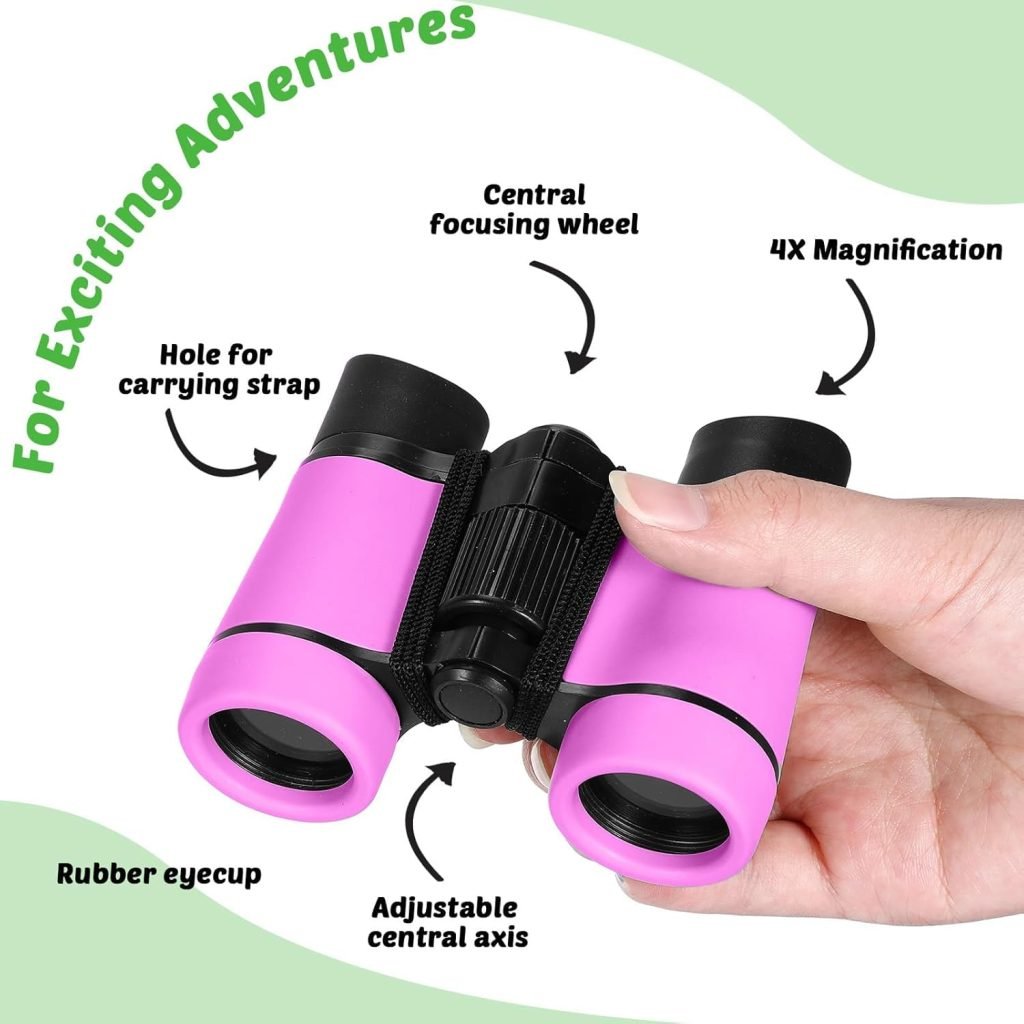
Show kids how to adjust the focus wheel to make images clear. Explain that both eyes need to see one sharp picture. Teach them to move the binoculars closer or farther apart to match their eye distance.
- Help your child hold binoculars up to their eyes.
- Turn the focus knob slowly until the image is sharp.
- Move the two tubes together or apart until they see one circle, not two.
- Practice focusing on objects at different distances.
Encouraging Proper Handling
Teach kids to carry binoculars carefully. Explain that dropping them can break the lenses or focus mechanism. Show how to use the neck strap for safety.
| Handling Tips | Reason |
| Hold binoculars with both hands | Keep steady and avoid drops |
| Use the neck strap | Prevents accidental drops |
| Keep lenses clean with a soft cloth | Clear vision and protects lenses |
| Store in a safe place after use | Protects from damage and dust |
Fun Activities To Practice Viewing
Make learning fun by using binoculars during activities. Kids will enjoy spotting birds, animals, or distant objects. Practice helps them get better at using the binoculars.
- Go on a nature walk and spot different birds.
- Look for interesting landmarks far away.
- Watch sports or outdoor events from a distance.
- Try spotting shapes or colors in trees or clouds.

Credit: www.yahoo.com
Recommended Magnification Ranges By Age
Choosing the right magnification for kids’ binoculars helps them enjoy nature better. The right strength depends on their age and ability to hold the binoculars steady.
Lower magnification is easier to use for young children, while older kids can handle stronger zooms. Let’s look at the best magnification ranges by age group.
Toddlers And Preschoolers
For toddlers and preschoolers, binoculars should be light and simple. Low magnification helps them see clearly without shaking the view.
- Magnification: 3x to 4x
- Wide field of view to spot objects easily
- Easy to hold and focus
Elementary School Children
Elementary school kids can use binoculars with a bit more power. They can focus better and enjoy seeing details at a distance.
| Age Range | Recommended Magnification | Notes |
| 6 to 8 years | 5x to 6x | Good balance of zoom and stability |
| 9 to 11 years | 6x to 8x | Stronger zoom for more detail |
Older Kids And Teens
Older kids and teens can handle higher magnification binoculars. They can enjoy bird watching and sports with sharper views.
- Magnification: 8x to 10x
- Require steady hands or tripod for best use
- Smaller field of view but more detail
Frequently Asked Questions
What Magnification Is Ideal For Kids Binoculars?
A magnification of 4x to 6x is ideal for kids. It provides clear images without too much shakiness. This range balances ease of use with good viewing quality for children.
Why Avoid High Magnification In Kids Binoculars?
High magnification makes images shaky and hard to focus for kids. It also reduces the field of view. Lower magnification ensures stable, bright, and easy-to-see images for children.
How Does Magnification Affect Kids’ Binocular Usability?
Higher magnification increases weight and complexity, making binoculars harder for kids to handle. Lower magnification offers lightweight, simpler binoculars that kids can comfortably use and enjoy.
Can Kids Use 8x Or Higher Magnification Binoculars?
Binoculars with 8x or higher magnification are usually too powerful for kids. They cause blurry images and are difficult to steady. It’s best to choose lower magnification for better experience.
Conclusion
Choosing the right magnification is important for kids’ binoculars. Lower magnification, like 6x or 8x, is best. It offers a wider view and steadier image. Kids can enjoy nature without struggling to focus. Higher magnification can be too shaky for them.
Also, lightweight binoculars are easier for kids to handle. Comfort matters, too. Adjustable eyepieces help. So, pick binoculars that fit well and are easy to use. This way, kids can explore and learn more about the world around them. Happy exploring!