Have you ever wondered if kids binoculars are just simple toys or if they actually work like real binoculars? If you’re thinking about getting a pair for your child, you probably want to know if they’ll see clear, sharp images or just blurry shapes.
The truth might surprise you—and it can make a big difference in how much your child enjoys exploring nature or watching sports. Keep reading to find out what makes kids binoculars real or just playthings, so you can make the best choice for your little explorer.
Types Of Kids Binoculars
Kids binoculars come in different types. Some are made just for fun. Others are real tools for exploring.
This article talks about the main kinds of kids binoculars. We will look at their features and quality.
Toy Binoculars Features
Toy binoculars are simple and colorful. They look like real binoculars but are made for play. These binoculars usually have plastic lenses and light frames. They are easy for small hands to hold.
- Made from lightweight plastic
- No real magnification or low zoom
- Bright colors and fun designs
- Safe for young children
- Often waterproof or shockproof
Real Binoculars For Kids
Real binoculars for kids work like adult models. They offer true magnification and better lenses. These binoculars help kids see far objects clearly. They are great for learning and outdoor activities.
These binoculars often have adjustable focus and stronger build. They use glass lenses for clearer images. Real binoculars can be heavier but last longer.
Differences In Build Quality
| Feature | Toy Binoculars | Real Binoculars |
| Lens Material | Plastic | Glass |
| Magnification | Low or none | Clear and adjustable |
| Weight | Very light | Heavier |
| Durability | Good for play | Built to last outdoors |
| Focus | Fixed or limited | Adjustable |
Materials And Durability
Kids binoculars come in many designs. Their materials affect how strong and long-lasting they are.
Understanding the parts and build helps choose binoculars that last and stay safe for kids.
Plastic Vs. Metal Components
Many kids binoculars use plastic parts because plastic is light and cheap. Metal parts are stronger but heavier. Some binoculars mix plastic and metal to balance weight and strength.
- Plastic:Lightweight, less costly, but may break easier.
- Metal:Durable, heavier, usually found in higher quality models.
- Mixed materials:Plastic body with metal screws or hinges for strength.
Impact Resistance
Kids can drop or bump binoculars often. Impact resistance means how well the binoculars survive falls and hits. Rubber coatings help protect the binoculars and improve grip.
| Feature | Effect on Durability |
| Rubber Armor | Absorbs shocks and prevents scratches |
| Reinforced Frames | Stops parts from breaking on impact |
| Flexible Lenses | Less likely to crack or shatter |
Waterproofing And Weatherproofing
Kids use binoculars outdoors where they might get wet or dusty. Waterproof and weatherproof features keep binoculars working well in rain or dirt.
Common weatherproof features include:
- Sealed joints to stop water entry
- Coated lenses to resist fog and moisture
- Rust-proof metal parts
Optical Performance
Kids binoculars can be real optical tools or just toys for fun. Optical performance helps decide which they are. This includes how well they magnify, the lens quality, and the image clarity.
Good optical performance means kids can see objects clearly and sharply. Low quality binoculars may have blurry or distorted views. Let’s look at the main parts of optical performance.
Magnification Power
Magnification power shows how much closer an object appears. Kids binoculars often have lower magnification than adult ones. This helps keep the image steady and easy to use.
Too high magnification can make the image shaky or blurry. Most kids binoculars have magnification between 4x and 8x. This range is good for young users to see distant objects clearly.
- Lower magnification gives a wider view
- Higher magnification shows more detail but less stability
- 4x to 8x is typical for kids binoculars
Lens Quality
Lens quality affects how light passes through the binoculars. Good lenses show brighter and clearer images. Cheap lenses might cause colors to look dull or blurry.
Kids binoculars may use plastic or glass lenses. Glass lenses usually offer better clarity but cost more. Plastic lenses are lighter and safer but may reduce image quality.
- Glass lenses provide better image brightness
- Plastic lenses are lighter and safer for kids
- Lens coatings reduce glare and improve clarity
Image Clarity And Focus
Image clarity means how sharp and detailed objects look through binoculars. Good focus allows users to adjust the view for clear images. Kids binoculars often have simple focus systems.
Some models let kids twist the center wheel to focus. Others have fixed focus for easier use but less sharp images. Clear and easy focus helps kids enjoy seeing things far away.
- Adjustable focus improves sharpness
- Fixed focus is simpler but less clear
- Good binoculars reduce image blur and distortion
Safety Considerations
Kids binoculars are fun tools for exploring nature. They let children see faraway things up close. Safety is very important when choosing these binoculars for kids.
Parents should check if the binoculars protect children’s eyes and are made from safe materials. The age of the child also matters when picking binoculars.
Eye Safety Features
Binoculars designed for kids often include special features to keep their eyes safe. These features help prevent eye strain and damage.
- Low power magnification to reduce eye strain
- Soft eyecups to protect the skin around the eyes
- Lens coatings to block harmful UV rays
- Adjustable focus to avoid blurred vision
Non-toxic Materials
Children often put toys in their mouths. Binoculars for kids must be made from safe, non-toxic materials. This prevents harm if a child chews or sucks on the toy.
| Material | Safety Feature |
| Plastic | Free from BPA and phthalates |
| Rubber | Non-toxic and soft to touch |
| Paint | Lead-free and safe if swallowed |
Age Appropriateness
Not all binoculars suit every child. Age recommendations help choose the right model. Using binoculars made for older kids may cause safety risks for younger children.
Here are age guidelines for kids binoculars:
- For ages 3-5: Simple models with low magnification and large parts
- For ages 6-8: Medium magnification with adjustable focus
- For ages 9 and up: Higher magnification and more advanced features
Popular Brands And Models
Choosing the right binoculars for kids can be tricky. Some are toys, while others are real optical devices. Knowing popular brands helps make a good choice.
This guide covers popular toy binoculars, real binoculars for kids, and price ranges. It helps parents pick suitable options for their children.
Top Toy Binoculars
Toy binoculars are light and colorful. They offer basic magnification and are safe for young children. These models are well-liked by kids.
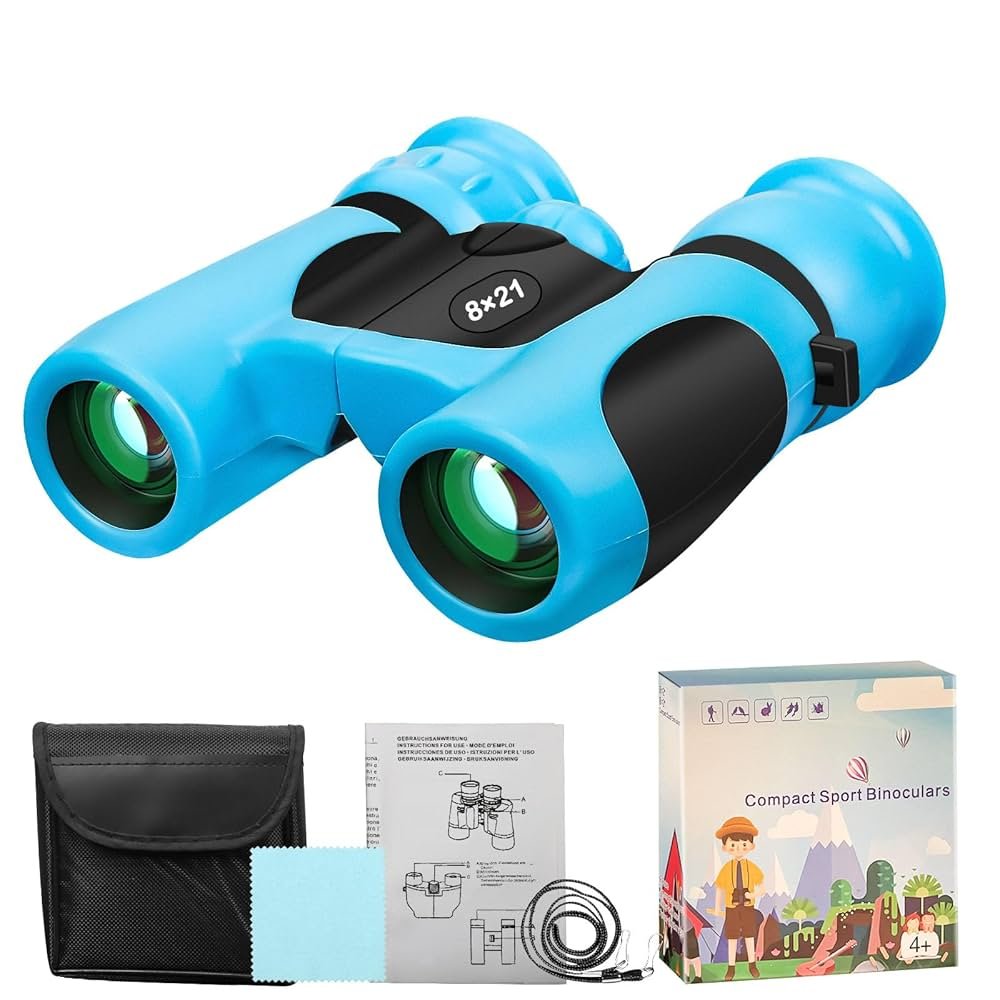
- Kidwinz 8×21 Binoculars – bright colors and easy grip
- Educational Insights GeoSafari Jr. Kidnoculars – durable and fun
- Vortex Optics Raptor Porro Prism – toy version with simple lenses
- Levenhuk LabZZ B2 – beginner-friendly plastic binoculars
Recommended Real Binoculars For Kids
Real binoculars have better lenses and clearer images. They help kids learn about nature and science. These models balance quality and child-friendly design.
- Nikon Aculon T01 8×21 – lightweight and good optics
- Olympus Trooper 8×21 DPS I – compact and durable
- Bushnell Falcon 133410 – simple and affordable
- Carson MiniAura 8×25 – clear view with good focus
Price Ranges
| Type | Price Range (USD) | Features |
|---|---|---|
| Toy Binoculars | $10 – $25 | Plastic, low magnification, bright colors |
| Real Binoculars for Kids | $30 – $70 | Better lenses, clear images, durable |

Credit: www.amazon.com
Tips For Choosing Kids Binoculars
Kids binoculars can be fun and educational tools. Choosing the right pair helps children enjoy exploring nature and the world around them.
It is important to pick binoculars that fit the child’s age, purpose, and your budget. This guide gives simple tips for making a good choice.
Matching Binoculars To Age
Binoculars should match the child’s age to be safe and easy to use. Younger kids need simple models with fewer features. Older children can handle more advanced options.
- For ages 3 to 5: Choose lightweight, durable binoculars with large eyepieces.
- For ages 6 to 9: Look for models with better magnification but still easy to hold.
- For ages 10 and up: Consider binoculars with higher quality lenses and adjustable focus.
Purpose And Usage
Think about where and how the binoculars will be used. Different activities need different features in binoculars.
| Activity | Recommended Features |
| Bird Watching | Clear lenses, medium magnification, lightweight |
| Sports Events | Compact size, easy focus, wide field of view |
| Camping and Hiking | Durable, waterproof, good grip |
| Indoor Use | Lower magnification, simple design |
Budget Considerations
Kids binoculars come in many price ranges. It is best to balance cost with quality and features.
Keep these tips in mind when setting a budget:
- Set a price range before shopping.
- Look for durable and safe materials.
- Check if the binoculars have a warranty.
- Read reviews to find good value models.
- Avoid very cheap models that break easily.
Encouraging Outdoor Exploration
Kids binoculars are often seen as toys, but they can be real tools for exploring nature. These binoculars help children see far objects clearly. They encourage kids to spend more time outside and notice the world around them.
Using binoculars, children can observe animals, plants, and landscapes from a distance. This outdoor activity supports learning and builds a love for nature. It makes exploring fun and educational at the same time.
Learning Through Observation
Binoculars help kids focus on details that are hard to see with the naked eye. They learn to watch carefully and notice small changes in nature. This improves their attention and understanding of the environment.
Watching birds, insects, or distant trees teaches children about different species and habitats. Kids develop patience as they wait quietly to observe animals. This kind of learning is hands-on and exciting.
Nature Activities With Binoculars
Binoculars make outdoor games more interesting. Kids can go birdwatching, look for insects, or explore parks. These activities encourage movement and discovery in fresh air.
- Birdwatching: Spot different birds in trees or sky
- Bug Hunting: Watch insects without disturbing them
- Scenic Viewing: See mountains, lakes, or faraway landmarks
- Tree Identification: Observe leaves and branches up close
These simple activities help kids connect with nature and learn through play. Using binoculars adds excitement and a sense of adventure.
Building Curiosity And Skills
Binoculars encourage kids to ask questions and explore more. They wonder about animals’ behavior and why plants grow in certain places. This curiosity supports critical thinking and problem-solving.
Handling binoculars also improves hand-eye coordination and focus. Kids learn to adjust lenses and hold the binoculars steady. These skills help in many other activities and hobbies.

Credit: www.amazon.com

Credit: www.walmart.com
Frequently Asked Questions
Are Kids Binoculars Functional Or Just Toys?
Kids binoculars are functional but with limited optics. They offer basic magnification for fun and learning, not professional use.
How Do Kids Binoculars Differ From Adult Versions?
Kids binoculars are smaller, lighter, and simpler. They have lower magnification and durability suited for children’s hands and activities.
Can Kids Binoculars Improve Children’s Observation Skills?
Yes, kids binoculars encourage curiosity and focus. They help develop visual tracking and exploration skills in outdoor environments.
Are Kids Binoculars Safe For Young Children?
Most kids binoculars are designed with safety in mind. They use non-toxic materials and have rounded edges to prevent injuries.
Conclusion
Kids binoculars offer more than just playtime fun. They’re real tools for exploration. Children can learn and discover new things outdoors. These binoculars are designed for smaller hands and faces. They help kids observe nature closely. Parents can join in and make it a family activity.
Quality varies, so choose wisely. Look for sturdy and safe designs. Affordable options are available for every budget. Encourage curiosity and adventure with these handy devices. Kids will love seeing the world up close. A great way to spark interest in nature and science.