Have you ever tried to get a clear view of something really close with your binoculars, only to find the image blurry or out of focus? That frustrating moment happens because of something called the minimum close focus distance.
Understanding this simple yet important feature can completely change how you use your binoculars and improve your viewing experience. If you want to know how close you can get to your subject without losing sharpness, keep reading. This guide will help you unlock the full potential of your binoculars and make every detail crystal clear.
Minimum Close Focus Distance
The minimum close focus distance is the closest point you can see clearly through binoculars. It shows how near an object can be while still in focus.
Knowing this distance helps you use binoculars better, especially for viewing objects up close.
Definition And Importance
The minimum close focus distance is the shortest distance between your eyes and an object. At this distance, the binoculars can focus sharply.
This feature is important for seeing small or nearby items clearly. It helps in activities like birdwatching or examining flowers.
- Shows how close you can get to an object and still see it clearly
- Important for detailed observation of small subjects
- Varies between different binocular models
How It Affects Viewing Experience
Minimum close focus distance affects what you can see up close. A shorter distance means you can view objects nearer to you with good detail.
If the distance is too long, you cannot focus on nearby subjects well. This limits your ability to enjoy close-up views.
- Short distance helps see insects, flowers, or coins clearly
- Long distance may blur objects that are near
- Improves the variety of things you can observe

Credit: www.amazon.ae
Factors Influencing Close Focus
The minimum close focus distance is how near you can see an object clearly through binoculars. This distance changes based on many factors. Understanding these factors helps you pick binoculars for close-up views.
Close focus is important for seeing details in nearby birds, insects, or flowers. Let’s look at key factors that affect this feature.
Optical Design
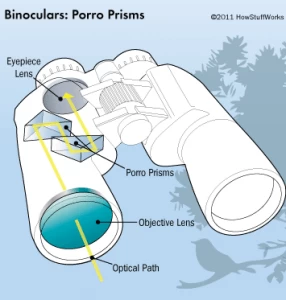
Binoculars use different optical designs like roof prism or porro prism. These designs affect how light travels inside. It changes how close you can focus on an object.
Some designs have shorter close focus distances. They let you see things clearly that are very near. Others need more space inside and have longer close focus distances.
Lens Quality
Good lens quality improves image sharpness and clarity. High-quality lenses can focus better at close range. Poor lenses may blur objects that are too close.
Lens coatings also help by reducing glare and improving light flow. This makes close objects look clearer and brighter.
Magnification Impact
Magnification affects the close focus distance. Higher magnification usually means you need to be farther from the object to see it clearly. Lower magnification lets you focus closer.
- Low magnification: closer focus possible
- High magnification: longer close focus distance
- Balance magnification with close focus for best use
Comparing Binoculars By Close Focus
Close focus distance is the shortest distance you can see an object clearly through binoculars. It matters for viewing things up close.
Different binocular models have different close focus distances. Comparing these helps you pick the right binoculars for your needs.
Standard Vs. Close Focus Models
Standard binoculars usually have a close focus distance of about 6 to 10 feet. They work well for general viewing and distant objects.
Close focus binoculars focus on objects as near as 3 to 5 feet. This makes them better for seeing small or nearby details.
- Standard models are good for birdwatching and sports.
- Close focus models help with insects and flowers.
- Close focus binoculars often cost more but offer detailed views.
Use Cases For Short Close Focus
Short close focus binoculars are useful for nature lovers who want to see small creatures. They also work well for museum visits.
People who enjoy hiking may use them to look at plants and rocks up close without touching them.
- Observing butterflies and bugs
- Viewing flower details
- Watching small animals in gardens
- Exploring art and exhibits in museums
- Inspecting textures on rocks or trees
Credit: www.amazon.com
Testing And Measuring Close Focus
Close focus distance is the nearest point where binoculars can focus clearly. Testing it helps you understand how well binoculars work for viewing nearby objects.
Measuring this distance is important for buyers who want to use binoculars for activities like birdwatching or viewing details up close.
Methods To Determine Distance
There are several ways to measure the minimum close focus distance of binoculars. One simple way is to hold the binoculars steady and move closer to an object until it becomes sharp.
- Choose a small object to focus on, like a leaf or a coin.
- Hold the binoculars at eye level and slowly move closer to the object.
- Stop when the object comes into clear focus.
- Measure the distance from your eyes to the object using a tape measure.
- Record the distance as the close focus distance.
Another method uses a ruler or measuring tape placed on a flat surface. Focus on markings or numbers and note the closest readable mark.
Practical Tips For Buyers
| Tip | Reason |
|---|---|
| Test binoculars in person | See how close focus works for your needs |
| Check product specs | Compare minimum close focus distances |
| Consider your activity | Close focus matters more for nearby viewing |
| Use a measuring tool | Get accurate close focus distance |
| Read reviews | Learn about real user experiences |
Benefits Of A Short Minimum Close Focus
The minimum close focus distance of binoculars is the nearest point where objects appear clear. Binoculars with a short minimum close focus let you see things that are very close. This feature is useful for many activities.
Having a short minimum close focus helps you observe small details without losing clarity. It makes binoculars more versatile for different uses.
Nature Observation
Nature lovers benefit from binoculars with a short minimum close focus. You can see plants, insects, and other small creatures up close. This helps you study nature in detail without disturbing it.
- Observe flower patterns and leaf shapes closely
- Watch insects and spiders without getting too near
- See textures of tree bark and rocks clearly
- Enjoy details of small animals in their natural habitat
Sports And Bird Watching
Sports fans and bird watchers find short minimum close focus very helpful. It allows you to focus on nearby birds or players with sharp detail. This is key for fast-moving or close subjects.
| Activity | Benefit of Short Close Focus |
| Bird Watching | See small birds and feathers up close |
| Sports Events | Focus on players near the field |
| Outdoor Games | Watch quick moves from short distances |

Credit: zarimex.eu
Limitations And Considerations
The minimum close focus distance in binoculars is the shortest distance at which the device can clearly focus. This distance affects how close you can see small or nearby objects.
Understanding its limits is important for activities like bird watching or observing insects. It also helps you choose the right binoculars for your needs.
Trade-offs With Other Features
Binoculars with a very short close focus distance may have compromises in other areas. Sometimes, improving one feature affects another.
For example, binoculars designed for close focus might be heavier or bulkier. They may also have narrower fields of view compared to standard models.
- Short close focus often means larger lenses or special lenses
- Wider field of view may increase minimum close focus distance
- Compact binoculars usually have longer close focus distances
Price Vs. Performance
Binoculars with excellent close focus features tend to cost more. High-quality lenses and advanced designs increase the price.
Budget binoculars may have longer minimum close focus distances. They might not show nearby details as clearly.
- Higher price usually means better optics and closer focus
- Low-cost models may sacrifice close focus to reduce price
- Consider your needs before choosing based on price alone
Frequently Asked Questions
What Is The Minimum Close Focus Distance?
The minimum close focus distance is the shortest range at which binoculars can clearly focus on an object. It determines how close you can observe details sharply. This distance varies by model and affects viewing small or nearby objects.
Why Does Minimum Close Focus Matter In Binoculars?
Minimum close focus matters because it allows detailed viewing of objects nearby. It benefits bird watchers and nature observers who want to see insects or flowers up close. Lower close focus distances provide more versatility for various observation needs.
How Is Minimum Close Focus Distance Measured?
The minimum close focus distance is measured in meters or feet. It’s the smallest distance from the binocular lenses to the object in clear focus. Manufacturers specify this distance to help users understand binocular capabilities.
Can Close Focus Distance Affect Binocular Image Quality?
Yes, close focus distance can affect image sharpness at short ranges. Binoculars with poor close focus may produce blurry images of nearby objects. High-quality optics ensure clear, crisp views even at minimum focusing distances.
Conclusion
Understanding the minimum close focus distance is vital for binocular users. It lets you see nearby objects clearly. This feature enhances your viewing experience. Different binoculars have varying focus distances. Choose what suits your needs best. Consider bird watching or nature observation.
Always check specifications before buying. This ensures the best performance for your activities. Remember, comfort matters when using binoculars for extended periods. So, find a balance between focus distance and comfort. Happy viewing!