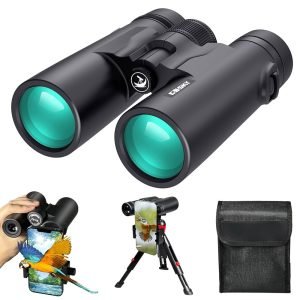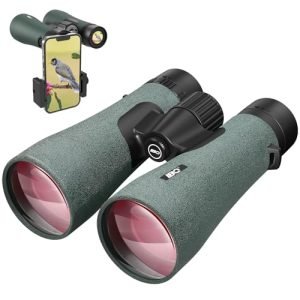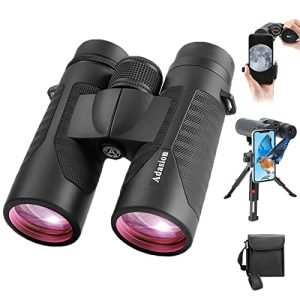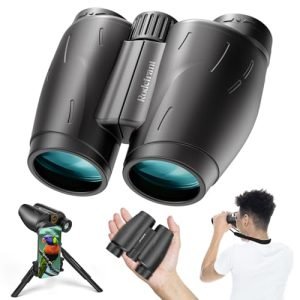
So, you're staring at monocular specs and wondering if that bigger objective lens on an 8×42 is really worth the extra bulk over a slim 8×25. It's a classic trade-off in optics, and the answer often hinges on where and when you plan to use it. We've looked at what makes these two options different, and it boils down to light and portability.
Manufacturer specifications confirm that while both offer the same 8x magnification, the 42mm objective lens on one model gathers significantly more light than the 25mm on the other. This difference has a major impact on image brightness, especially as daylight fades. Let's break down exactly what that means for you.
Quick Answer
The larger objective lens on an 8×42 monocular is worth the extra size if you need brighter images in low light. An 8×25 monocular is best for maximum portability in bright daylight. For general outdoor use, the 8×42 often provides a better viewing experience.
Understanding Monocular Magnification and Objective Lenses
Before we dive into the nitty-gritty of how these two perform, let's quickly get on the same page about what those numbers mean. It’s pretty straightforward once you know the basics.
The Magnification (8x)
The first number, in this case "8x," tells you how much closer the monocular makes distant objects appear. An 8x magnification means an object that's 80 feet away will look as if it's only 10 feet away. Both the 8×25 and 8×42 share this same magnification power.
This means they'll both make things appear the same size, but how clearly and brightly you see them will differ.
The Objective Lens Diameter (25mm vs 42mm)
The second number, 25mm or 42mm, refers to the diameter of the objective lens, that's the big lens at the very front of the monocular. This is the crucial component that gathers light from the scene you're observing. A larger objective lens diameter means more light can enter the monocular.
More light generally translates to a brighter, clearer, and more detailed image, especially when you're not in perfect, sunny conditions. This is the primary factor creating the difference between an 8×25 and an 8×42.
8×25 Monocular: The Ultra-Portable Option
Think of the 8×25 monocular as the nimble scout of the optical world. It's designed for people who value convenience and minimal bulk above all else. You can easily tuck it away without even thinking about it, making it a fantastic companion for a wide range of casual activities where you might want a quick peek at something in the distance.
8×25 Monocular: Pros and Cons
This compact size comes with a specific set of advantages and disadvantages that are good to know.
Pros:
- Supreme Portability: The biggest draw is its incredibly small size. You can slip an 8×25 into a jacket pocket, a small purse, or even a cargo pocket without adding any significant weight or bulk. This makes it ideal for spontaneous moments or when you want to travel light.
- Lightweight Design: Because the objective lens and overall housing are smaller, these monoculars are exceptionally light. You’ll barely notice you’re carrying one, even on long excursions.
- Cost-Effective: Generally, 8×25 models tend to be more budget-friendly than their larger counterparts. This makes them an accessible entry point for those new to monoculars or who need a simple, basic magnification tool.
Cons:
- Limited Light Gathering: This is the primary trade-off for its size. The smaller 25mm objective lens simply can't capture as much light as a larger one. This means images will appear dimmer, particularly in challenging light conditions like dawn, dusk, or heavily shaded areas.
- Narrower Field of View: Often, the optical design required for such a compact unit results in a slightly narrower field of view. You might see less of the surrounding environment, which can make tracking fast-moving subjects more difficult.
- Potential for Lower Image Quality: While there are excellent 8×25 models available, achieving top-tier edge-to-edge sharpness and vibrant color rendition can be more challenging with smaller optical elements compared to larger, more sophisticated designs.
When to Choose an 8×25 Monocular
This type of monocular truly shines in specific scenarios where its strengths are most beneficial. If you find yourself prioritizing ease of carrying and will mostly be using your monocular under bright, clear skies, the 8×25 is probably your best bet. It's perfect for quick checks, like spotting a distant landmark on a sunny hike, identifying a bird high in a tree on a clear day, or getting a better look at details from your seat at a daytime sporting event.
Think of it as your convenient, everyday magnification tool.
8×42 Monocular: The Brighter, More Capable Choice
Stepping up to the 8×42 monocular means you're opting for a device that prioritizes viewing performance, particularly in less-than-ideal lighting. While it's a bit larger, the payoff is a significantly improved visual experience across a wider range of conditions. This is often the choice for those who are serious about observing nature or need a more robust optical tool.
8×42 Monocular: Pros and Cons
The benefits of a larger objective lens are substantial, but they do come with certain compromises in terms of physical handling.
Pros:
- Superior Low-Light Performance: The 42mm objective lens is a substantial upgrade for low-light situations. It captures considerably more ambient light, resulting in a brighter image that retains more detail when the sun is low or has set. This is invaluable for activities like early morning birdwatching or late evening wildlife spotting.
- Brighter and More Vibrant Images: Even in good light, the increased light-gathering capability often leads to images that are richer, more vivid, and possess better contrast. Colors tend to pop more, and the overall viewing experience feels more immersive.
- Often Wider Field of View: Many 8×42 designs are engineered to offer a wider field of view compared to their smaller 8×25 counterparts. This broader perspective is excellent for scanning landscapes or following subjects that are moving, such as birds in flight or animals in open fields.
- Enhanced Image Quality: With more space available for optical components, manufacturers can often incorporate higher-quality glass and more advanced coatings. This typically leads to sharper images from edge to edge, better color accuracy, and reduced optical aberrations.
Cons:
- Increased Size and Weight: The most obvious drawback is that the 8×42 is physically larger and heavier than an 8×25. While still generally manageable and more portable than full-sized binoculars, it won't slip into every pocket as easily and will add a noticeable presence to your gear.
- Higher Cost: The larger lenses and potentially more complex optical construction of an 8×42 monocular usually mean a higher price point. You're paying for the enhanced performance and build quality.
When to Choose an 8×42 Monocular
This monocular is the preferred choice for those who demand better optical performance, especially when light is a limiting factor. If you're passionate about wildlife observation, birdwatching, or any activity where you need to pick out details in dim conditions, such as early mornings or late evenings, the 8×42 is a clear winner. Its ability to gather more light makes it far more effective for activities like early morning birdwatching or hunting at dusk, where every bit of detail counts.
It's also a great option if you appreciate a wider view of your surroundings.
Key Differences: 8×25 vs 8×42 Side-by-Side
When you’re trying to decide between these two, it’s helpful to see the core differences laid out side-by-side. The choice really boils down to how much you value portability versus visual performance.
How Size and Weight Compare
| Feature | 8×25 Monocular | 8×42 Monocular |
|---|---|---|
| Typical Length | 4-5 inches | 6-7 inches |
| Typical Weight | 3-5 ounces | 8-12 ounces |
| Pocketability | Excellent | Good (requires larger pockets) |
| Carry Comfort | Barely noticeable | Noticeable, but manageable |
The difference in weight and length is significant. An 8×25 can easily live in your pocket, almost forgotten, making it ideal for those who want maximum convenience. The 8×42, while still much smaller than a pair of binoculars, requires a bit more consideration in terms of where you'll stow it and how it feels on a long trek.
For instance, if you're packing light for a day hike in good weather, the 8×25 is a no-brainer. However, if you're on a serious birding trip that might extend into twilight, the extra ounce or two of the 8×42 becomes a worthwhile sacrifice.
Light Gathering: The Brightness Factor
The objective lens diameter is the key player here. The 42mm objective on the 8×42 monocular has a significantly larger surface area than the 25mm on the 8×25. This means it can capture roughly 2.8 times more light (calculated by squaring the ratio of the diameters: (42/25)^2 ≈ 2.8).
- 8×25: Performs adequately in bright sunlight. Images can appear dimmer in overcast conditions or at dawn/dusk.
- 8×42: Provides a much brighter image, especially in low light. This allows for better detail recognition when light is scarce.
This difference is critical for activities like birdwatching or hunting in forests, where light can be heavily filtered. For example, in deeply shaded woods, an 8×25 might make identifying a small bird's plumage very difficult, whereas an 8×42 would reveal those subtle colors much more clearly. Manufacturer specifications often list "exit pupil" (objective lens diameter divided by magnification), which for an 8×25 is 3.1mm and for an 8×42 is 5.25mm.
A larger exit pupil generally indicates better low-light performance.
Image Quality and Field of View
Beyond brightness, the larger optical elements in an 8×42 often allow for superior image quality.
- Image Sharpness: Higher-end 8×42 models often exhibit better edge-to-edge sharpness. This means that the entire field of view, from the center to the periphery, remains clear and detailed, reducing the "softness" you might find towards the edges of some 8×25 models.
- Color and Contrast: The increased light gathering and potentially better glass quality in 8×42 units can lead to more vibrant colors and higher contrast. This makes subjects stand out more distinctly from their backgrounds.
- Field of View (FOV): While not guaranteed, 8×42 configurations more frequently offer a wider field of view. A wider FOV, often measured in degrees or feet at 1000 yards, allows you to see more of your surroundings. For example, a typical 8×25 might have a FOV of around 6.5 degrees, while an 8×42 could offer 7.5 degrees or more. This wider perspective is beneficial for spotting movement or quickly surveying an area, such as when looking for game on the move.
Real-World Scenarios: Putting Them to the Test
To truly understand the difference, let's imagine a couple of typical situations where you might use each monocular.
For the Casual Hiker and Sightseer
Imagine you're out for a pleasant day hike on a well-maintained trail. The sun is shining brightly, and the views are clear. You spot a hawk circling high overhead or a deer grazing in a distant meadow.
With an 8×25: You can easily pull it from your pocket, bring the hawk into clear focus, and appreciate its flight pattern. The bright daylight ensures the image is bright and sharp enough to see the details. It's quick, effortless, and doesn't weigh you down. You might also use this for spotting details on a historical monument across a town square or checking out signage on a building far away. Its compact size makes it perfect for everyday carry without being noticeable. The best binoculars for nature walks often share some of these desirable traits of portability.
With an 8×42: You can do the same, and the image might be marginally brighter or sharper, but the difference might not be dramatic enough to warrant the slightly larger size for this specific scenario. The added weight is barely felt when you're not carrying much else.
For the Dedicated Birdwatcher and Wildlife Enthusiast
Now, let's change the scene to early morning, just as dawn is breaking. You're in a dense forest, hoping to spot some elusive woodland birds. The light is dim, filtered through a thick canopy of leaves.
With an 8×25: You spot a small bird perched on a branch. However, due to the limited light entering the 25mm objective lens, the image appears somewhat dim and muddy. It might be hard to discern the subtle feather patterns or distinguish between similar-looking species. You can see something is there, but the details are lost in the gloom.
With an 8×42: The 42mm objective lens performs admirably. It gathers enough light to reveal the bird's vibrant plumage, clear distinguishing marks, and even the texture of the bark it's sitting on. The image is bright, sharp, and offers a much better chance of accurate identification. This is where the 8×42 truly earns its keep. For enthusiasts aiming for the best possible views in challenging light, models like the best binoculars for low light bird hunting highlight the importance of larger objectives for clarity. If you're serious about hunting in similar poor light conditions, consider options like the best binoculars for hunting in poor light.
Making Your Decision: Is the Larger Objective Worth It?
The choice between an 8×25 and an 8×42 monocular isn't about which one is definitively "better," but rather which one is better for you. It hinges on how you'll use it and what you prioritize in your optical gear. If you're someone who cherishes the ability to have a magnification tool that slips unnoticed into any pocket or bag, the 8×25 excels.
Its primary appeal is its unobtrusive nature, making it ideal for casual outings where a quick view is all that's needed.
On the flip side, if your outdoor adventures frequently involve challenging light conditions, think early mornings, late evenings, deep forests, or overcast days, the 8×42 monocular offers a significant advantage. The increased light-gathering capability translates directly into brighter, clearer images, allowing for better detail observation. This is where investing in the slightly larger size really pays off for serious enthusiasts.
For those hunting or observing wildlife, clarity in poor light can be the difference between success and missed opportunity. If you’re looking for options that excel in challenging light, the best binoculars for hunting in snow or the best binoculars for sunset hunting demonstrate how objective lens size is often a key factor.
Final Recommendation: Which Monocular Wins For You?
Ultimately, the question of whether the larger objective is worth the extra size comes down to a practical assessment of your needs. If your typical viewing scenarios involve ample daylight, and your main concern is having something incredibly compact and lightweight on hand, the 8×25 monocular is your clear winner. It’s the epitome of convenience, fitting seamlessly into your daily routine or travel pack without fuss.
Its performance is perfectly adequate for casual spotting and daytime observation.
However, if your interests lean towards wildlife observation, birdwatching, or any activity where capturing fine details in dimmer light is crucial, then the 8×42 monocular is the more capable tool. The significant improvement in brightness and clarity, especially as daylight fades, makes a tangible difference in what you can see and identify. While it’s not as pocket-friendly, the enhanced visual experience it provides in more challenging conditions often justifies the slight increase in bulk for dedicated users.
For broader outdoor use where some low-light capability is beneficial, consider looking at the best binoculars for outdoor hunting or even best waterproof binoculars for rugged terrain as these categories often prioritize robustness and light gathering.
Frequently Asked Questions
How much brighter is an 8×42 compared to an 8×25 monocular?
An 8×42 monocular can be approximately 2.8 times brighter than an 8×25 in terms of light-gathering capability. This is because its 42mm objective lens has a much larger surface area than the 25mm lens on the smaller model, allowing more light to enter the optical system.
Is an 8×25 monocular easier to use for beginners?
Yes, the 8×25 monocular is generally easier for beginners due to its simplicity and ease of handling. Its compact size and lighter weight make it less intimidating and more convenient for casual use. The 8x magnification is also a good starting point for most novice users.
Can I use an 8×42 monocular for birdwatching at night?
While an 8×42 monocular performs much better in low light than an 8×25, it is not designed for true night vision or observing in complete darkness. It excels at dawn, dusk, and in heavily shaded areas, but for nighttime viewing, specialized night vision devices are required. The best binoculars for low light duck hunting would still perform better than the 8×25 in dim conditions.
Will an 8×25 monocular be sufficient for parade viewing?
Absolutely. For events like parades, where viewing distances are often moderate and lighting is typically bright daylight, an 8×25 monocular is perfectly sufficient. Its portability means you can easily bring it along without it being a burden, making it ideal for best binoculars for parade viewing scenarios.
What if I need a wider view than either offers?
If a wider field of view is a top priority, you might want to consider monocular models specifically designed for that, or even look into binoculars. Some 8×42 monocular designs offer a wider field of view than typical 8×25 models. For a truly expansive view, the best binoculars for wide field of view might be a better direction to explore.