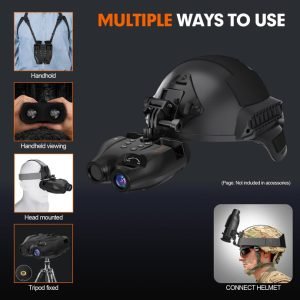
Have you ever wondered how night vision binoculars let you see clearly in complete darkness? Imagine exploring the night without fumbling or missing a single detail.
These amazing devices turn the invisible into visible, giving you a secret advantage when light fades away. If you want to understand exactly how night vision binoculars work and how they can transform your night-time adventures, keep reading. By the end, you’ll see the night in a whole new light—literally.
The Science Behind Night Vision
Night vision binoculars work by collecting tiny bits of light. This light can be from the moon, stars, or even nearby objects. The device has special lenses that gather the light and focus it. Inside, a tube called an image intensifier amplifies this light.
The image intensifier changes the weak light into electrons. These electrons hit a screen that glows, creating a visible image. This image looks bright, even in very dark places.
Some binoculars use infrared light, which is invisible to our eyes. They send out this light and capture the reflection to see in total darkness.
- Collects tiny light particles
- Uses an image intensifier tube
- Converts light into glowing image
- Sometimes uses invisible infrared light

Credit: www.usnighthawk.com
Types Of Night Vision Technologies
Image Intensificationuses a special tube to boost tiny light particles. It turns weak light into a clear green image. This helps see in dark places with some light, like moonlight or stars.
Thermal Imagingdetects heat from objects and living things. It shows warm areas as bright spots. It works well in total darkness and can see through fog or smoke.
Digital Night Visionuses a camera sensor to capture light. It then shows the image on a screen. It can record videos and work in very low light.
Key Components Of Night Vision Binoculars
The objective lenscaptures light from the scene. It gathers both visible and near-infrared light. This lens is usually large to let in more light. More light means a clearer image in the dark.
The eyepieceis where you look through. It magnifies the image made by the binoculars. The eyepiece helps you see details clearly even in low light.
The image intensifier tubeis the core part. It takes the small amount of light and makes it brighter. Inside, it converts light photons to electrons. These electrons hit a screen, making a green glowing image. This green color is easier for eyes to see at night.
How Light Is Amplified
Photon collectionbegins the process by gathering tiny light particles. These photons come from moonlight, stars, or infrared sources. The binocular lenses focus this low light into a small point.
Electron conversionchanges the collected photons into electrons. A special tube inside the binoculars does this. The electrons are then amplified, making the image much brighter than the original light.
Screen projectionis the last step. The amplified electrons hit a phosphor screen. This screen glows and creates a clear green image. The user sees this bright image through the eyepiece, even in darkness.
Thermal Detection Mechanism
Night vision binoculars detect heat emittedby objects and living things. All objects give off a small amount of heat, called a heat signature. This heat is invisible to the naked eye but can be seen using special sensors.
These binoculars use sensors that pick up heat in the infrared spectrum. Infrared light is a type of light not visible to humans. It travels from warm objects and is captured by the binoculars’ lenses.
- The binoculars convert heat into an image.
- Warm objects appear bright or white.
- Cool objects look dark or black.
This way, users can see shapes and movement in total darkness. The heat signature analysis helps identify objects even in fog or smoke.

Credit: www.usnighthawk.com
Digital Processing In Night Vision
Signal enhancementimproves weak light signals captured by the binoculars. The device converts light into electronic signals. These signals get amplified to make images brighter and clearer. Noise reduction filters remove unwanted interference. This process helps users see better in dark places.
The display outputshows the enhanced image on a screen inside the binoculars. This screen can be LCD or OLED. It presents a clear and sharp image to the user. Some models allow adjusting brightness and contrast. This customization makes viewing more comfortable at night.
Advantages Of Night Vision Binoculars
Night vision binocularshelp you see clearly in total darkness. They boost weak light, making objects visible at night. This improves safetyby spotting dangers early, like animals or obstacles. You can walk or drive with more confidence.
These binoculars work for many tasks. They are great for wildlife watching, security, and even night hiking. Their versatilitymeans you can use them in different places and jobs. Compact size makes them easy to carry.
Limitations And Challenges
Night vision binoculars have a limited range. Objects far away may appear blurry or unclear. This happens because the devices rely on available light, which weakens over distance. Brightness and clarity drop as distance grows.
Image qualitycan also vary. Different models show different sharpness and color tones. Cheaper versions may produce grainy or greenish images. Higher-end devices usually offer clearer views but cost more.
Environmental factors affect performance greatly. Fog, rain, or dust can block or scatter light. This reduces the binoculars’ ability to produce a clear image. Cold weather might affect battery life, too.
Choosing The Right Night Vision Binoculars
Choosing the right night vision binoculars depends on how you plan to use them. Different tasks need different features. For example, hunting requires clear images at long distances. Camping might need lightweight and easy-to-carry models. Night security needs good image quality in low light.
Budget affects what features you can get. Basic models are cheaper but have fewer functions. Advanced models cost more but offer better clarity and longer range. Decide what features matter most before buying.
| Technology | Advantages | Disadvantages |
|---|---|---|
| Image Intensifier | Good for close to mid-range, clear images | Needs some light, can be expensive |
| Thermal | Works in total darkness, detects heat | Lower detail, higher cost |
| Digital | Records video, easy to use | Battery life is shorter, image quality varies |
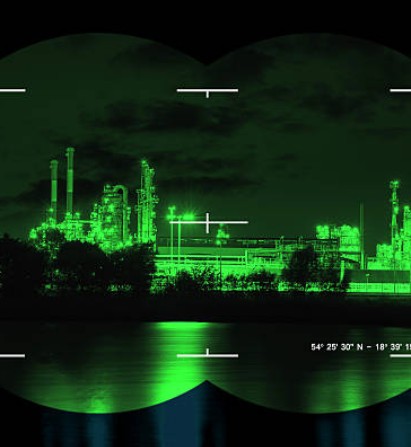
Credit: n1outdoors.com
Future Of Night Vision Technology
The future of night vision technology is bright with many innovations and developments. New devices will be lighterand more powerful. Improved sensors will capture clearer images in low lightconditions. Battery lifewill last much longer, allowing for extended use. Some night vision tools will combine with other tech, like thermal imagingor digital zoom. This will help users see better in the dark.
Potential applications of these advances are wide. They can help in wildlife observation, making it easier to watch animals without disturbing them. Law enforcement may use better night vision for security and patrol. Outdoor adventurers will find it safer for night hikingor camping. Even drivers could benefit from improved night vision to avoid accidents. The technology will keep expanding to help many people in different ways.
Frequently Asked Questions
How Do Night Vision Binoculars Enhance Visibility In Darkness?
Night vision binoculars amplify available light, including infrared, to create a clear image. They use image intensifier tubes to convert low light into visible scenes. This technology allows users to see in near-total darkness efficiently and clearly.
What Technology Powers Night Vision Binoculars?
Night vision binoculars use image intensifier tubes and infrared sensors. These components amplify ambient light and detect infrared radiation invisible to the naked eye. This combination provides enhanced visibility in low-light or no-light conditions.
Can Night Vision Binoculars See Through Complete Darkness?
Yes, night vision binoculars can see in complete darkness. They detect infrared light, which is emitted by objects and surroundings. This capability allows them to generate visible images even without any natural light.
Are Night Vision Binoculars Useful For Wildlife Observation?
Absolutely, night vision binoculars are ideal for wildlife observation. They let users watch nocturnal animals without disturbance. Their clear, amplified images provide a close-up view in low-light environments.
Conclusion
Night vision binoculars help you see clearly in darkness. They use special technology to capture and enhance light. This makes objects visible even at night. Understanding how they work can help you choose the right pair. Whether for nature watching or security, they improve night vision.
These devices bring the unseen world into view. Simple, effective, and useful for many activities after dark. Now you know the basics of night vision binoculars. Explore and enjoy the night with better sight.